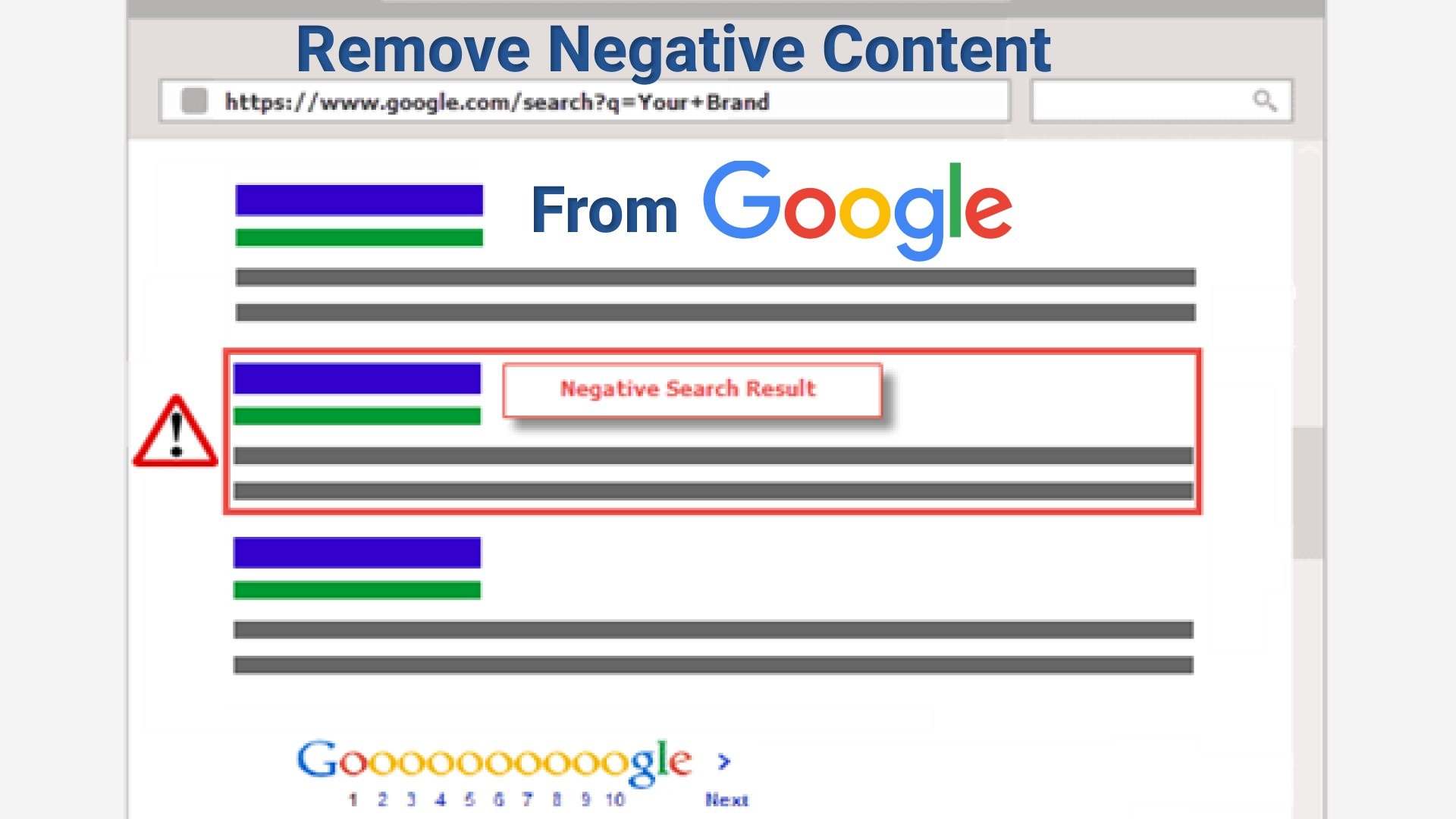
Negative search results on Google not only give customers a poor impression of your business, they can also drain your revenue. Research on news exposure shows that a single negative article can lower public confidence even when readers doubt its accuracy, which means harmful coverage can shape perception long before anyone reaches your website. There are two ways to address this kind of damage on Google. One is to remove the material entirely. The other is to push it out of view by strengthening the presence of positive and authoritative information so that it rises to the first page of search results.

Why Should You Care About Your Search Results?
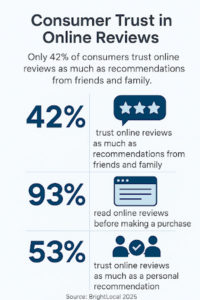
Search engines return results in seconds, and the content that appears on the first page. Along with the auto-suggestions during the query, it greatly influences how your business is perceived online. A negative review, article or blog linked to your brand can quickly escalate into a full-blown reputation crisis if not addressed proactively. According to a 2025 survey by BrightLocal, only 42% of consumers now say they trust online reviews as much as recommendations from friends and family, down from 79% just a few years ago.
At the same time, other research finds that 93% of people read online reviews before making a purchase, and more than 53% trust those reviews just as much as a personal recommendation.
What this means is clear: positive reviews build trust and generate profit, while negative or fake reviews expose your company to significant reputational risk. If a negative Google review appears to be impacting your business or personal brand, don’t hesitate to ask satisfied customers to leave reviews and take proactive steps to remove or suppress misleading or harmful content on Google.

#1 How to Remove Negative Information From the Internet?
You can address negative information in several ways, and the most effective approach depends on where the material appears and who controls the page.
Remove the information at the source
Reach out to the site owner and request that the page be taken down or edited. Many publishers will cooperate when the content is inaccurate, outdated, or harmful. Once the page is removed or updated, Google will eventually drop it from search results.
Ask the publisher to make the page invisible to search engines
A site owner can add a “no index” tag to the page. This tells Google not to include the page in its index. The content remains online, but it will not appear in search results.
Request edits that reduce the page’s relevance
If full removal is not possible, ask the publisher to adjust or remove specific details about your business so the page no longer ranks for your name or brand.
Use Google’s removal tools when appropriate
Google may remove content from its results when it violates legal or safety policies. Examples include copyright violations under the DMCA, nonconsensual intimate imagery, child exploitation, doxing, financial fraud, and other forms of harmful or illegal material.
You can also use Google’s Remove Outdated Content tool when a page has been deleted or changed but still appears in results. For business reviews, you may flag a review that breaks Google’s policies and, when necessary, contact Business Profile support to escalate obvious spam or impersonation.
If none of these options apply, the next practical step is to strengthen the visibility of accurate and positive material about your business so it rises above the negative content in search results.
#2 How Do I Suppress Negative Content from the Internet?
Suppression is a search engine optimization method that raises positive and authoritative content so it outranks unwanted material. The aim is to control what appears on the first page of search results by giving Google stronger and more relevant signals than the negative content provides.
- It replaces negative visibility with stronger alternatives.
Well-written and accurate material rises above harmful results, causing the unwanted content to lose prominence. - It uses a wide mix of media.
Articles, blogs, social profiles, images, videos, and forum discussions all help build relevance around your name or brand. - It improves organic search performance.
Search engine optimization strengthens visibility through genuine signals from credible sources and works smoothly alongside any removal steps. - It succeeds because people stay on the first page.
Users rarely click through to later pages, so pushing negative results downward is often enough to minimize their impact. - It is often more practical than complete removal.
Elevating existing positive content can bury unwelcome pages even when the original material cannot be taken down.
#3 Promote High Quality Content
Locate gaps in content by auditing your online profile. Brand reputation management includes looking up your social media pages, articles, and blogs to determine strengths and weaknesses of your brand as well as user intent. User intent is what people are looking for when they search you online. You can look at your competitors’ profiles to guide you on the type of content you need, or use digital monitoring tools to find out what is trending about you.
Leverage on unreported positive aspects of your business to balance the narrative and help remove negative content from Google that could otherwise dominate search results. This gives a search engine more options to consider when deciding relevant information to rank highly in its first page search results.
Employ the use of effective search engine optimization to boost existing content, and ensure newly created content has maximum visibility. These highlights about your work promote organic search results by creating demand for positive content while consequently pushing down unwanted information from the first page of Google search results. By consistently promoting high-quality content, businesses can strengthen credibility, manage visibility, and strategically remove negative content from the spotlight—whether for lawyers, doctors, or any other service providers.
#4 Create a Personal Website and Social Media Profiles
A dedicated website serves as the storefront of your business in the digital world and makes it easier for people to find you online. The way your business appears on the internet influences real world outcomes, including hiring, revenue, and personal growth. Managing your personal reputation supports your business reputation and helps limit the impact of negative information that appears on Google.
- Secure a domain in your name or brand.
Purchase a domain that matches your business or personal name and use it as the center of your online presence. - Optimize the site for the keyword affected by negative results.
Create focused pages that address the keyword connected to the harmful content and guide Google toward the material you want to rank. - Strengthen page search optimization.
Improve page speed, refine headings, polish copy, and organize your structure so Google can easily understand and reward the site.
Build high quality social media profiles.
Create strong profiles on major platforms and optimize each one for the keyword you want Google to rank naturally.

We Listen, We Evaluate,
then we Provide a Solution.
Our professionals carefully construct a strategy as per your goals. It is individually structured catering to all your needs. Our motto is to personalize your experience and journey of establishing your brand!
#5 Build a Strong Network
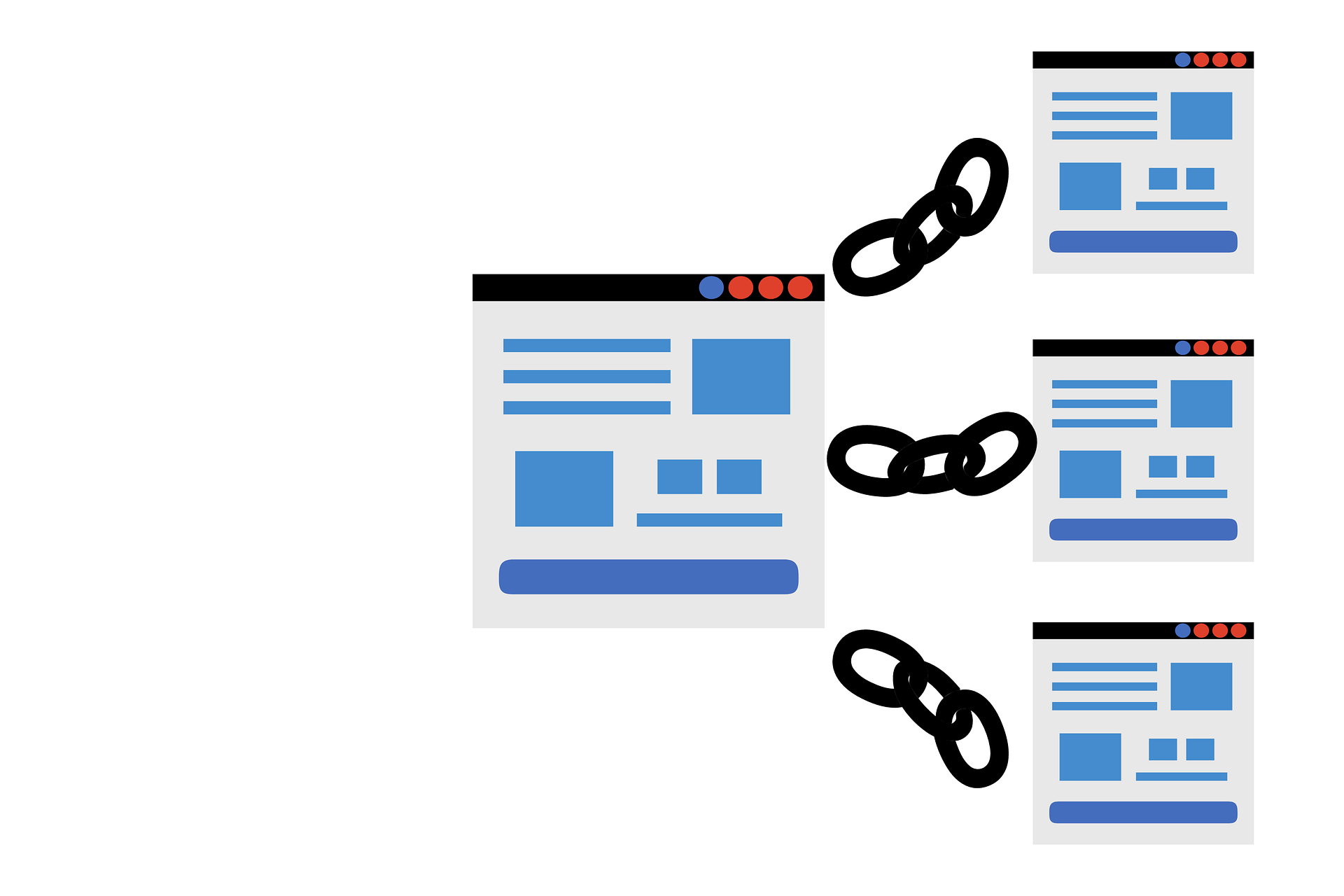
Link all your platforms to one another so search engines can clearly associate your pages with your brand and personal reputation. This creates a unified presence and supports the visibility of the content you want to promote. A reliable way to do this is to build strong backlinks.
- Backlinks act as endorsements.
A backlink is a link from one site to another. Search engines use these links to judge which content is trustworthy and which is not. When reputable sites point to your page, they signal that your material is worth showing in search results. - High quality backlinks share key traits.
A valuable backlink comes from a site with strong authority. It passes some of that strength to your own page. It also uses your target keyword as the anchor text. This is the clickable word or phrase that leads users to your page. A third trait is topical relevance. A site that covers your subject matter gives a far stronger signal than one with no relation to your field. - Use practical methods to earn do follow backlinks.
Set a Google Alert for your name or key phrase. When new content mentions you, reach out to the publisher and request a link back to your site. This simple step can raise your authority and help push down negative content. - Maintain and update all backlinks.
Review your link profile regularly. Fix broken links, update outdated pages, and continue earning new mentions. These habits strengthen your reputation and support ongoing efforts to limit the visibility of negative information. - Use personal reputation strategies to reinforce the network.
Consistent publishing, accurate profiles, and active engagement help search engines understand that you are a credible source. Over time this steady effort builds a resilient foundation that keeps unwanted content from rising to the top of search results.
#6 Publish on High Authority Websites
High authority websites are those that have a high domain authority – you can check domain authority here – or sites that have a voice that is considered more informative than the average blogger online.
The first step to effective use of this approach is to identify which of these websites are authoritative in your industry. Pitch them relevant content and strive to have it published in your name. In reference to building a strong network of interlinked sites, strive to get a backlink from that article to your website.
Conclusion
Your search results play a major role in how others judge your business. Even one negative review or article can weaken trust and affect revenue, which makes it important to remove negative content from Google and strengthen the content that supports your reputation.
Main Takeaways
| Area | Summary |
| Removing negative content | Request takedowns, edits, no index tags, or use Google’s removal tools when policies allow. |
| Suppression | Strengthen positive content so it rises above negative results in search. |
| High-quality content | Audit your presence and publish material that highlights your strengths. |
| Website and profiles | Secure a domain, optimize it, and build strong social profiles to anchor your brand. |
| Backlinks | Earn reputable links and connect your platforms to raise authority and bury unwanted content. |
Frequently Removed Questions
Can you remove negative Google reviews?
You can remove a review only when it violates Google’s policies. You may flag it for removal if it is false, offensive or spam. If it does not break any rules, your best option is to reply with clarity and resolve the issue.
How to remove negative articles from Google?
You may request removal if the article contains unlawful, outdated or personally harmful content that qualifies under Google’s removal policies. If removal is not possible, you can publish stronger and more relevant material that outranks the article in search results.
How to remove negative comments from Google?
Flag the comment if it violates Google’s content rules. Provide clear evidence when you submit your request. If it remains, respond politely and offer a solution to show good faith to future readers.
How to remove negative information from Google search?
Submit a removal request when the content meets Google’s criteria. When removal is not an option, create accurate and authoritative pages that present your business in a better light so that they rise above the negative information in search results.
Removing Negative Content Online Is One of the Simplest Ways to Restore Your Online Reputation.
Get in Touch With Us Today to Start Repairing Your Reputation!