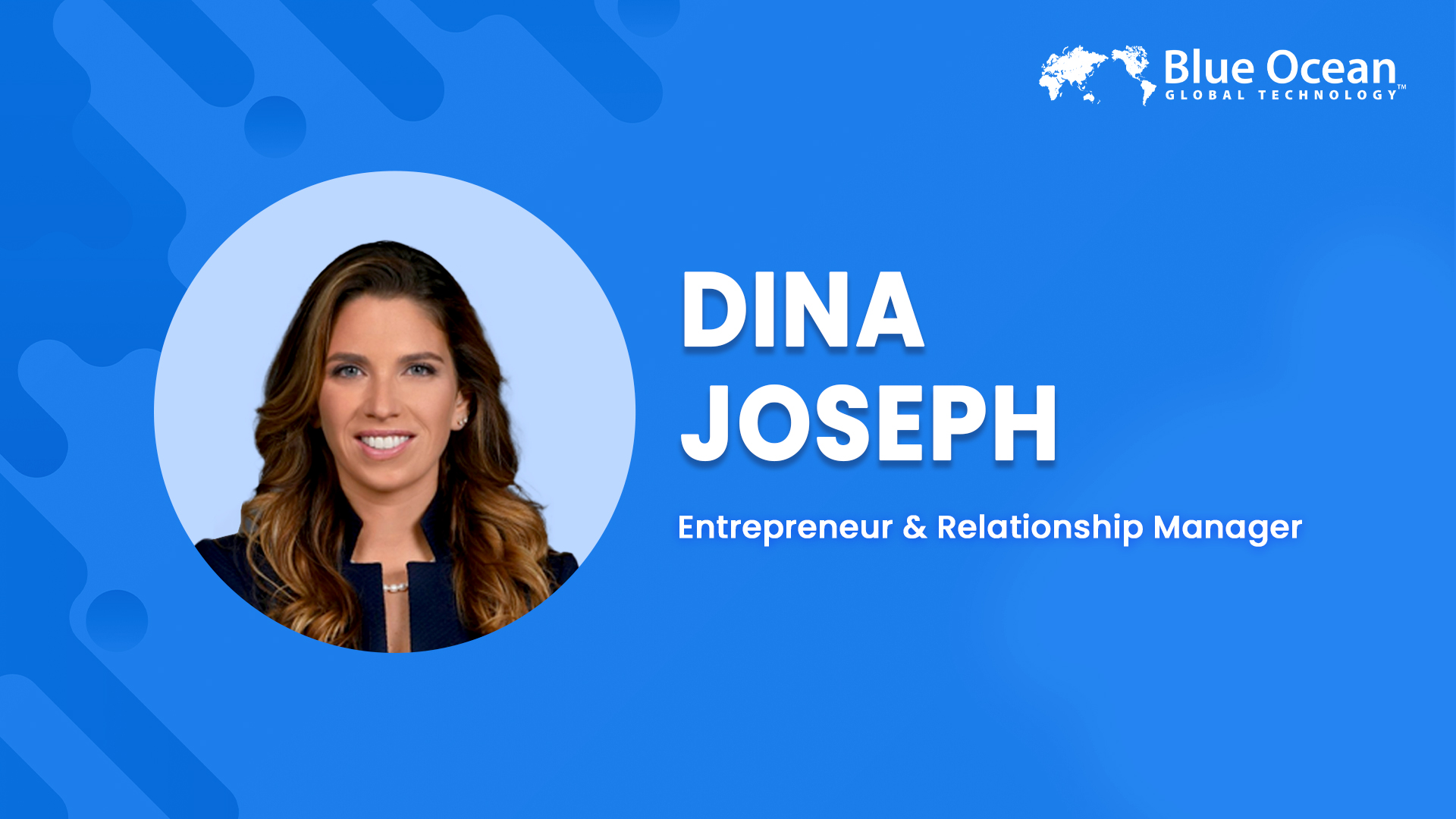
About Dina Joseph:

Dina Joseph built her career in legal finance after starting in hospitality, where she developed the customer service and problem-solving instincts that still shape how she runs her businesses. She began her entrepreneurial path with a concierge company that made events, dining, and lifestyle access more accessible to a broader range of clients, and later built a business that lets people tip staff and valets by credit card after noticing how often people were left without cash on hand.
That same instinct for identifying overlooked problems led her into plaintiff funding and litigation finance. This led to her founding her own company after concluding that the pricing and transparency in the industry could be improved for clients. She now attends multiple legal conferences each year and has built an extensive network across the legal and financial communities, working with law firms, entrepreneurs, and technology companies while also investing in and mentoring other business owners.
Joseph is a mother who homeschools her son, Asher, and structures her work around what she describes as life integration rather than work-life balance, often traveling and building alongside him. Outside of work, she enjoys long walks, volleyball, live music, and reading.
Blue Ocean: Can you tell us about your professional journey and what initially inspired you to pursue a career in legal finance?
Dina: I never set out to end up in legal finance, but I always knew from a young age that I wanted to be an entrepreneur, and I arrived here through hospitality, which makes more sense than it sounds. Hospitality taught me that every business grows through customer service, problem-solving, and a genuine curiosity about what people need, and if you listen closely enough, people will tell you exactly where the opportunity is. Through a series of fortunate accidents, I met someone working in legal finance, learned a great deal from her, and shortly after left to open my own company.

Blue Ocean: What does a typical day look like for you, and which aspects of your professional life do you find most rewarding?
Dina: There really isn’t a typical day for me, and that is part of what I enjoy about entrepreneurship. Some mornings I am up at six trying to fit in a workout before calls with law firms, tech companies, or fellow entrepreneurs, and other days I am flying to one of the roughly thirty-three legal conferences I attend each year or sending an introduction to two people who absolutely need to meet. I am also a mom, so I homeschool my son and bring him into my work whenever I can. The inconsistency is genuinely my consistency, and I’ve worked intentionally to build a life I don’t need a vacation from, since a rigid schedule would not work alongside raising a child.
Blue Ocean: You entered the legal finance space after recognizing its potential through your concierge business and have since watched the industry continue to evolve. Which emerging trends or developments in plaintiff funding and litigation finance most excite you, and where do you see the industry heading in the coming years?
Dina: I have enjoyed watching this industry mature, and I think its next evolution will center on predictability and transparency. When I started, most companies charged roughly the same rates, and the industry had a reputation for being predatory toward plaintiffs, which is part of why I left to build something better. Now I am seeing marketplaces emerge that offer far more transparent, almost credit-card-like rates for clients, along with a significant increase in private equity capital flowing into litigation finance for lawyers. That capital is forcing more creativity and more options into the space. I believe the winners going forward will be the firms that combine capital with strong data, disciplined underwriting, and real technology, alongside the human judgment that none of that can fully replace.
Blue Ocean: What do you believe has been key to your success as an entrepreneur, and how do you recognize when an unconventional idea has the potential to become a viable business?
Dina: Curiosity and pattern recognition. I started my first company right out of college to solve a problem I saw in access to events and lifestyle experiences, and from there I pivoted toward what the market actually needed, which eventually led me into legal technology. I don’t fall in love with ideas so much as with problems that are worth solving. Many of my companies came directly from problems I personally experienced, whether that was feeling like I was overpromising to clients in plaintiff funding or realizing I had no way to tip in cash after the pandemic. When someone brings me an idea, I look at two things: whether that person is genuinely driven enough to see it through, and whether the problem they are solving affects enough people to matter.
Blue Ocean: Relationship building has clearly played an important role in your career, particularly through your extensive involvement in the legal community and attendance at more than 100 legal conferences. What is unique about your approach to developing meaningful professional relationships and turning connections into opportunities for mutual growth?
Dina: When I go to a conference, my goal is not to meet as many people as possible; it is to build context rather than contacts. I try to understand who someone is and why they are in the room, because even if I cannot help them directly, I likely know someone who can, and a genuinely memorable interaction can turn into a valuable introduction months later. I try to go into every interaction with a giving mindset rather than expecting something in return, and I think that instinct comes directly from my hospitality background, particularly the habit of anticipating what matters to someone before they ask for it.
Blue Ocean: What qualities do you believe distinguish entrepreneurs who successfully disrupt established industries from those who struggle to turn innovative ideas into sustainable businesses?
Dina: The ability to challenge conventional thinking without becoming detached from reality. You have to be willing to say that the way something has always been done might not be the best, but you need enough humility to keep listening while you do it. Real disruption also requires understanding monetization, since not every idea makes a viable business, and the discipline to implement ideas intentionally rather than chasing every trend. Just as important is knowing when something is not working and being willing to pivot quickly instead of staying committed to an idea simply because you are invested in it.

Blue Ocean: You have built an extensive network across the legal and financial communities and describe yourself as someone who values quality conversations and meaningful connections. How do you approach mentoring, connecting, or guiding entrepreneurs and professionals who look to you for advice?
Dina: This might be the most important question to me. I grew up in a small town in New York where an extraordinary number of successful people, across business, sports, and entertainment, came from an environment where nobody was told their goal was unattainable, and I believed that too. I do not think entrepreneurship is right for everyone, but I think a life someone genuinely enjoys living is something everyone deserves and can build. When I mentor someone, I try to show them that it is possible, because if they believe in themselves, the world around them tends to shape itself around that belief. My job is not to tell someone what their business should look like; it is to help them get honest about what they actually want and then help them build it.
Blue Ocean: What advice would you give your younger self at the beginning of your journey as a business owner?
Dina: Trust myself sooner. It was always easy for me to champion other people and help them break their self-limiting beliefs, but much harder to do that for myself. I spent a lot of my early career looking to people simply because they were older or more established, without questioning whether their way was actually the best way. The earlier stages of a career are meant for learning, growing, and making mistakes, and some of the best breakthroughs come from things falling apart first. If I could go back, I would tell myself it is okay to go for the home run and see what happens.

Blue Ocean: You mentioned it is okay for things not to work out. How do you balance your work with being intentional about time with your son, Asher, whom you homeschool?
Dina: I do not believe in work-life balance; I believe in work-life integration. We travel together, and he gets to watch me pursue a career I genuinely enjoy, which has been motivating for him as he has started building his own first business. Homeschooling gives me the chance to show him how the subjects we learn in a conventional classroom actually show up in daily life, whether that is how we price a product or how we manage time, and reinforcing that kind of understanding matters to me as much as any lesson itself.
Blue Ocean: Is there something that did not work out the way you expected but led to something better?
Dina: It happens constantly, often in small ways rather than big dramatic ones. I used to get frustrated when a deal did not close or a raise fell through on schedule, and I would assume I had done something wrong. Over time, I realized that a closed door often opens space for something else, whether that is a bigger opportunity down the line or simply an unplanned afternoon with my son. Even something as minor as a three-and-a-half-hour flight delay recently turned into extra time to be present with him instead of rushing through an airport. Shifting my mindset toward gratitude for the unexpected has changed how I experience setbacks entirely.
Blue Ocean: What hobbies or interests help you recharge and maintain balance outside of your professional life?
Dina: I love being outside, so I take long walks, play volleyball, and go to the gym. I read, I go to concerts, and I spend as much time as I can with my son. Honestly, I also default to having conversations about ideas that could be built into something, since that curiosity never really turns off. I travel so much for work that when I do have unstructured time, I try to be present and enjoy whatever is around me simply.
Conclusion
Dina Joseph’s path from hospitality to legal finance reflects a consistent pattern of spotting an overlooked problem and building something better around it. Relationships are one of her greatest assets, but her ability to turn those relationships into tangible business opportunities is what makes her experience distinctive rather than just traditional networking. Her guiding belief is that real success comes from solving problems worth solving and from building a life worth living, rather than simply a business worth running.
Do you have a personal or professional story that can inspire other people into becoming the best version of themselves?
You are welcome to share your journey with our audience.