Why It Matters to Remove Negative Content from Google Search
The first thing people do to learn more about you before engaging in any kind of business is search for you online, something so simple yet highly critical in shaping their impression. In fact, a recent U.S. study found that 74% of consumers choose not to proceed with a purchase if they find negative content on the first page of search results.This underscores how essential it is to track what appears about you on the internet and to take swift action to remove or manage negative content from Google search. This is why it becomes so important to keep track of the content about you on the internet and take quick action to remove negative content from Google search.

Why Removing Negative Content is Important?
In today’s digital landscape, online reputation can make or break a business or individual. Negative content—whether it appears in reviews, articles, or social media posts—can damage credibility, drive potential clients away, and linger on search results long after the issue has passed. Taking action to remove or suppress harmful content is essential for maintaining trust and authority online.
Protecting Reputation and Credibility
First impressions are often formed through online searches. A single negative post can overshadow years of positive work. Removing damaging content helps ensure that your digital presence reflects your true values and achievements. It also prevents misinformation from spreading, which is particularly important for businesses that rely on public perception.
Building Consumer Trust
Consumers turn to online reviews and ratings before making decisions. A few negative mentions can significantly reduce confidence in your brand. By managing and removing false or harmful content, you help maintain transparency and protect your reputation.
Supporting Growth and Visibility
Search engines prioritize frequently engaged content. Negative material can gain traction if left unaddressed, pushing positive coverage further down search results. Removing such content not only improves brand image but also enhances visibility and helps regain control of search rankings.
Statistics
- Around 93% of consumers say they read online reviews before making a purchase.
- About 79% of businesses have rejected a job candidate based on social-media content found during screening.
- About 57% of employers have rejected a job candidate based on something discovered via social media.
- About 85% of consumers say they trust online reviews as much as personal recommendations from friends or family.
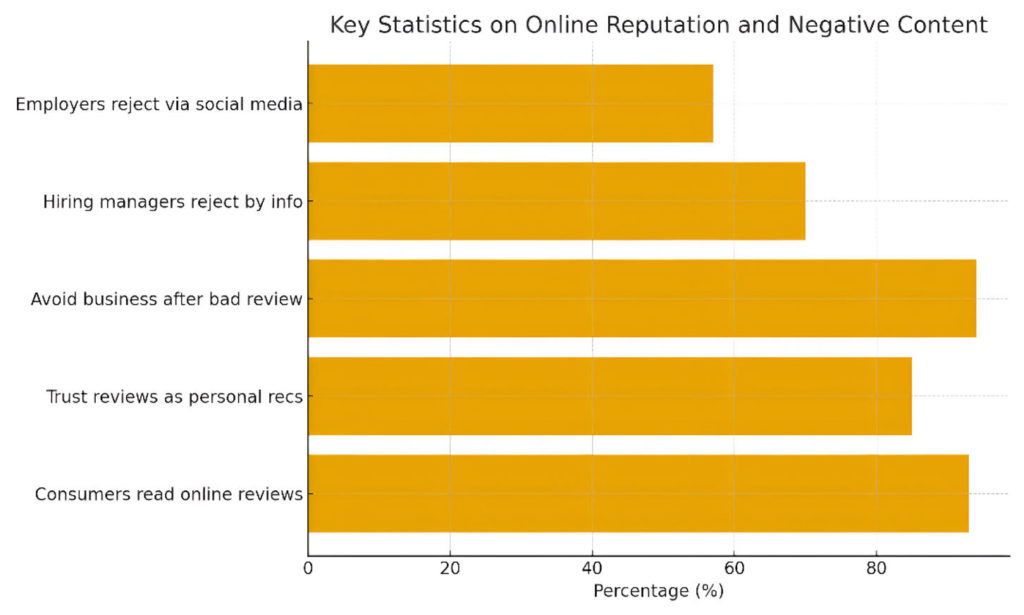
Removing or managing negative content is not merely about image control—it is about protecting opportunity, maintaining trust, and ensuring fair representation. A proactive reputation strategy safeguards not only what people see but also how they perceive your credibility in the digital world.
The Financial Cost of Ignoring Negative Online Content
Your online reputation directly affects income, partnerships, and growth. Negative content left unchecked can lead to measurable financial loss.
- Revenue loss: One negative article can cut sales by up to 22%, and a single bad review can reduce purchase likelihood by 51.4%.
- Higher recovery costs: Businesses spend $3,000–$10,000 monthly on crisis management when issues are ignored.
- Lower valuation: Poor reputations can reduce stock value by up to 31%.
- Hiring challenges: Around 80% of employers have rejected candidates due to online findings.
In short, reputation management isn’t just about image, it protects real money. Acting early saves thousands and safeguards long-term growth.
Effective Strategies to Remove Negative Content from Google Search Results
Here Are a Few Ways To Maintain a Good Reputation Online and remove negative links From Google Search:
1. Request Content Removal from the Website Owner
The easiest way to remove negative links from the internet is to directly approach the source and ask them to delete or modify the content. If they do so, it will no longer show up on Google search result pages. If the contact information of the writer is available, get in touch with them and ask to have the content removed from the web page if possible.

Picture Credits: Unsplash
2. Submit a Bad Review Removal Request
In case you’re dealing with a bad review on Google, you can file a request to Google directly to have it taken down. Certain content can be removed by Google if it is considered to violate user policy. Some parameters for the same include:
- Spam content
- Impersonation or fraudulent information
- Views which show conflict of interest
- Off topic opinions
- Depiction of illegal content such as sexually explicit or terrorist content
- Depictions or promotions of violence or self-harm
- Profanity, hate speech, or other offensive content
You can flag a review which fits into any of these categories as inappropriate. If no action is taken, you can escalate the complaint to customer support. Remember to make the complaint detailed and refer to specific policy violations.

Picture Credits: Pexels
3. Bury Negative Google Search Results
If the content cannot be removed, you can approach the owner and ask them to add a NO INDEX tag to the HTML of the web page. This will make it irrelevant to the search engine and it will not rank high, helping bury negative search results from Google.
The discarded search results can also be removed from Google with the help of the ‘remove outdated content’ tool, used mainly when the information showing up on the search page does not match the current content on the site. If the webmaster has removed the URL but the outdated information still appears in Google’s index, this tool can notify Google to update its search results. Similarly, businesses dealing with false or policy-violating employer reviews may explore Glassdoor review removal to reduce the visibility and impact of inaccurate content on their online reputation.
4. Consult an Attorney for Defamatory Content
If the content you want removed is harmful that was stated about you or your company, you will often be unable to do that unless you have legal paperwork to back up your accusations. According to the existing internet law, hosting firms and websites are not required to remove potentially defamatory content unless a judge determines that the content is genuinely false and harmful to you. When all other options have been exhausted, a defamation lawyer is the best option to remove negative internet content.
A bad online reputation can leave a damaging effect on your employment, personal life, and even financial prospects in today’s digital age. When you come across unpleasant or detrimental content on the internet about yourself or your company, you want it removed as soon as possible. Your best move is to hire online reputation experts to advise you and guide you in swiftly mitigating any reputational risks or damages from negative content.
We Value Reputation,
Let’s Rebuild Yours.
A High Reputation Comes With a Cost, Put Value on It.
Strategies to Suppress Negative Search Results with Reputation Management
1. Understanding Negative Content Suppression
If the information cannot be removed, it’s best to suppress it completely through proactive online reputation management. This is a technique where preferred content is promoted through search engine optimization, repositioning any undesirable links, and helping to suppress negative search results. Personal Reputation Management strategies are needed for all those whose online presence is a key part of their reputation for individuals, business owners, lawyers, doctors, celebrities, etc.
2. Create and Optimize Social Media Profiles
You’re missing out on a lot of brand exposure if you haven’t developed social profiles for your company yet, because social profiles rank well in search engine results. Maintain your brand reputation consistently across all social media profiles to leave a lasting impression on your visitors.
Here are some of the most popular social media platforms where you should develop social profiles to maximize your search engine exposure:
- YouTube
- Google Plus
All these profiles generally rank high on SERPs, which will further help in suppression of any negative links.
3. Create a Wikipedia Page
The Wikipedia domain is well-known for its power and authority. This authority can be used to add another positive result to the first page of the search results. Wikipedia pages almost always appear in Google search results. If you have a Wikipedia page, it will almost certainly appear in the results, regardless of what market you’re in.
You can use this guide to create your page on Wikipedia.
4. Engage with Authoritative Blogs and Forums
Develop a habit to comment on various authoritative blogs that are relevant to you. Set up notifications for respected blogs in your niche, leave comments whenever fresh content is published, and mention your brand when you think it will be of benefit to others.
This method has the advantage of allowing you to rank such articles against your brand name. If you leave comments on authoritative blogs, your brand name will be more likely to appear on Google’s first page when someone searches for it.
5. Leverage Business Directories to Improve Visibility
Business directories are websites where you can easily enter your business information so that others can find you. You will need NAP for this (Name, Address, and Phone Number). These websites are specifically created to assist small businesses to gain more exposure and reach out to their clients. Some of these sites could rank higher for your business name due to their high authority.
Bury negative content from Google by listing your local business on the following prominent business directories:
6. Publish Press Releases
Another strategy to get your brand-related results on the first page of Google search results is to issue a press release. You can post your press release on reputable press release websites. The following are some of the most popular press release websites you can use:

Picture Credits: Pexels
Choosing the Right Approach to Handle Negative Content
The right method depends on where and how the negative content appears. Use this quick guide to decide what fits best.
| Strategy | When to Use | Key Steps |
| Ask Site Owner to Remove It | If you can contact the site directly. | Identify the source → Reach out politely → Request deletion or edits. |
| Request Google Review Removal | For harmful or false reviews violating policy. | Flag as inappropriate → Explain why → Escalate if ignored. |
| Suppress with SEO | When removal isn’t possible. | Ask for “NO INDEX” tag → Use Google’s outdated content tool → Publish new positive content. |
| Consult a Lawyer | For defamatory or false claims. | Gather proof → Get legal advice → Seek court order if needed. |
| Reputation Management | For long-term control and visibility. | Optimize profiles → Create Wikipedia page → Post blogs and press releases. |
Key Takeaways
Maintaining a clean digital presence is essential for protecting both personal and professional credibility. Negative search results can harm trust, limit opportunities, and misrepresent your brand. Proactive monitoring and timely action ensure your online image reflects who you truly are.
- Reputation defines trust. First impressions often come from Google searches, so keeping results positive is vital.
- Act quickly. Contact site owners or use Google’s tools to remove or report false or harmful content.
- Suppress what you can’t remove. Use SEO and fresh, high-quality content to push down negative results.
- Legal help matters. For defamatory or false claims, consult an attorney to pursue removal through legal channels.
- Build strong profiles. Active, optimized social media and Wikipedia pages improve authority and visibility.
- Stay proactive. Ongoing reputation management prevents future issues and strengthens long-term credibility.
Frequently Asked Questions (FAQ)
How can I monitor my online reputation effectively?
Tracking the mentions of your brand, business or even your name across the online landscape consistently is a vital reputation management activity. You can use alerts, check social channels, and track reviews on various sites can help you stay aware of your online presence.
Is It Possible to Remove Search Results from Google?
Yes, if the content contains some of your personal information, you can remove it using Google’s tools and services. Additionally, if the content violates any law or regulation from Google, then you should contact Google and ask them to remove it.
How to get rid of negative google search results?
To remove negative Google results, publish and optimize high-quality, keyword-rich content on authoritative platforms that outranks the unwanted pages, while strengthening your website’s SEO and earning credible backlinks to push the negative listings down. If the content is false or violates policies, request its removal through Google’s Content Removal Tool.
How long does it take to see results when suppressing negative search results?
The time frame to suppress negative search results depends on the strength of the negative content, the effectiveness of your SEO strategy, and the consistency of your efforts in promoting positive content.
Removing Negative Content Online Is One of the Simplest Ways to Restore Your Online Reputation.
Get in Touch With Us Today to Start Repairing Your Reputation!