About Brian Brinig:

Brian Peter Brinig is the author of Mastering the Art of Expert Witness Testimony and four other books directed to the legal and accounting professions. He is both a lawyer and CPA and an Adjunct Professor at the University of San Diego School of Law and the Knauss School of Business Administration. He is a nationally recognized speaker to universities and professional organizations, and he has qualified as a financial expert witness in more than 100 matters in federal and state courts across the United States.
Blue Ocean: Tell us about your professional journey. What inspired you to pursue a career in business valuation, forensic accounting, and financial consulting, and what continues to drive your passion for the profession today?
Brian: I earned a degree in accounting from Georgetown University and began my career in auditing at Price Waterhouse, then later worked in taxation at Arthur Young, spending a total of a few years in public accounting.
While the experience provided a strong technical foundation, I found accounting to be highly routine and realized it was not the career I wanted to pursue. I decided to attend the University of San Diego School of Law. As I neared graduation, most of my career opportunities were in business law. Although I passed the bar exam and became licensed to practice, I found that reviewing lengthy business contracts was every bit as boring to me as auditing. So, I never pursued the traditional practice of law.
Instead, I entered the field of business brokerage, which, particularly in California, functions much like real estate brokerage, with brokers acting as intermediaries between buyers and sellers of privately held businesses. I spent about a year working with small businesses in that capacity.
I received frequent requests from clients who were not looking to buy or sell a business but instead needed an independent valuation. At first, I declined those requests because business appraisals were not part of my services, but I eventually realized I was well positioned to provide them. The analytical skills from my CPA background helped me evaluate financial information, my legal training enabled me to communicate complex findings, and my experience as a business broker had given me practical insight into how the marketplace values privately held businesses.
That realization led me to begin performing business valuations in the late 1970s. At the time, the fields of forensic accounting and forensic valuation were still in their infancy. The term “forensic accounting” was not yet widely used, and few people recognized it as a distinct discipline.
I also learned that business valuation was closely tied to litigation. In my experience, clients rarely commissioned a valuation simply out of curiosity. Rather, the overwhelming majority of assignments arose from legal or financial disputes. These included partnership disagreements, shareholder disputes, tax matters, and, particularly in California, divorce proceedings requiring the valuation and division of a closely held business.
From there, my practice expanded into more complex valuation and litigation support, leading to a career focused on business valuation, forensic accounting, and expert witness services.

Blue Ocean: What does a typical day look like as Managing Director of the San Diego office of CBIZ Forensic Consulting Group?
Brian: My practice grew beyond traditional business valuation into forensic accounting. Our work came to include economic damages analysis, forensic investigations, complex financial analyses, and high-net-worth marital dissolution matters.
Today, as a Managing Director, my primary role is overseeing and directing a large portfolio of engagements. Historically, my practice has consisted of a high volume of relatively modest-sized matters, with individual engagements typically generating professional fees in the range of $10,000 to $20,000. At any given time, I may be actively managing between 50 and 100 cases.
The majority of these engagements fall into two primary categories: economic damages analyses and business valuation matters. My responsibilities span the entire lifecycle of each case, from the initial client engagement through expert testimony, if required.
A significant portion of my time is devoted to communicating with clients, attorneys, and prospective clients, discussing case strategy, managing ongoing engagements, and preparing matters for deposition or trial. I also work closely with the associates and financial analysts on my team, who perform much of the detailed financial analysis, document review, and data collection during the early stages of an engagement.
Although I remain involved throughout every case, my role becomes particularly intensive once a matter is approximately two-thirds complete. By that stage, if the case has not settled, the focus shifts from analysis to preparing expert opinions, refining conclusions, and getting ready for deposition and trial testimony.
In practical terms, my day is spent mostly communicating with people, whether consulting with new or existing clients, evaluating prospective matters, or meeting with my team to review the status of ongoing engagements and provide strategic direction as each case progresses.
Blue Ocean: Which emerging trends in your business do you find most exciting?
Brian: AI is taking over a fair amount of the more mundane part of forensic accounting. A lot of the more routine work is being done by artificial intelligence in the sense of document summary, deposition summary, the inputting of huge amounts of data.
For example, in a complex matter we may receive decades’ worth of financial records, perhaps 20 years of bank statements from multiple accounts. Rather than manually entering and organizing that information, my team now uses AI to extract, structure, and import the data into Excel and other analytical platforms. AI can rapidly summarize the information, identify patterns, and prepare it for further analysis.

Blue Ocean: Can you walk us through a particularly challenging valuation or forensic accounting engagement you’ve handled, and explain the analytical approach and strategy you used to reach a successful outcome?
Brian: One of the more interesting aspects of my practice is that the most challenging business valuations have typically involved smaller, closely held businesses rather than large companies. That may seem counterintuitive, but in my experience, larger businesses often fit within more established valuation frameworks.
With larger companies, you generally have audited financial statements, well-developed accounting systems, established management structures, and a business that clearly exists as an ongoing institution. Whether the company generates $10 million, $20 million, or $30 million in annual revenue, the valuation process typically focuses on understanding the business, analyzing its financial performance, assessing management, projecting future cash flows, and determining an appropriate capitalization or discount rate. While those judgments are certainly complex, the underlying business itself is usually well-defined.
The greater challenge, in my view, lies with smaller businesses, particularly closely held companies and professional practices. Much of my career has involved valuing these types of businesses, especially in California, a community property state where business valuation is frequently required in marital dissolution proceedings.
Many of these businesses depend heavily on a single individual, a physician, attorney, consultant, or other professional, whose personal skill, reputation, and relationships drive much of the firm’s success. The central valuation question then becomes: how much of the business’s earnings are attributable to the enterprise itself, and how much are attributable to the personal efforts and talents of the owner?
For example, consider a solo law practice with one attorney supported by a small staff. Suppose the practice generates $600,000 in annual income. It would be easy to assume that a practice producing that level of earnings must be highly valuable as a business. However, that conclusion overlooks a critical distinction. Is the value embedded in a transferable business asset, such as an established client base, systems, brand, and goodwill, or is it primarily a reflection of the individual attorney’s personal reputation, expertise, and ability to generate work?
In many cases, I believe the latter is true. A substantial portion of the earnings may be attributable to the owner’s personal services rather than to transferable enterprise goodwill. Distinguishing between personal goodwill and enterprise goodwill requires careful judgment, and I find that many valuations oversimplify or overlook this distinction.
For that reason, I have always found smaller-business valuations more intellectually demanding than valuations of larger institutional companies. They require a deeper understanding of the economics of the business, the role of the owner, and the extent to which the business could continue generating income if that individual were no longer involved.
So, when asked which valuations I find most creative or challenging, my answer is almost always the same: closely held businesses and professional practices. They require the greatest degree of judgment, and have shaped much of my career and perspective as a valuation expert.
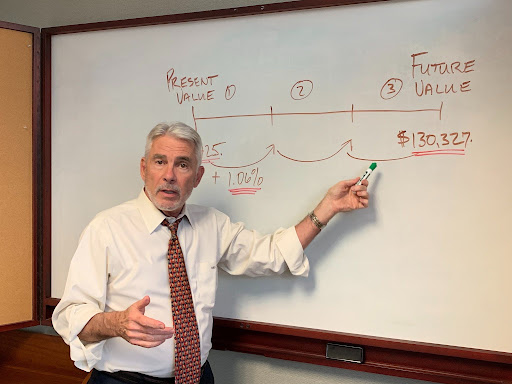
Blue Ocean: You have built a distinguished career advising clients on complex financial matters. How do you and your team stay ahead in an industry where financial regulations, valuation methodologies, and litigation strategies continue to evolve?
Brian: I do a lot of teaching and writing, and I find that teaching these topics is very educational for me. One of the ways I stay current is by committing to teach a program somewhere.
I often find myself digging into the latest developments on capitalization rates, discounts for lack of marketability, capital asset pricing models, and other related topics to prepare. You have to keep diving into the latest literature that’s out there.
That’s what I do. Teaching and writing have been very helpful in my own journey to stay on top of things.
Blue Ocean: What core principles do you believe every financial expert and forensic consultant should uphold?
Brian: I feel very strongly about ethics, integrity, and objectivity.
Valuation is an area where professional valuation experts develop opinions, and most of those opinions are used in some type of dispute process, particularly litigation.
It is critically important to maintain integrity and objectivity. I believe it is both a moral and ethical responsibility to do so, to remain untainted and to do your best not to be influenced by either side of a case. We all say that, and I do my best to live by it.
Over the years, I developed extensive experience performing valuation work by stipulation or agreement between both sides, which is not easy. You’re trying to satisfy both parties, if you will. I always say that if you make both sides equally unhappy, you’ve probably done a good job.
To me, the most important characteristics are integrity, objectivity, and applying your craft honestly without being influenced to present your opinion a certain way.
In fact, some of my biggest disagreements have been with my own clients. I have had to tell them, “No, I know you want it to be worth this much, but it simply isn’t, and I’m not going to say that.”
As a practical matter, I have often thought to myself that one case is not worth damaging your reputation over. There will always be another case, and another, and another. That client will eventually be gone, but your reputation will remain.
If you shape your opinion to favor one side, people remember. Although I did some practice nationally, I was mostly concentrated in one city. Over time, the lawyers get to know you.
If you are willing to say two plus two equals seven for one lawyer today, that same lawyer may be on the other side of a case six months or a year later. They will remember what you did before. If you now tell them that two plus two equals four, they may not believe you because you compromised your objectivity the last time.
Blue Ocean: What unique value do you bring to clients facing high-stakes business disputes?
Brian: A good valuation analyst is creative, financially sophisticated, and intellectually curious.
Accountants tend to see things in black and white and often do not think outside the box. Lawyers, on the other hand, tend to think in shades of gray, being more creative. It is not just the legal training, but also the ability to work through an issue, consider different possibilities, and explore multiple perspectives. That mindset is extremely valuable for a valuation expert.
What I believe I bring to the table is the ability to think through complex issues by digging down to their roots. I can weigh the strengths and weaknesses of different approaches, evaluate competing perspectives, and determine the right path while building a strong analytical foundation. I just call it creative thinking, and I believe it is one of my greatest strengths.
The second quality is objectivity and integrity, which is the ability to tell your client or attorney, who is naturally advocating for a particular outcome, “I’m not going to say that.”
I’ll exaggerate for the sake of illustration. If a lawyer wants me to say that two plus two equals seven, I have to have the courage to respond, “I’m not going to say that.” It would be foolish to let someone persuade me to do so because there will eventually come a day when I am challenged on that opinion. I’m not willing to put myself in that position.
My responsibility is to develop an objective, balanced opinion that I can confidently defend while sitting on the witness stand. I need to be able to explain that I considered all of the evidence, including the evidence that favored the opposing side, evaluated its significance, factored it into my analysis, and reached my conclusions based on the totality of the information, not by ignoring facts that were inconvenient.
So, to me, the two most important qualities are creative thinking and the integrity, objectivity, and courage to tell your own side, “I’m not going to do that for you. I need to provide a balanced opinion.” Ultimately, that is the strongest position an expert can bring to any litigation.
Blue Ocean: How do you maintain objectivity, analytical rigor, and resilience while working under pressure and managing complex engagements?
Brian: I don’t think it’s that difficult, provided you incorporate my principles: integrity, objectivity, sound judgment, and the ability to recognize what is and is not supportable. I’m going through a checklist in my mind. One of the most important things is remembering that there will always be what I call “game day.”
It’s one thing to practice on Tuesday, but Friday night is the game. Using an American football analogy, on Friday night you’re lining up against a 250-pound tackle on the other side of the line when the ball is snapped.
It’s easy to talk tough on Tuesday and say, “We’re going to do this,” or “We’re going to do that.” But you have to understand that when game day arrives, someone on the other side is going to come after you with everything they have.
Knowing that and having enough experience to expect it is one of the things that keeps me from allowing attorneys to persuade me to offer opinions that simply are not supportable.
So, for me, it comes down to integrity, objectivity, morality, and ethics, along with the understanding that there is always another inning, another quarter, another play, or another game ahead. You have to be prepared for that.
That’s what keeps me on the straight and narrow, so to speak.
Blue Ocean: What are some of the most common misconceptions people have about business valuation, forensic accounting, or the role financial experts play in litigation?
Brian: One of the common misconceptions, and unfortunately, it’s probably true 30 or 25 or 40% of the time, but one of the common misconceptions is that the valuation expert is an advocate for his or her client.
And as I said in the last comment, Important that you not be that. Now, unfortunately, it seems to be true that too many times that is the case.
But I think most observers think that that’s true. Oh, this guy is a, you know, he’s an appraisal or valuation expert for client X. He’s going to say whatever client X wants. And I think that is a misconception about competent quality valuation. Experts that are out there.
But unfortunately, there are 25 or 30% of the group who will say whatever they’re paid to say. And that’s unfortunate.

Blue Ocean: What advice would you give to young professionals who aspire to build careers in business valuation, forensic accounting, or financial consulting?
Brian: Well, for me, it has been a very fun career. It’s kind of between law and accounting, which is what I’ve liked about it.
I’m not envious of any of my colleagues who went on to practice law. I would not like to practice law for a lot of reasons. I don’t think it’s a very fun job. I’m overstating it a bit, but half of your clients are crazy, and you have to represent them.
Just doing plain accounting is a real sleeper, as far as I’m concerned. Business valuation has been a very creative area of the profession.
So I’m not sure I’m directly answering your question. All I can say to a young person who’s looking at it is, first, it’s a very cool career. I really think it is. Second, I hope it isn’t going to be made obsolete by AI. I do think various aspects of regular accounting already are, just as the lower levels of law practice are becoming obsolete because of AI.
I feel like, and I’m not 100% sure of this, that you’re always going to need the expert to pull it all together and go testify about it.
In fairness, though, I don’t know how you get from step zero to step eight or nine, which is where the expert is. Fifteen years ago, it was easier for me to say, “Well, you start out reading depositions, doing financial analysis, being the person who summarizes all those bank statements and learns all that detail, and then works your way up to step eight, where you’re preparing for the deposition and testifying.”
I was more confident talking about those first eight steps 15 years ago, when there was no AI, because now AI is taking over some of those steps. And that does concern me.
But I know steps eight, nine, and ten are still in play, so to speak.
All I can say to that young person is that it’s a very fun, exciting, and rewarding career. If it’s still around in 20 years, and I think it will be, go for it.
Blue Ocean: Is there a guiding philosophy, professional principle, or piece of advice that has shaped your career and approach to serving clients and back when you started?
Brian: I feel like I have a pretty good professional, moral, and ethical foundation for my career, an inherent sense of knowing the right thing to do.
When I think of business valuation, I think the “right answer” has a lot to do with what we’ve been talking about: objectivity, integrity, and so forth. Having a good sense of, “Hey, this is the smart, right answer to this question.” It may not serve your particular client’s needs or align with what your client thinks the answer ought to be, but I know valuation. I know that this business isn’t worth $2 million, and it isn’t worth $2. It’s somewhere in the middle. That may not make this side happy, and it may not make that side happy, but that’s reality.
So I feel like I have a pretty good sense of objectivity. Let’s pretend for the moment that it’s morally and ethically based, that this is the right thing to do. That’s number one.
Number two, even if you don’t believe that, and I don’t mean this in an argumentative way, but even if you don’t believe that, from a business perspective it’s still the right way to approach this, for the following reason.
As I said before, I work in a community. There may be two million people in the city where I work, but over time people get to know you and know your reputation. If you have a reputation for doing good, objective work with integrity, it comes back and serves you well professionally.
So, how do I put this? I’m saying this facetiously now. Even if you don’t have any morals or integrity, if you have good business sense, you’re smart to do this the right way and come up with the right answers overall, even if your client doesn’t like you in a particular case, because it will serve you well in the long run.
So that’s my answer as to how I approach this. Number one, I think it’s the right thing to do morally and ethically. But number two, even if you don’t believe that, and I’m talking to myself here, from a business perspective it’s still the right thing to do because it will come back to you in spades, as we would say in English.
Judges will call you and hire you. You’ll get hired jointly by both sides in these cases. So, anyway, I won’t ramble on and on, but that’s the basis for my approach.
Blue Ocean: Outside of your professional work, what hobbies or interests help you recharge and maintain balance?
Brian: One thing I’d like to mention is that my avocation has been teaching and writing.
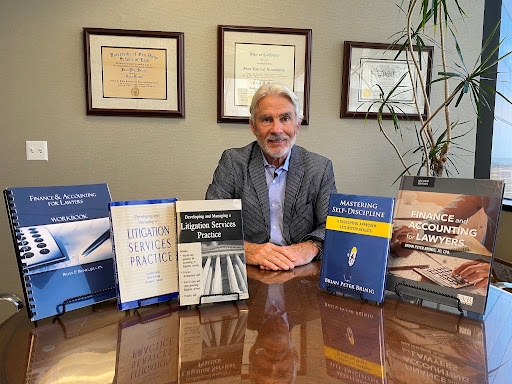
I’ve written five books, and with respect to the expert witness and business valuation portion of my work, I’m very proud of my book, Mastering the Art of Expert Witness Testimony, in which I summarize every aspect of a forensic consulting practice, from managing it and marketing it to developing opinions and how to do the work. It’s really what I call the celebration of my career.
I’ve also included a great deal about the tactics and strategies of testifying as an expert in depositions and at trial.
So I’m very proud of that, and I think it’s very instructional for anybody in the practice, whether you’re at the beginning, intermediate, or advanced level. Mastering the Art of Expert Witness Testimony is an excellent resource, and I would encourage and invite anyone with an interest in expert testimony to take a look at it. It’s very good.
Well, this may make me sound pretty narrow, but teaching and writing are my avocation. I’ve been teaching at the University of San Diego School of Law for about 30 years. I also teach at the University of San Diego School of Business, where I’ve been teaching for about five years.
At the law school, I teach finance and accounting for lawyers. At the business school, I teach forensic accounting and expert witness testimony. So that’s what I do. Between that and work, it keeps me pretty busy with a little bit of grandparenting here and there.
Conclusion
Brian Brinig’s career demonstrates how technical expertise, legal insight, and independent judgment can come together to shape a trusted expert witness practice. He emphasizes that successful business valuation extends beyond financial analysis, requiring creativity, intellectual curiosity, and the courage to remain objective even under pressure. From pioneering forensic valuation work to mentoring the next generation through teaching and writing, Brian’s professional philosophy is grounded in integrity, continuous learning, and the belief that a reputation built on honest, defensible opinions is an expert’s most valuable asset. As technology continues to transform the profession, he remains confident that sound judgment, ethical decision-making, and credible expert testimony will continue to define the role of leading financial experts.
Do you have a personal or professional story that can inspire other people into becoming the best version of themselves?
You are welcome to share your journey with our audience.