About Jacob K. Friefeld:
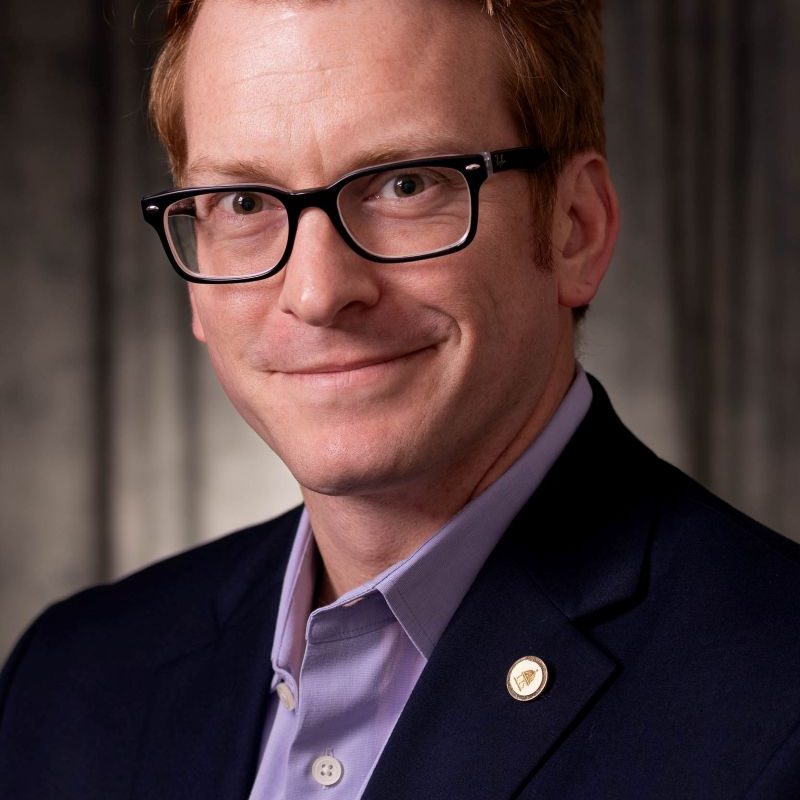
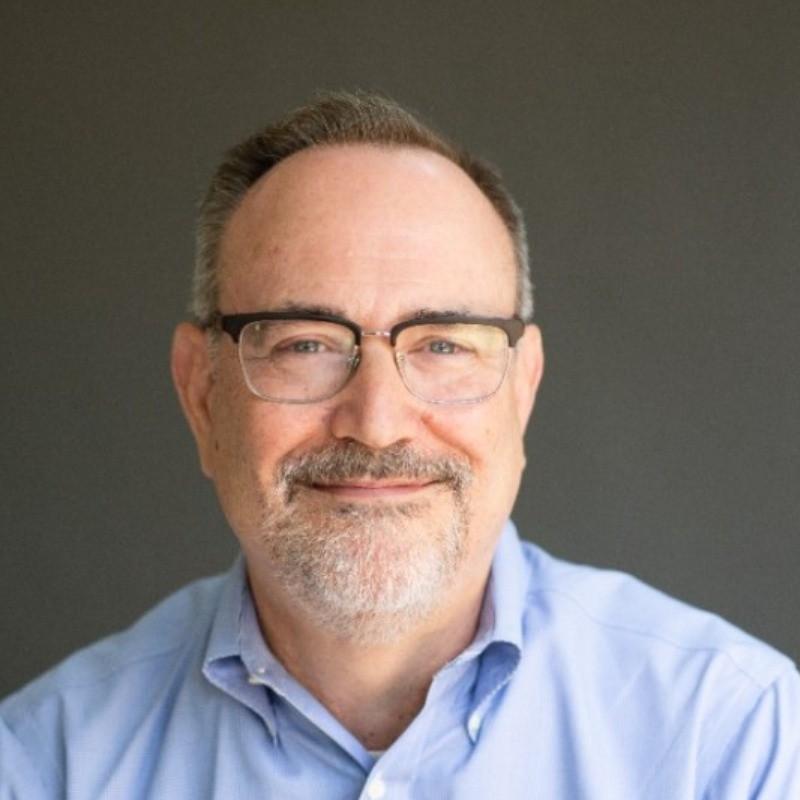
Jacob K. Friefeld is the director of the Center for Lincoln Studies at the University of Illinois Springfield. His newest book The First Migrants: How Black Homesteaders’ Quest for Land and Freedom Heralded America’s Great Migration, tells the epic story of Black Americans homesteading in the Great Plains after the Civil War. His first book, Homesteading the Plains: Toward a New History, examines the Homestead Act of 1862, one of the most important social policies ever enacted in the United States.
Friefeld has a passion for making history accessible for broad audiences through his writing, public speaking, television appearances, and work with museums.
Blue Ocean: Could you tell us about your professional journey—what inspired you to pursue a career in history and ultimately focus on Lincoln studies?
Jacob K: My interest in history goes all the way back to seventh grade, when I unexpectedly found myself enjoying an afternoon reading my history textbook. That curiosity deepened through high school when I took AP European History and began to see history as something I could seriously pursue.
I majored in history in college, choosing it over theology with the guidance of my professors, and later faced a dilemma between law school and graduate school. After my dad, who is a lawyer, remarked that one doesn’t meet many happy lawyers, I enrolled in a master’s program at Loyola University Chicago. There, strong mentorship and exposure to public history reshaped how I thought about the field, showing me that history could engage the public directly, not just restricted to academia.
That insight guided me to the University of Nebraska for my PhD, where I worked in digital history and managed the History Harvest, a community-based project that preserved family histories and artifacts. At the same time, my scholarship focused on 19th-century America and the Homestead Act of 1862. That research led to two books—Homesteading the Plains and The First Migrants—which challenged long-held assumptions about homesteading and highlighted the overlooked experiences of Black homesteaders in the Great Plains.
After completing my PhD and a postdoctoral fellowship, I joined the Abraham Lincoln Presidential Library as a historian, where I worked directly with Lincoln materials and the public. While it was a dream role, I realized I missed mentoring students. That realization led me to my current position as Director of the Center for Lincoln Studies at the University of Illinois Springfield. In this role, I combine public history, research, and student mentorship—working on projects like the Lincoln Legacy Project and creating pathways into public-facing historical work for students.
Blue Ocean: What does a typical day in your life look like?
Jacob K: At the museum, I joke that there was no such thing as a typical day—you’d make a plan in the morning, and by 10 a.m., something had already blown it up. A public program would change, legislators might arrive for an impromptu tour, and suddenly everything else was on hold.
On a good day, I’d get a couple of quiet hours to sit, think, and write. Most days, though, I’m working with my team across the Center’s three main pillars: research, public programming, and student opportunity. We spend a great deal of time planning lectures and events, including our annual Juneteenth program, which we develop in collaboration with local partners.
I also work closely with our research team. Right now, we’re trying to estimate how many Black residents left Springfield after the 1908 race riot—work that requires creative approaches because the data is incomplete. That process of piecing together evidence is one of the most intellectually engaging parts of the job.
Alongside this, I focus on building partnerships and creating internship opportunities. We currently have interns in the field and are preparing to bring on several more. At this point in my career, I’m much more of an administrator than a field historian, but when I get those rare hours to sit and think, I’m reminded how much I still love the research side of the work.
Blue Ocean: What do you believe has been key to your success as a historian of Lincoln’s era, and how do you continue deepening your understanding of a figure who has been studied for generations?
Jacob K: I think there are two main answers to that question. The first surprised me as a historian. Much of historical training is solitary, like archival work and dissertation writing, but my most rewarding experiences have come through collaboration. Projects like the History Harvest and co-authoring my first two books showed me that relationships can be even more meaningful than the final product. Those collaborations, built on overlapping expertise, ultimately made the scholarship stronger. In The First Migrants, for example, working with descendants of Black homesteaders allowed us to uncover stories and perspectives that simply wouldn’t have surfaced otherwise. That human connection is what keeps the work fresh and prevents burnout—it’s the excitement of wondering who you’ll meet and where the project will lead.
The second answer is Abraham Lincoln himself. He remains endlessly compelling—not just because of his historical significance, but because of who he was. From his humble beginnings to his strong belief in the rule of law and the Declaration of Independence, Lincoln understood the power of principles, coalition-building, and moral courage. He didn’t act alone; he listened, adapted, and responded to pressure from Black Americans and others during the Civil War, ultimately helping to bring about the end of slavery. Few leaders could have navigated that moment as effectively.
Despite being one of the most written-about figures in history, Lincoln still invites new questions and conversations—and the public never tires of engaging with him. He does much of the work himself.
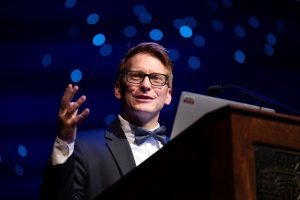
Jacob K. Friefeld speaking at a professional seminar
Blue Ocean: What is something unique you aim to offer through your work, whether through your books, public speaking, teaching, or collaboration with museums?
Jacob K: In my academic work, especially in The First Migrants, I try to connect historical eras that are often taught as separate. We tend to learn U.S. history in neat segments: the Civil War, Reconstruction, and westward expansion. In reality, these processes were happening simultaneously. The end of the Civil War didn’t cleanly give way to Reconstruction, nor did Reconstruction neatly end before westward expansion began. History is messy, and new social and political orders emerge unevenly. My work challenges readers to see these moments as interconnected, while also linking them to the later Great Migration of Black Americans from the South in search of opportunity.
On the public history side, my goal is to meet people where they are. In an era that can feel increasingly anti-intellectual, especially during election cycles, museums remain among the most trusted institutions in American society. That trust creates an opportunity to engage people with challenging history in ways that are accessible, thoughtful, and grounded. If we can use museums to cut through misinformation and foster real conversations, they can become spaces where people learn to talk across differences rather than past one another. At this particularly fraught moment in the nation’s history, that feels more important than ever.
Blue Ocean: In your experience, what qualities separate those who excel in their field from those who don’t?
Jacob K:
Collaboration starts with recognizing that everyone has something to offer. I’ve known people in my line of work who have said that when they walk into a room, they assume they’re the smartest person there. That mindset is not a recipe for meaningful collaboration. Effective collaboration comes from understanding that everyone brings their own experiences and expertise, and that overlapping knowledge is often what makes a project truly successful.
At the heart of the coalition is a very Lincoln-esque idea: you can’t do anything alone. If you try, the result will almost always be less than what you could achieve by bringing people together. Knowing how to work with others, and not assuming you’re always the smartest person in the room, is essential to doing work that actually matters.
Blue Ocean: How do you approach mentoring or guiding students and emerging historians who look up to you?
Jacob K: When it comes to direct mentorship, it starts with understanding people’s current skill sets and where they are. From there, I introduce them to the project and the relevant historiography, then give them something concrete to work on. I strongly believe in learning by doing. I offer guidance on how they might approach a task, let them complete one project, and see how they do. When that goes well, I expand their role and invite them to add their own creative touch.
Even when I have a clear idea of how I might approach an issue, I’ll bring the student into the conversation and let them think it through and come back with their ideas. Sometimes they return with a better solution than I would have had myself, and that’s a good thing.
Moments like that make you feel optimistic about the next generation. Good mentorship means giving students the space to learn by doing, to make mistakes, and not to overreact when those mistakes happen. You rarely learn when everything goes perfectly; most learning happens when something goes slightly wrong.
When I was a graduate student working with undergraduates, I sometimes found myself getting frustrated by their mistakes. It’s easy to become cynical, but over time, I realized that this is actually the most meaningful part of the work. While priorities shift with experience, the project always matters, but what I’ll truly remember is mentoring the student. That’s where the real value is and what I truly love doing.
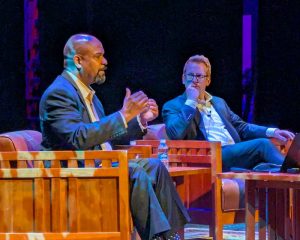
Jacob K. Friefeld in a debate at a recent event
Blue Ocean: What advice would you give to your younger self as you were starting your career in this multifaceted industry?
Jacob K: The modern world conditions us to see our careers as a straight line, introducing ideas like the “dream job.” We often begin our professional lives with that expectation and then feel frustrated when things don’t unfold that way.
I would advise my younger self to be comfortable with uncertainty—something that’s much easier to say after you’ve lived through it.
I’d also encourage myself to walk through the unexpected doors that open, rather than fixating on the ones I assumed would open but didn’t, or didn’t open when I wanted them to. Embracing that uncertainty is really how careers are built. In the long run, it makes you a more well-rounded person and a better scholar.
Blue Ocean: What is something you are most grateful for, either professionally or personally?
Jacob K: My lovely wife, Lauren. We’ve been together since 2015 and got married in 2020. We had one of those COVID weddings that was supposed to have about 200 guests, and instead we had four. Thankfully, we made up for it with a big celebration the following year.
Now we’re expecting our first child on July 9th, which is incredibly exciting.
Blue Ocean: What’s one lesson in life that changed your perspective?
Jacob K: I think I may have a different answer to this question on July 10th, after my first child is born. In the meantime, though, I go back to graduate school. At the time, I saw my career as a straight-line path—master’s degree, PhD, then becoming a professor. I assumed it would be easy.
That changed when I was exposed to the public and the idea that history doesn’t have to live only in academia. It can also be about writing books that reach the public, meeting people where they are, and talking about historical artifacts in ways that connect meaningfully to their lives.
I hadn’t realized that people were truly doing this or going to school to do it. Until I encountered the scholars who were teaching it and practicing it themselves. That experience completely changed how I understood history and ultimately transformed my career, shifting it from a strictly academic track to one that is far more engaged with the public.
Blue Ocean: Is there a particular quote or piece of advice that has guided you through your career?
Jacob K: I’ve always had a close relationship with my dad. He was very involved in local politics and even ran for the state legislature once. He lost that race, but he stayed deeply engaged at the county level. At one point, he turned to me and said, “Sometimes being a bigger fish in a smaller pond—working in your own community—lets you get a lot more done that truly impacts people’s lives than always trying to be a superstar.” That idea stuck with me: Do what you can for your community and move the needle where you are. It should be a goal to leave your community better than you found it.
He told me this when I was in ninth grade, and I still think about it. It comes back to me especially when I’m frustrated, like when my book did well but didn’t get as much traction as I had hoped.
Blue Ocean: What hobbies or interests do you enjoy outside of work?
Jacob K: I played volleyball in high school, and outside of work, my favorite activity is coaching youth middle school volleyball. The team is doing really well, and it’s incredibly gratifying to mentor them, watch them come in with raw skills, and then see those skills improve over time.
Other than coaching, because I moved across the country during my education years, I have friends all over, so I enjoy video gaming in my free time as a way to stay connected with them. I also enjoy writing and have drawers full of unpublished fiction. I write regularly to keep my skills sharp.
Otherwise, I’m usually just spending time with my wife. My wife is deeply involved in community theater, and I love going to watch her perform. This past year, she played Maria in The Sound of Music, and I attended every single show.
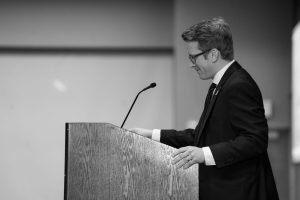
Jacob K. Friefeld speaking on his leadership
Conclusion
Jacob K. Friefeld’s career reflects a deeply human approach to history. From his early fascination with the subject to his leadership at the Center for Lincoln Studies, his work challenges traditional boundaries between academia and the public, reminding us that history is not static or neatly compartmentalized but lived, contested, and deeply interconnected. He embodies a Lincoln-esque belief in coalition building and shared purpose. His reflections underscore a powerful lesson for professionals in any field. As he balances scholarship, public service, and the anticipation of becoming a first-time parent, Friefeld’s story is one of humility, curiosity, energy, and care.
Do you have a personal or professional story that can inspire other people into becoming the best version of themselves?
You are welcome to share your journey with our audience.