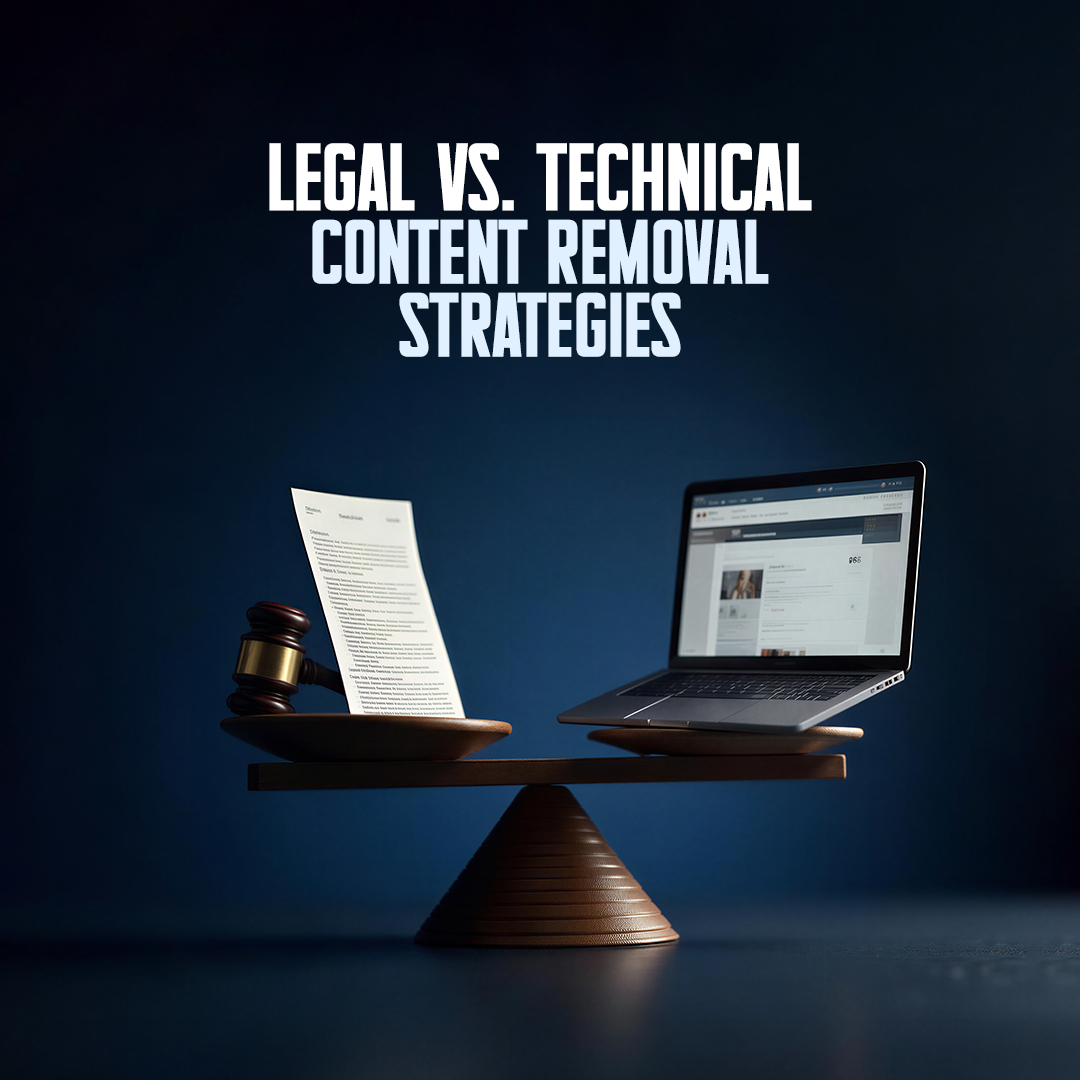
When damaging content surfaces online, the affected individual’s first reaction is to get it down immediately. However, “getting it down” can mean different things depending on the route you take. Generally, there are two ways. Legal strategies, which involve legal rights, regulatory frameworks, platform policy enforcement, and formal notices. Or technical strategies that rely on SEO, de-indexing, and digital suppression techniques. Knowing when to use either one and when to use both usually determines whether a removal effort succeeds or drags on for months.

Image link: Magnific
Legal Strategies: How to Use the Law as Leverage
Legal removal strategies can offer a certain, if longer, path to content removal when they succeed. This is usually done by invoking a specific right or violation that a platform, publisher, or individual is obligated to act on. They include :
Cease and Desist Letters.
This is one of the first steps in removing negative content online. It is done by formally demanding that an author or publisher take down defamatory or false content.
DMCA Takedown Notices
This process involves sending takedown notices to websites to remove copyrighted material, such as photos, documents, or written works, that is reproduced without permission.
Defamation Claims
This requires proving a statement is false and damaging, with a higher bar (“actual malice”) for public figures than private individuals.

Image link: Magnific
Privacy Law Requests
This includes Right to Be Forgotten filings available under GDPR in the EU and UK, which allow individuals to request the removal of outdated or irrelevant personal information

Image link: Magnific
Legal strategies carry real consequences because they ensure accountability. A well-drafted cease-and-desist letter or DMCA notice creates evidence and, in many cases, a legal obligation to respond. However, they also have limits. Unlike the EU, there is no general right to be forgotten in the United States. The First Amendment of the Constitution provides broad protection for constitutionally protected speech that may be reputationally harmful. Legal processes can also be time-consuming. For instance, defamation claims may remain unresolved for months or even years while content continues to circulate.

Image link: Unsplash
Technical Strategies: Effectively Working Around What Can’t Be Removed
Technical strategies do not rely on legal violations or directions. Instead, they work with how search engines and platforms rank. Some core techniques include:
- SEO suppression: publishing authoritative and relevant content to push negative results further down the search page.
- Google de-indexing requests: submitting requests directly to search engines. If accepted, Google can remove a page from search results even when the underlying website refuses to take it down.
- Digital footprint management: building and optimizing professional profiles, websites, and social media so they can rank ahead of damaging content. This proactively shapes what appears when someone is searched before a crisis happens.
- Direct webmaster negotiation: reaching out to the site owner or host to request removal at the source, independent of any legal claim.
Technical strategies are usually the only realistic option when content is accurate but still damaging, when the publisher is anonymous in a jurisdiction with no enforcement reach, or when a legal claim doesn’t apply. The tradeoff is that suppression is not a complete cleanup. The content still exists; it’s just harder to find. For some clients, that’s a meaningful distinction worth being upfront about.

Image link: Unsplash
Why the Best Strategy Is Usually Both
In practice, the strongest content removal outcomes rarely come from choosing one approach over the other. A defamation claim could run in parallel with SEO suppression, so a client’s reputation isn’t determined by how long litigation takes. A DMCA notice may get leaked material removed, but the copies that have already spread to some forum or aggregator site could need de-indexing. Legal action signals seriousness and impels a platform to act where a routine takedown notice would be ignored. In the meantime, technical action manages exposure.
Choosing the right strategy depends on a few important questions:
- Is there an actual legal violation (copyright, defamation, privacy law, platform terms), or is the content simply unflattering?
- Is the publisher identifiable and reachable, or effectively anonymous?
- How urgent is the reputational or financial harm, and can the client wait out a legal timeline?
- Has the content already spread beyond the original source?
Answering these honestly before choosing a strategy is what separates an effective response from a frustrating and unsuccessful one. Content removal is not instant and is hardly ever guaranteed in full. But a blend of legal pressure and technical suppression, applied with the right timing, gives individuals and organizations the best realistic shot at controlling the narrative and limiting lasting damage.