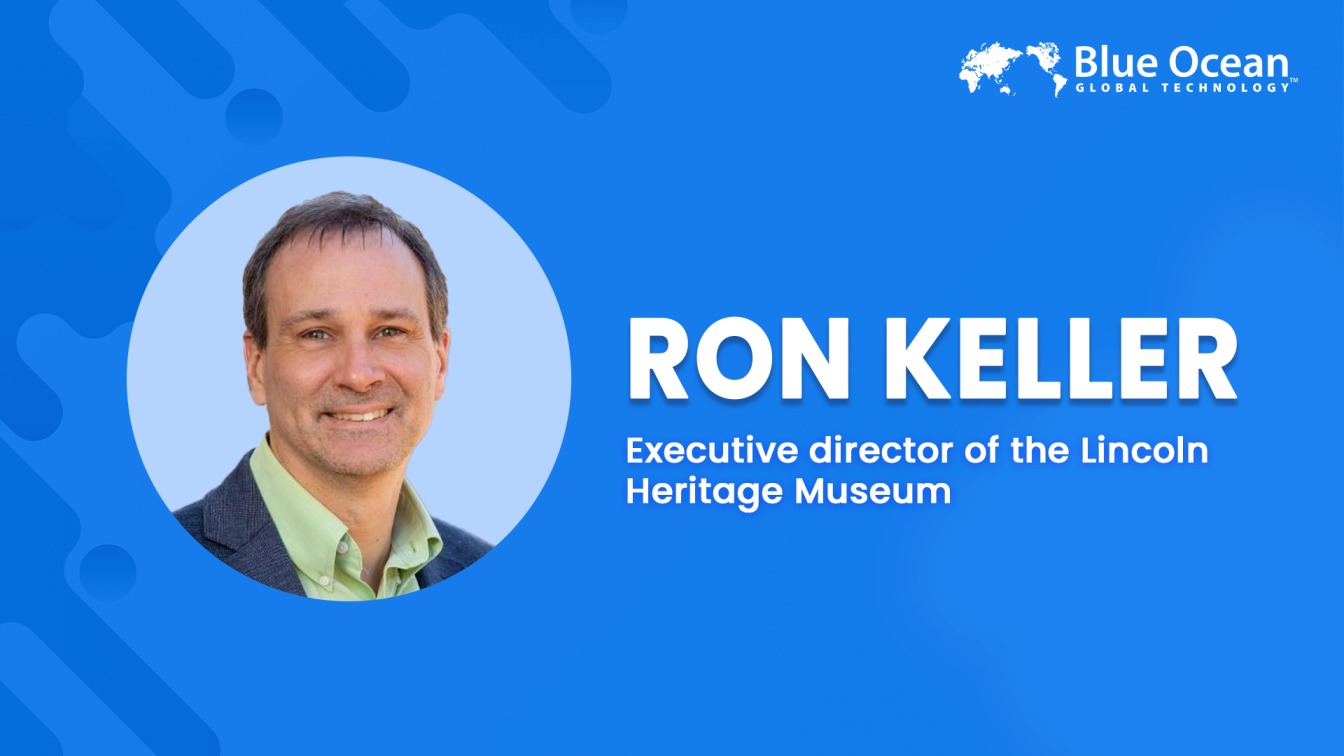
About Ron Keller
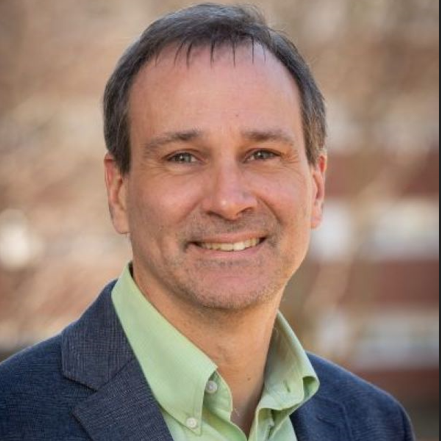
Ron J. Keller is the Executive Director of the renowned Lincoln Heritage Museum. He is a former Assistant Professor of History, College Archivist, and Curator of Special Collections at Illinois College, and served for 20 years as an Associate Professor of History and Political Science at Lincoln College. Keller led the redesign of the Lincoln Heritage Museum, which opened in 2014. He earned an associate degree from Olney Central College, both his bachelor’s and master’s degrees in history from Eastern Illinois University. Keller authored Lincoln in the Illinois Legislature (SIU Press, 2019) and co-authored several books, including A Respect For the Office: Letters From the Presidents (2009) and Abraham Lincoln in Logan County (2010). His essays have also appeared in White House History Journal. He serves on the board of the prestigious Abraham Lincoln Association and has long been active in public service, including a term as alderman on the Lincoln (IL) City Council. Known as a passionate educator, Keller has received numerous teaching awards and was honored with the Order of Lincoln—the highest recognition given for Illinois residents—in 2009. He is a husband and a father to three adult children.
Blue Ocean: Could you tell us about your professional journey—what inspired you to pursue history, education, and museum leadership?
Ron Keller: I’ve always been a historian and educator at heart. My fascination with history began in junior high while reading David Balsiger’s The Lincoln Conspiracy, a book about the tragic assassination of Abraham Lincoln. I later learned it wasn’t entirely accurate, but it sparked a lifelong curiosity about the past.
In high school, a teacher named Dave Thompson noticed my enthusiasm for history and said I should consider teaching. I remember laughing and replying, “Mr. Thompson, no offense, but I know what teachers make—I don’t think I want to be poor the rest of my life!” Life, of course, has a sense of humor. I became a teacher, and I’m grateful he saw something in me before I did.
My path to museum work was unexpected. When I accepted a position as a history instructor at Lincoln College, the president asked if I’d like to direct the college museum. I had no formal training, but I learned through books, mentors, and hands-on experience. It turned out to be one of the most fulfilling decisions of my career.
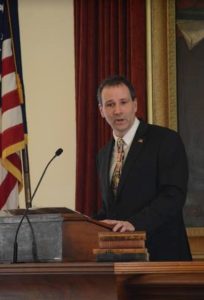
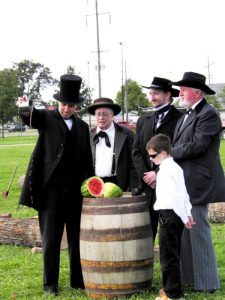
Ron at Old State Capitol – “One of the greatest experiences I have had is being invited to speak at the Old State Capitol in Springfield, where Lincoln himself delivered his House Divided speech in 1858.”
Blue Ocean: What does a typical day look like for you?
Ron Keller: What I love most about museum work is the variety. Every day brings new people from different walks of life, from all areas of the world, from all backgrounds, all with a common curiosity to learn. Sharing history with them and knowing that I am helping to create memorable experiences with them is incredibly rewarding.
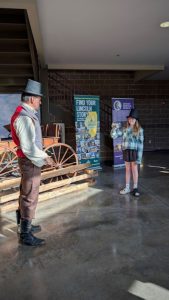
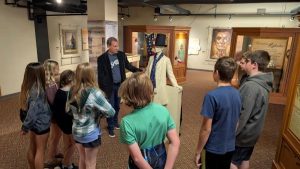
I especially enjoy historical interpretation— portraying historical figures to bring history to life. We can’t literally resurrect these people, but through researching their lives and embodying their stories, we help visitors connect with them on a human level.
Beyond that, my role includes budgeting, exhibit development, artifact conservation, and public outreach. Fielding questions as the local Lincoln “expert” is a pleasure and an honor, and I have been asked about every imaginable thing about Lincoln. As far a typical day, no two days are ever the same, and that’s what keeps it exciting.
Blue Ocean: Which emerging trends in museums, public history, or Lincoln scholarship most excite you today?
Ron Keller: I’m inspired by how museums are reimagining their role as connectors—linking us to the past and also to each other. Public historians possess a vital role in building those connections to a past which matters, enforcing why it still should matter. Whether it’s a history museum, a science museum, or an art museum, our museums all help us understand why things matter: culture, people, and ideas.
One major trend I value is the move toward more inclusive storytelling. Museums today are confronting uncomfortable histories and highlighting the experiences of marginalized and underrepresented groups that were too often left out of traditional narratives.
As an example, when I first visited Monticello years ago, the tour focused mainly on Jefferson’s brilliance, and the beauty of the estate’s architecture, with little mention of slavery. On later visits, that narrative had evolved to be more complete and honest. They now offer specialized tours into the world of slavery on the plantation. That kind of change represents growth and integrity in our field.
Technology is another exciting frontier. Tools like digital engagement and artificial intelligence can feel intimidating to traditionalists. But technology offers incredible opportunities to make history more accessible and interactive.
Blue Ocean: What is something unique you bring to your students, museum visitors, or community partners?
Ron Keller: The Lincoln Heritage Museum has something truly timeless: the legacy of Abraham Lincoln. His story continues to inspire people across generations and cultures. Lincoln is a universally known and loved commodity. He never seems to go out of fashion.
Visitors come to our museum because they’re looking for more than just history. They want to not just learn about, but learn from Lincoln. We are all in our core truth-seekers. We’re drawn to Lincoln’s moral courage, humility, and his belief in equality and humanity. We invite reflection on what it means to lead with integrity and purpose. We want people when they depart our museum to be challenged to replicate the very character attributes which Lincoln forged in himself, so each of us can find the better angels of our nature in ourselves and to help chart a more kind and civil society. If our museum can change lives that way, there is no more noble purpose than that.
That’s what makes our museum stand out. We’re not just preserving artifacts—we’re preserving ideals. Lincoln’s story offers timeless lessons in character and leadership that people continue to connect with. And because of that, I believe the Lincoln Heritage Museum will remain vibrant and relevant for many years to come.
Blue Ocean: How do you approach mentoring or guiding students and young professionals who look up to you?
Ron Keller: I remind students that it’s okay to fail. Failure is how we learn. Thomas Edison is said to have responded to questions about failing many times to invent a light bulb, “I didn’t fail. I just found 10,000 ways that didn’t work.” I love that mindset. Mistakes are “happy accidents,” as Bob Ross would say—they’re teachable moments. Every mistake gives us a chance to fail forward and to learn, adapt, and grow stronger. Don’t fear failure. Embrace it because every misstep is really just a stepping stone toward growth. It builds awareness, resilience, and wisdom.
Abraham Lincoln is an excellent example of that. He failed many times—politically, personally, and professionally—but each setback shaped him into the leader we remember today. His story reminds us that failure isn’t the end; it’s often the beginning of something greater.
Young professionals often feel pressure to have it all figured out, but life rarely follows a straight path. Embrace change, learn from mistakes, and trust the process. That’s how real growth happens.
Blue Ocean: What advice would you give to your younger self as you were starting your career in education and museum work?
Ron Keller: I’d tell my younger self to have a plan but hold it loosely. Be open to change and don’t let unexpected circumstances define you or dictate your reaction to them.
Setbacks and barriers are part of every journey. When you rise above them mentally, you eventually rise above them materially. And often, those challenges turn out to be the best learning experiences of all.
Growth rarely happens in comfort zones. Sometimes life needs to shake us up so we can move forward. If you’re standing still, you’re falling behind. So, if I could speak to my 22-year-old self, I’d simply say: It’s okay. Take life as it comes. You’ll be just fine.
Blue Ocean: What are you most grateful for, either professionally or personally?
Ron Keller: What I’m most grateful for are the people I’ve met along the way. I don’t believe in chance meetings; every encounter has a meaning. Meeting Sameer Somal, for instance, was one of those moments I’d call a divine appointment. We were meant to cross paths. Moments like that remind me that each of us is, in many ways, the sum of every person we meet and every experience we have.
And in the midst of all the noise and hurry of life, it’s important to slow down and live in the moment. There’s a quote from The Office—Andy Bernard, in the final episode, says, “I wish there were a way to know you’re in the good old days before you’ve actually left them.” Too often, we only realize how meaningful a moment was after it’s gone.
My reminder is to be present. Enjoy where you are, the people you’re with, and the experiences you’re having right now. Don’t rush to the next thing. Because these moments, ordinary as they may seem, often turn out to be the ones we’ll look back on and cherish the most.
Blue Ocean: What’s one lesson in life that changed your perspective?
Ron Keller: As an educator, one quote that has always stayed with me is often attributed to William Butler Yeats: “Education is not the filling of a bucket, but the lighting of a fire.” That perfectly captures how I see my role. My goal isn’t to fill students’ minds with everything there is to know. It’s to ignite their curiosity, to spark that fire so they’re inspired to keep learning long after they leave my classroom. Education, at its best, is about awakening that inner drive to discover more.
Another guiding principle for me comes from my faith, Philippians 2:3-4: “Do nothing out of selfish ambition or vain conceit. Rather, in humility, value others above yourselves.” That verse has become a personal mantra. It is my daily reminder to lead with humility, to serve others before myself, and to approach my work and life with a spirit of compassion and respect.
Blue Ocean: Is there a guiding principle, quote, or piece of advice that has influenced your career and life?
Ron Keller: I often look to Abraham Lincoln’s example of humility, empathy, and service. He understood that true leadership was about lifting others. That’s the kind of example I try to follow, both as an educator and as a person.
His call to “appeal to the better angels of our nature” is something I return to often. It reminds us to continually strive toward the best version of ourselves. To rise above anger, ego, or division, and instead lead with empathy, integrity, and understanding.
At our museum, that philosophy guides everything we do. We encourage visitors—especially young people—to reflect on Lincoln’s character and see how his honesty, perseverance, and compassion can inspire their own lives.
Blue Ocean: What hobbies or interests help you maintain a balanced lifestyle outside of work?
Ron Keller: Maintaining balance can be a challenge. Still, I try to stay grounded through my involvement in church activities and by spending time with family and friends. That’s really what gives me a sense of respite from work. It helps me disconnect and recharge.
I also enjoy making honey mead, which is a great hobby and a delicious drink. Music is another outlet for me; playing the guitar is my therapy. It’s how I unwind and express myself. And of course, I try to stay active and in decent physical shape.
Conclusion
Ron Keller’s journey is filled with passion, purpose, and perseverance. What began as a childhood fascination with Abraham Lincoln grew into a lifelong calling to educate, inspire, and preserve history. Through his work at the Lincoln Heritage Museum, he continues to connect people with the past in meaningful, human ways that emphasize empathy, integrity, and truth. Keller reminds us that leadership, like learning, is a lifelong journey of growth.
Do you have a personal or professional story that can inspire other people into becoming the best version of themselves?
You are welcome to share your journey with our audience.