About Dr. Duane Bryant
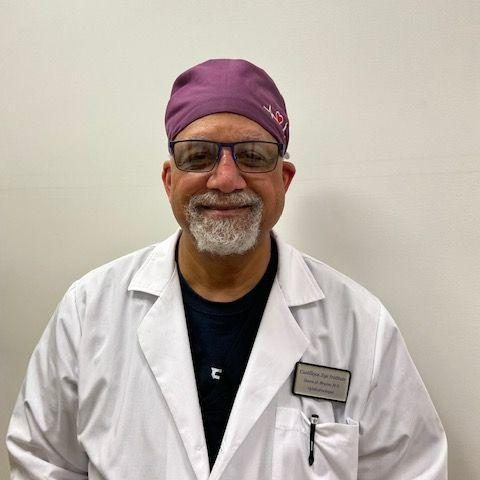
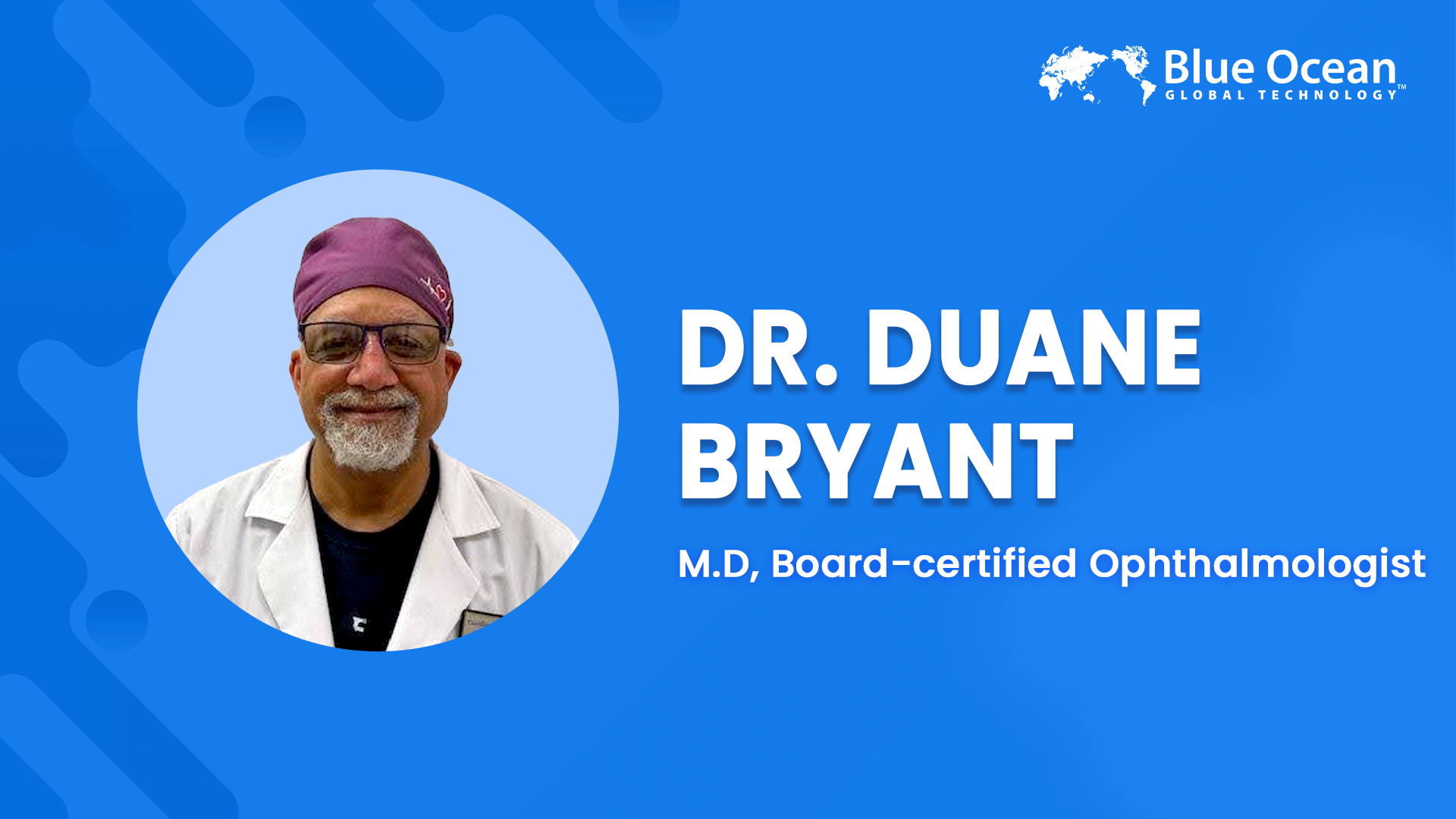
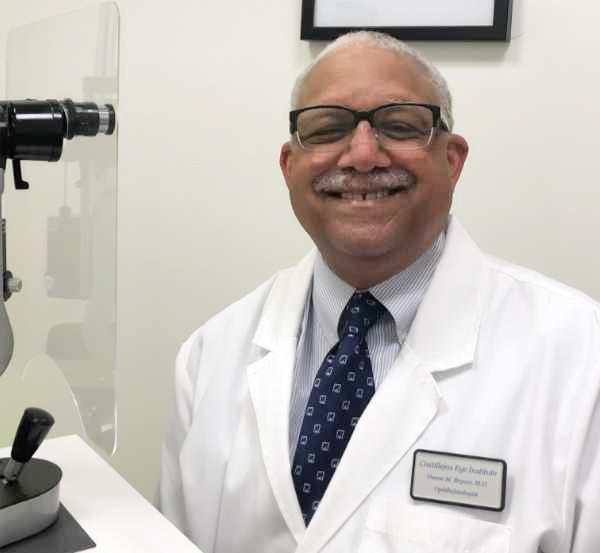
Duane M. Bryant, M.D., a board-certified ophthalmologist, has served the community for over 35 years. His experience includes cataracts, glaucoma, diabetic retinopathy, branch vein occlusion, central retinal vein occlusion, macular degeneration, eye injury, and vision loss/impairment. Surgical experience includes cataracts, glaucoma, laser surgery for glaucoma, laser surgery for diabetic retinopathy, laser surgery for central vein occlusion and branch retinal vein occlusion, macular degeneration, and intra-vitreal injections.
Dr. Bryant also provides expert witness reports and testimony, medical peer reviews, independent medical examinations, impairment ratings, and nexus letters.
He enjoys participating in ministry, teaching, preaching, discipling, mentoring and healing of wounded hearts. Dr. Bryant also enjoys going to the beach, playing Pickleball and spending time with family and friends.
Blue Ocean: Tell us about your professional journey. What inspired you to pursue this career, and what continues to fuel your passion for the profession today?
Dr. Duane Bryant: My path into medicine was influenced by my cousin, who was a few years ahead of me and became an internist. I admired his dedication and decided to follow a similar path. I attended the University of Maryland for both college and medical school.
During my fourth year, while exploring different clinical rotations, I had not yet found a specialty that truly resonated with me. I initially considered psychiatry, but after working on an inpatient ward with severely psychotic patients, I realized it was not the right fit for me long-term. I then took an ophthalmology rotation, where I met Dr. Lois Young, a pediatric ophthalmologist whose passion for her work was contagious. Combined with my interest in technology and instruments, ophthalmology immediately appealed to me.
I was supported through medical school by the U.S. Public Health Service and later completed my internship at a community hospital with an independent ophthalmology program. An unexpected opportunity opened when a candidate withdrew, and I was offered the residency position. It felt like one of those moments of divine timing.
After completing my residency, I began a solo private practice, which I ran for nearly two decades before joining a group practice in Silver Spring, Maryland. Eventually, I moved to Southern California, where I now work with Castillejos Eye Institute in Chula Vista, just south of San Diego. Our group includes four ophthalmologists and three optometrists. Two of my colleagues specialize in medical and surgical retina, one in glaucoma, and I serve as the comprehensive ophthalmologist. I have always had a strong interest in medical retina, and I continue to handle many of those cases today, with the support of my fellowship-trained colleagues.
Looking back, my journey has been shaped by both opportunity and faith. What continues to motivate me is the chance to help patients preserve their vision and improve their quality of life through compassionate, informed care.
Blue Ocean: What does a typical day look like for you?
Dr. Duane Bryant: I usually begin my day around 4:30 a.m. and head to the gym by five, which has been a recent addition to my routine. After returning home, I spend about 30 to 45 minutes in quiet reflection and prayer before preparing for work.
I have been out of the operating room for about 12 years and primarily focus on clinical practice now. My work involves seeing patients with a wide range of eye conditions, performing medical retina procedures such as intravitreal injections, and occasionally conducting minor surgeries. I also supervise several medical optometrists within the practice.
The practice, Castillejos Eye Institute, is led by a brother-sister team. Recently, their niece joined as a glaucoma specialist, which has brought fresh perspectives and updated clinical and management approaches to the group.
We typically conclude the day around 5 p.m. The environment can become quite busy, as we accommodate all patients who visit or are referred for urgent consultations. However, we have a strong support team of technicians, scribes, and administrative staff, which helps maintain efficiency and ensure quality care.
Blue Ocean: Which emerging trends in ophthalmology, surgery, or medical review most excite you?
Dr. Duane Bryant: In ophthalmology, one of the most promising developments is a new laser technology being designed to treat age-related macular degeneration (AMD), specifically the dry type. Unlike the wet form, where abnormal blood vessels grow under the retina, the dry form does not involve new blood vessel membranes but rather the accumulation of deposits known as drusen in the macula, the central part of the retina.
Until now, there have been no effective treatments for dry macular degeneration beyond nutritional supplements and vitamins. This new laser, which is still in the research phase, could potentially change that. It aims to target and reduce drusen before the disease progresses into the wet form or causes retinal atrophy. If successful, this technology could help slow or even reverse early degeneration, offering patients hope where currently there are limited options.
In my experience, one of the most difficult moments as a physician is having to tell a patient that there is nothing more that can be done to preserve their vision. The possibility that this laser could help maintain or improve sight for those patients is incredibly encouraging.
On another front, I am also excited about the growing role of artificial intelligence in expert witness and medical review work. AI tools, such as the platform being developed by Sameer, hold tremendous potential for research efficiency and data analysis. They can quickly access and summarize vast amounts of information, making complex case preparation more streamlined.
That said, AI in healthcare also presents challenges, particularly concerning accuracy and accountability. If an AI system provides incorrect information, determining liability, whether it lies with the physician or the technology provider, remains a gray area. Moreover, the industry currently lacks strong regulatory oversight, which makes caution and verification essential.
Even with those caveats, AI’s potential to enhance medical research and expert analysis is undeniable. For me, both this new laser in ophthalmology and the thoughtful integration of AI into medical work represent the most exciting directions in our field today.
Blue Ocean: Can you walk us through a particularly challenging case—whether surgical or in your work as an expert witness—and explain how you approached it?
Dr. Duane Bryant: One case that stands out was a defense case in a criminal matter, which I do not handle very often. Occasionally, I receive calls from attorneys representing individuals who are incarcerated, but this one was especially unusual and emotionally challenging.
The case involved a gentleman who had a severe corneal condition that left him barely able to see. His vision was so compromised that he could not read print, recognize figures, or clearly perceive objects. Despite this, the district attorney alleged that he had been viewing child pornography.
Our task was to demonstrate that his vision was too poor for him to have possibly viewed the images he was accused of seeing. It was a complex and sensitive case because so much was at stake—this was not about financial damages but about a man’s freedom and future.
When I met him, I learned that he had earned a master’s degree in vocational rehabilitation and was trying to rebuild his life. That human connection deepened my sense of responsibility. I knew that the quality of my evaluation and the clarity of my testimony could directly impact the outcome of his case.
We conducted a detailed independent medical examination and prepared visual aids, including diagrams and photographs of corneal disease, to help the jury understand the extent of his impairment. During the trial, the attorney asked me what I saw when I looked at the patient’s eyes. I answered, but in retrospect, I realized I missed an important point—that his corneas were so cloudy and gray that the natural color of his eyes was completely obscured. It was a simple but powerful observation that could have made an even stronger impression on the jury.
Even so, we ultimately succeeded, and the case ended favorably. The experience reminded me how critical it is, both as a physician and expert witness, to present complex medical facts in a way that is not only accurate but also understandable and meaningful to non-medical audiences.
Blue Ocean: You’ve earned a strong reputation across both clinical and review work. How do you continue to stay ahead in a profession that is constantly evolving?
Dr. Duane Bryant: I’ve always been the one in our practice who advocates for adopting new technology, though I do get some pushback from the senior partners because, understandably, it often comes with additional costs. From a medical perspective, I stay engaged through professional associations such as the American Society of Cataract and Refractive Surgery. It’s an excellent source of updates since I frequently receive referrals related to cataract cases and their complications.
The field also overlaps with retinal and glaucoma issues. The American Academy of Ophthalmology offers a wide range of online learning resources, which makes staying current much easier. I also regularly attend the University of California, San Diego’s virtual Grand Rounds every Monday evening. They usually present challenging or novel cases, which help stimulate clinical thinking and expose me to new perspectives.
Discussions with colleagues, especially younger ophthalmologists entering the field, also help keep me sharp. I have a particular interest in medical retina, though I’m not fellowship-trained in that area. I often consult with our vitreoretinal specialist who has over four decades of experience. She’s incredibly generous with her knowledge and has been a great resource whenever I encounter complex management questions.
On the expert witness side, I initially trained through SEAK programs, which focus on expert witness education. Over time, experience has been the greatest teacher—understanding how attorneys think, what they need, and how to communicate effectively in reports and testimony. I also have a mentor, an ophthalmologist who has been doing expert witness work for about 30 years. I still consult with him on challenging cases, and his insights often help me consider angles I might have missed.
While I probably should take a few more SEAK refresher courses to stay up to date, the fundamentals of testimony, report writing, and case preparation have remained fairly consistent. Of course, it will be interesting to see how artificial intelligence influences these processes going forward, particularly in generating drafts or reports.
Blue Ocean: What core values or principles do you believe every great professional should uphold, regardless of their practice area?
Dr. Duane Bryant: I think the most important thing is to treat people as people—not as numbers or as disease processes. That has become increasingly difficult in today’s medical environment. When I first came out of residency, you could see about twenty patients a day and have the time to build meaningful connections. That’s not the case anymore. The pace is faster, and sometimes it feels like patients are moving through on a conveyor belt.
I have a background in psychology and pastoral counseling, so I value listening to people’s stories. But time limitations make that challenging. In ophthalmology, you can often determine what you need to know from a couple of sentences, but patients may need more time to express those thoughts. If you don’t allow them that space, they leave feeling unheard.
Another challenge is the growing influence of insurance companies and external controls. Years ago, private practices had more freedom to make decisions about treatments, medications, and procedures. Now, those choices are often dictated by what is approved or reimbursed. That makes it harder to provide exactly what patients need.
Still, I try to maintain the approach of treating people as people—listening, encouraging, and treating them the way I would want to be treated. It can be frustrating at times because our performance is measured by numbers rather than patient satisfaction. But I continue to focus on providing genuine care to each person I see.
Blue Ocean: What are some common misconceptions people have about ophthalmology or the role of expert witnesses in medicine?
Dr. Duane Bryant: Most people and patients are unaware of the difference between an optometrist and an ophthalmologist. They’re often unaware of the differences in training, scope of practice, and the kinds of procedures each can perform. That’s probably the most common misconception I encounter.
When I started my residency in ophthalmology, I realized how distinct the eye is from any other system in the body. It’s an incredibly specialized field. What many people also don’t realize is just how resilient the eye can be. Even though it’s composed of delicate soft tissues, it can sustain significant trauma and still recover remarkably well.
People often associate eye injuries or conditions with severe pain and assume that once something happens to the eye, it’s beyond repair. But over the years, I’ve seen some extraordinary recoveries. The eye may look fragile, but it’s a lot tougher than most people think.
Blue Ocean: What distinct value do you bring to your clients, especially when managing complex or high-stakes situations?
Dr. Duane Bryant: When it comes to expert witness work, honesty is essential. You have to tell the truth. At times, attorneys may try to persuade you to say something that benefits their case, but if it’s not accurate, you can’t do that. Being truthful means, you never have to worry about remembering how you may have adjusted or bent an answer.
Another key point is consistency. Attorneys have access to your prior testimony, so if you’ve said one thing in one case and something different in another, that can seriously undermine your credibility.
With experience, I’ve also developed a sense for which cases are viable and which aren’t. Sometimes I review a case and know right away that it’s not going to hold up, and I’ll say so or advise against taking it.
Lastly, I try to be easy to work with. Lawyers often have dozens or even hundreds of cases at once, while I’m focused on just one for them. So, I make a point of being flexible, respectful of their time, and understanding of their workload.
Blue Ocean: How do you maintain emotional and psychological resilience when handling sensitive or high-pressure cases?
Dr. Duane Bryant: I maintain a sense of peace, which primarily comes through prayer, my Christian faith, and fellowship with other Christians. Having quiet time with God settles me. It reassures me that He’s there for me, that He’s faithful, and that He won’t leave me, no matter what situation or circumstances I’m facing. Those reassurances and promises are really helpful.
I also have a mentor I meet with for something called Deep Heart Healing. Most of it deals with things from your past that still affect your present. You may have had an incident long ago, and when something happens now, it triggers that old reaction. Doing that work with him has been really helpful.
In addition, I have a Christian counselor. I think every health professional should have a counselor because we all deal with difficult things. It’s good to be able to vent or tell your story. Usually, the counselor listens and offers something practical about how you might handle situations in the future, what triggers you, or how to manage them.
I was trained as a pastoral counselor myself, though I haven’t practiced, and I’ve found that counseling helps with my own anxiety, which can come up pretty quickly. Lately, I’ve also found that increased physical activity at the gym helps me decompress. I feel better in my body, and there’s a certain confidence that comes with that. It helps release some of the stress that builds up from work.
Those are the main things I do. And outside of that, I really enjoy watching my son coach high school football. He’s 29 now. When he was little, I tried to get him into karate, but he didn’t like it—he wanted to play football instead. He played from Pop Warner through college, and honestly, I don’t think he would’ve gotten through college without football. Now he’s a high school offensive coordinator and gets to call plays. I usually stream his games each week, and I have a great time watching them.
Blue Ocean: What advice would you offer to aspiring professionals entering the profession today or those considering careers in medical review and expert witness work?
Dr. Duane Bryant: For medicine, I would say make sure you choose a specialty that you would do even if you weren’t being paid. Of course, you have to make a living, but that shouldn’t be the driving force. If you’re going to do something for 40 or 50 years, you have to genuinely like and enjoy it.
Also, spend time with people who’ve been in the field for a while—professors or those in private practice. Learn from them and seek their guidance. I think part of the burnout comes from people entering areas of medicine they didn’t truly want to pursue, maybe because they had to, and they end up not enjoying it.
I didn’t have anyone in ophthalmology to guide me early on—no family or close friends in the field—and that made it harder. So, finding mentors is really valuable. Doing a fellowship is also a good idea. When I came along, it wasn’t as common, but now most people do one. It gives you a leg up in terms of employment and enhances the skills you bring to your practice, whether you want to focus on comprehensive ophthalmology or your fellowship specialty.
Medicine today isn’t very holistic—it’s segmented. You go to one doctor for the heart, another for the lungs, ENT, neurology, etc. That’s just how the system works right now. So, it’s helpful to have your own “sandbox”, your area of expertise, where you can focus and build satisfaction in your work.
If medicine moves toward a more holistic approach in the future, that could change things, but for now, specialization is key. For example, as an eye doctor, I’m responsible for just a small part of the body—maybe two cubic inches—and how that interacts with the rest of the body. It’s not always ideal for the patient, but that’s how the system functions today.
Blue Ocean: What hobbies or interests do you enjoy outside of work?
Dr. Duane Bryant: I like to go to the beach. I’m only about 15 minutes from the Pacific Ocean, which is always nice. The water here surprised me, though. I thought it would be warm, like in Bermuda or the Caribbean, but it’s actually cold. Still, I enjoy walking along the beach, watching the birds fly by, and sometimes spotting dolphins.
The gym has also become something I enjoy. I used to dislike it, but I’ve started to like it now. It helps to be around other people doing the same thing. It’s more motivating than trying to work out alone. Pickleball is another sport I enjoy.
Blue Ocean: Is there a guiding principle, philosophy, or quote that has significantly influenced your career and life?
Dr. Duane Bryant: I think the golden rule still holds: love God and love other people as you love yourself. I believe many of us struggle because we don’t love ourselves well, and that affects how we love others.
I also realized later in my career that I’m something of a workaholic—between ophthalmology, expert witness work, and taking classes in completely different fields. There’s a quote I heard in church by N.T. Wright, a New Testament theologian: “It’s only when we slow down our lives that we can catch up with God.” As a workaholic, that’s a real challenge for me—to be still, to sit in silence and solitude. But I think it’s true. God is always available and speaking, but when you’re constantly running, you’re not paying attention.
Over the years, my challenge has been to take time to smell the roses, to look around, see the beauty in the world, and appreciate the uniqueness of every individual. There are billions of people on this planet, and each one is unique. If you don’t take the time to enjoy the people around you and the moments with them, you miss out on a lot.
I also try to meet people where they are. I get a lot of joy from sitting and talking with others, listening to them, and helping them dream about where they want to go or what they want to do. If I can help someone grow, that’s incredibly rewarding for me. I especially enjoy spending time with young people who are still figuring out their paths. I like hearing what they’re thinking about and encouraging them to start somewhere—to take that first step.
Helping others move forward—whether in their life journey or their faith journey—brings me a lot of happiness. And if someone feels stuck, and I can help them get over it, under it, through it, or around it, that’s a wonderful thing.
Conclusion
Dr. Duane Bryant’s career reflects a blend of medical expertise, integrity, and compassion. Guided by faith and a genuine desire to help others, he continues to embrace innovation while staying grounded in honesty and human connection. His journey reminds aspiring professionals to pursue what they love, seek mentors, and always keep people at the heart of their work.
Do you have a personal or professional story that can inspire other people into becoming the best version of themselves?
You are welcome to share your journey with our audience.