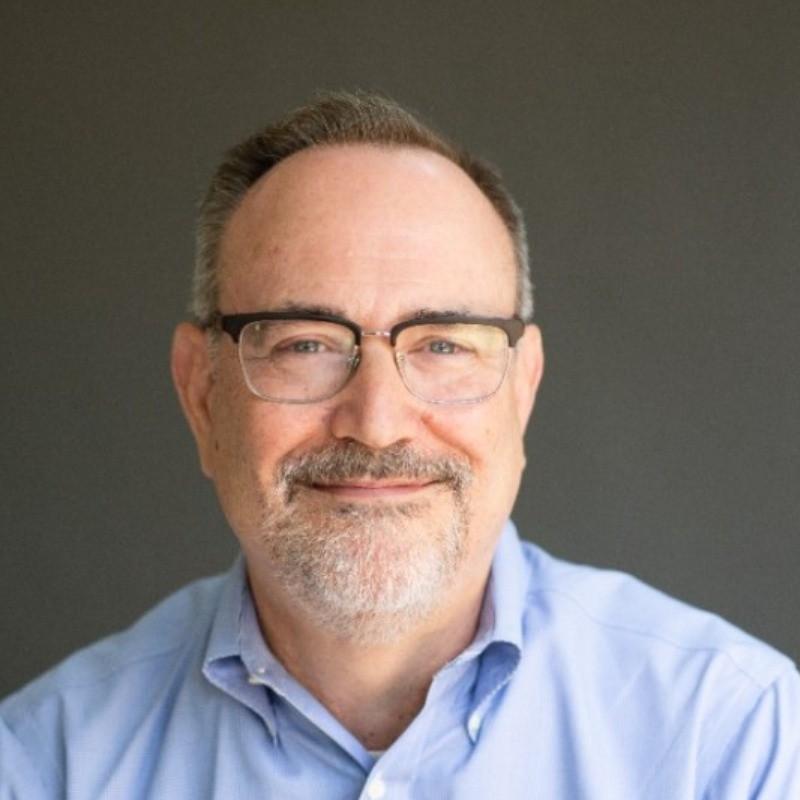
About Dr. Carl Berkowitz
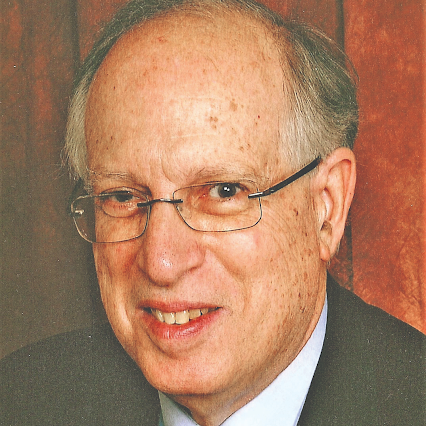
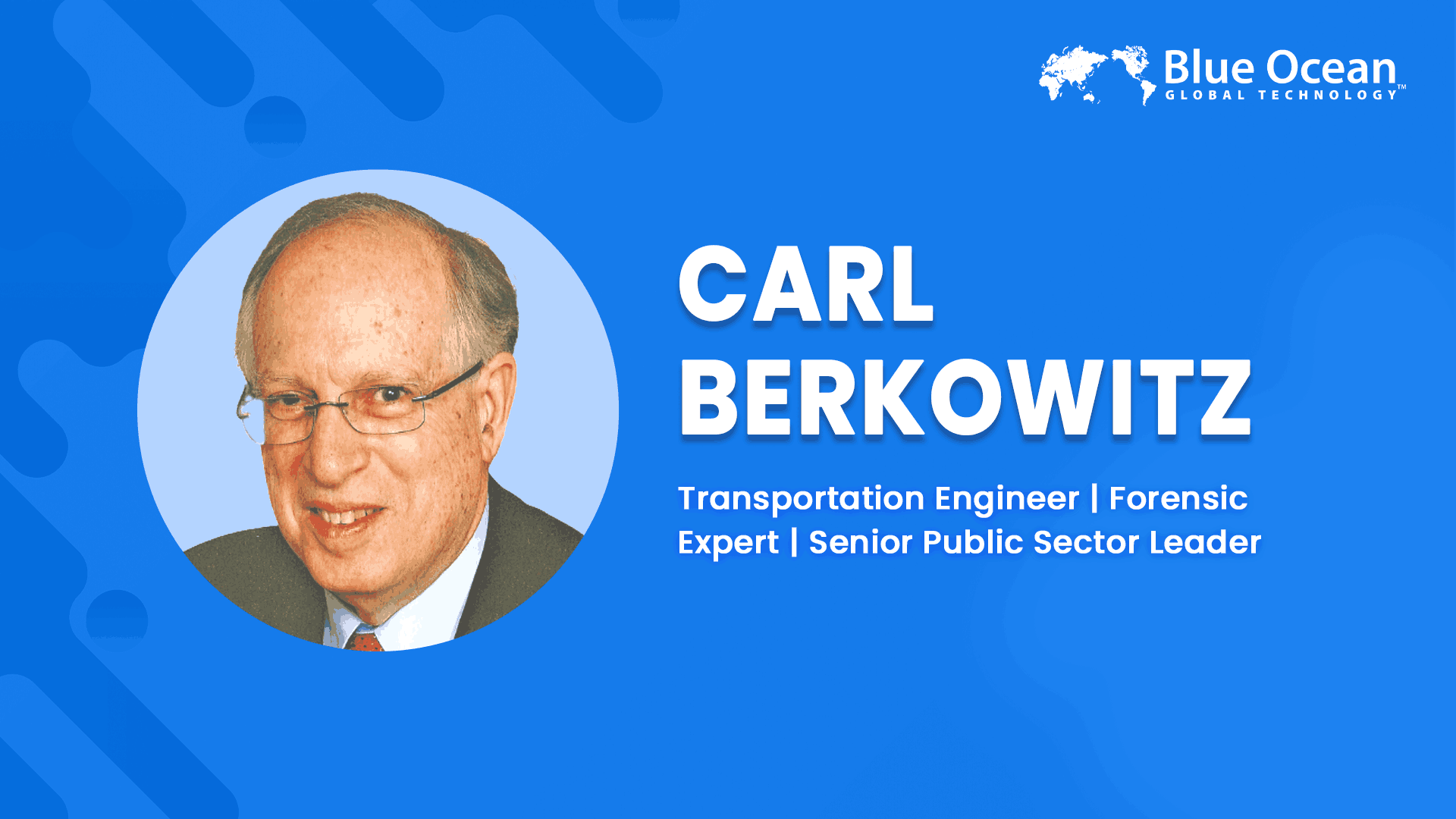
Dr. Carl Berkowitz is a nationally and internationally recognized transportation engineer and forensic expert whose career spans more than six decades. A former senior public sector leader, he has shaped major transportation systems, advised executive government leadership, and contributed to high-stakes litigation involving catastrophic injuries and public safety failures.
He previously served as Transportation Advisor to Nelson Rockefeller, became New York City’s first Director of Transportation Planning, and later led the Staten Island Ferry as Executive Director. He also played a foundational role in the creation of New York City’s bus operations, now part of the MTA Bus.
Beyond the United States, Dr. Berkowitz led the first U.S.-China science and engineering delegation following the Cultural Revolution and has advised governments across Russia, China, Central Asia, and the Middle East on transportation systems and safety standards.
Today, he is widely retained by leading law firms and public entities in complex litigation involving rail, transit, roadway design, commercial vehicles, and regulatory compliance. Known for his rigorous methodology and clarity under oath, Dr. Berkowitz integrates engineering principles, operational realities, and safety standards into opinions that withstand intense legal scrutiny.
“My role is not to advocate—it is to analyze, explain, and let the facts speak clearly.”
Blue Ocean: Tell us about your professional journey. What inspired you to pursue a career in transportation and traffic engineering, and what continues to fuel your passion for the profession today?
Dr. Berkowitz: My career began with a strong foundation in mathematics and science, which led me to civil engineering at the City College of New York. While still a student, I worked with the New York City Transit Authority and trained through the Reserve Officers’ Training Corps in the U.S. Army Corps of Engineers, experiences that immersed me early in large-scale infrastructure and public safety systems.
Through a joint work-study program with the New York State Department of Transportation, I rotated through multiple disciplines, including engineering, planning, land acquisition, and legal, while completing my MBA and later pursuing a Ph.D. This multidisciplinary exposure shaped how I approach complex problems: not in isolation, but as interconnected systems.
My public service career included serving as a transportation advisor to Governor Nelson Rockefeller, where I was involved in major statewide transportation initiatives. I later became New York City’s first Director of Transportation Planning, worked closely with the Mayor’s Office, served as Executive Director of the Staten Island Ferry, and played a key role in consolidating private bus systems into what became MTA Bus.
Beyond government, I have been deeply involved in education and international collaboration, establishing STEM programs, mentoring students, and leading global exchanges. In 1978, I led the first U.S.–China science delegation following the Cultural Revolution and later worked with governments in China, Russia, Central Asia, and the Middle East on transportation systems and policy.
Today, my work as an expert witness reflects the culmination of that experience. I focus on transportation safety, accountability, and standards of care, areas where engineering decisions directly affect human lives.
“Engineering is not just about systems—it is about protecting people. Safety is the highest calling of our profession.”

Blue Ocean: Can you walk us through a particularly challenging case you’ve handled as an expert witness and explain your strategy for resolving it?
Dr. Berkowitz: The most recent case covered by the press that I worked on was from 2018. It involved a 22-year-old woman from Brazil, an architecture student, who fainted on a New York City subway platform, fell onto the tracks, and was struck by a train, resulting in the loss of her arm and leg. It was a tragic event. Our task was to determine responsibility: whether this was truly an unavoidable accident and, if not, who was accountable.
Our strategy focused on two core issues.
First, operator performance. We conducted a detailed stopping-distance and perception-reaction analysis to determine whether the train operator had sufficient time to stop. The evidence showed that he did.
Second, systemic safety responsibility. We expanded the analysis beyond the single incident and examined the long-term data. The subway system had years of documented track intrusions—dozens of fatalities annually, hundreds of severe injuries, and hundreds more near-misses. This was not an isolated occurrence; it reflected a known, recurring hazard.
We also evaluated international standards. Many global transit systems have adopted platform barriers or edge protection to reduce track falls. Those protections were not widely implemented in New York, despite the documented risk.
By combining operational analysis with system-wide safety data, we demonstrated both immediate negligence and broader institutional shortcomings.
The jury found the New York City Transit Authority responsible and awarded $81.7 million in damages. While no verdict can undo catastrophic injury, accountability matters, particularly when known hazards are left unaddressed.
When risks are documented and foreseeable, they cease to be accidents. They become failures of responsibility.
Blue Ocean: What core values or principles do you believe every professional should uphold, regardless of their practice area?
Dr. Berkowitz: The most important principle in any profession, especially one grounded in science, is honesty.
Over the years, I have seen what happens when professionals abandon that principle. In litigation, I often refer to something called post hoc rationalization—starting with a desired conclusion and then reshaping the evidence to support it. That approach is the opposite of science.
Engineers and scientists are trained to follow the scientific method: develop a hypothesis, gather test it, and allow the evidence to lead to a conclusion, not the other way around. When someone begins with the answer and works backward, they are no longer practicing science. They are constructing a narrative.
As an engineer, my obligation is to the facts. The data either supports a position or it does not. If it does not, you adjust your conclusion, and not the reality.
This principle was reinforced early in my life by my father, who was a judge. He told me something I have never forgotten: the truth is easy to remember because it does not change. Facts remain consistent. Fabrications eventually unravel.
Credibility is built over a lifetime and can be lost in a moment. In engineering, truth is not optional.
Blue Ocean: Expert cases and large-scale transportation projects often involve high stakes and tight timelines. How do you maintain focus and resilience under that kind of pressure?
Dr. Berkowitz: I rely on discipline and on the scientific method.
In high-pressure cases, the key is not to improvise. I ground my work in established engineering principles, validated standards, and empirically supported research. If I conduct independent analysis, I clearly identify it as such and never rely on it in isolation. Sound methodology creates stability, even in adversarial environments.
Engineering decisions should never be arbitrary. They must be rooted in science.
In one matter, I examined a long-standing New York City subway standard that allowed a six-inch horizontal and vertical gap between the train and the platform. When I investigated its origin, I discovered it had not been derived from any scientific study. It had simply been selected years earlier without empirical support.
We challenged that standard in court. On appeal, the court agreed that a safety standard must be grounded in scientific evidence, not convenience or assumption. That ruling reinforced an essential principle: when public safety is involved, agencies must be able to demonstrate the analytical basis for their standards.
By comparison, systems I observed in São Paulo and Rio de Janeiro maintained significantly smaller platform gaps. A few inches may appear minor, but in engineering terms, small dimensions can carry substantial safety consequences.
High-stakes work demands clarity. My approach is straightforward: follow the data, apply validated principles, and remain transparent in methodology. When your analysis is grounded in sound science, pressure becomes manageable because the work speaks for itself.
“Standards are not suggestions. If they lack a scientific foundation, they become risks.”

Blue Ocean: What advice would you offer to aspiring professionals entering the profession today?
Dr. Berkowitz: Preparation, transparency, and mastery.
Today, everything is discoverable—your credentials, your prior cases, your published opinions. Nothing remains hidden for long. The only sustainable approach is to know your material thoroughly and stand behind your work with confidence.
Early in my career, I had the privilege of serving as Transportation Advisor to Nelson Rockefeller. He once told me that effective communication comes from mastery, not memorization. That lesson stayed with me, particularly as someone who overcame dyslexia. When you truly understand your subject, you can explain it clearly, calmly, and persuasively.
Young professionals should focus on three things: master your discipline, communicate with clarity, and never compromise your integrity.
If you understand your work deeply, you can explain it simply and defend it confidently.
Conclusion
Dr. Carl Berkowitz’s career reflects a rare combination of technical expertise, public leadership, and ethical standards. From shaping major transportation systems to high-stakes litigation, his work has consistently advanced safety, accountability, and scientific rigor.
His legacy is not defined by projects he has led or the verdicts he has influenced, but by the principle that engineering must always serve the public, grounded in science, guided by ethics, and committed to truth.
“The ultimate measure of our work is not what we build—but how many lives we make safer.”
Do you have a personal or professional story that can inspire other people into becoming the best version of themselves?
You are welcome to share your journey with our audience.