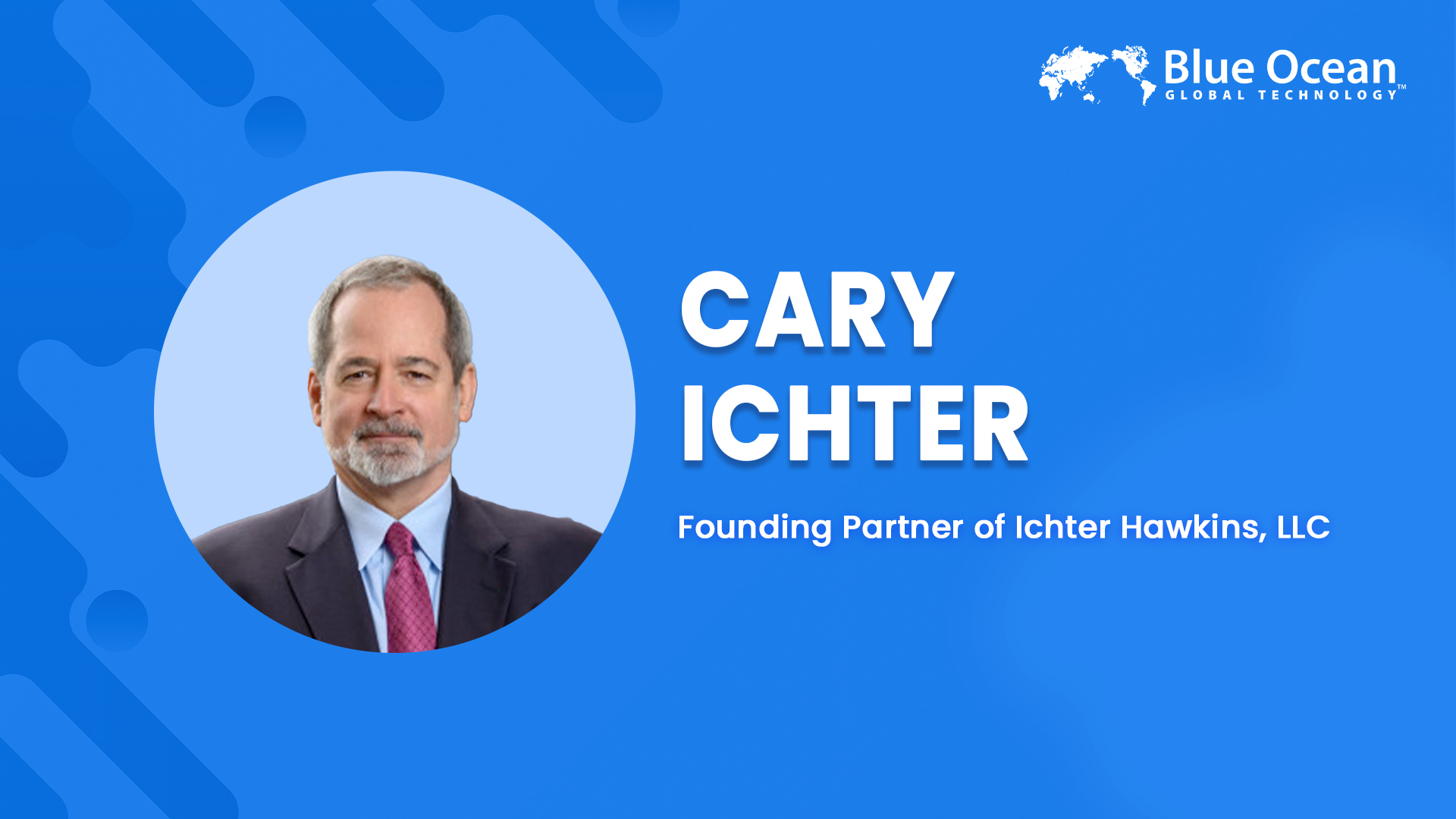
About Cary Ichter:

Cary Ichter is one of Georgia’s most accomplished commercial litigation attorneys, known for his courtroom skill, strategic thinking, and relentless advocacy. A founding partner of Ichter Hawkins LLC in Atlanta, he focuses on complex business disputes, trust and estate litigation, and high-stakes financial cases. Over a distinguished career spanning more than four decades, he has tried more than sixty jury trials and handled disputes involving billions of dollars.
Cary graduated magna cum laude from the University of Georgia School of Law, earning Order of the Coif honors and serving on the editorial board and the managing board of the Georgia Law Review.
He began his legal career at the prestigious Powell Goldstein firm, quickly gaining courtroom experience representing major clients like Delta Air Lines and State Farm. Cary later founded multiple successful law firms that grew rapidly and handled complex national litigation. Ichter has also served as lead counsel in bond validation proceedings exceeding $ 20 billion in the aggregate that financed major economic development projects across Georgia.
Ichter is also a nationally recognized authority on the use of Special Masters in complex litigation, serving as President of the Academy of Court-Appointed Neutrals and the Reporter for the ABA’s Guidelines for the Appointment and Use of Special Masters in State and Federal Courts. In 2025, he received the Tradition of Excellence Award, the top award presented annually by the Litigation Section of the Georgia State Bar.
Blue Ocean: Could you tell us about your professional journey and what initially inspired you to pursue a career in law?
Cary: I guess it all started when I became a high school debater as a junior in high school. And I got kind of hooked on that because it satisfied my intellectual curiosity and my competitive urges.
And before I knew it, I had an offer to go to a small college in Georgia where they gave me a full scholarship to debate, and I spent four years debating.
My partner and I, in my senior year, were ranked number seven in the country. And as a consequence of that, I decided that the best thing to do would be to essentially turn pro and become a trial lawyer.
And I went into law, and that’s how I got started. I was interested in it because I had spent six or seven years of my early life honing my advocacy skills, and it seemed like a good way to use those skills.

Blue ocean: What does a typical day in your professional life look like, and which aspects of your work do you find most rewarding?
Cary: These days, technology has changed the nature of the work that I do so much. I recall that when I started working, which, as it turns out, was in 1984, 42 years ago. I went to work for a large firm called Powell Goldstein, Frazer and Murphy, and the most high-tech thing I had in my life, in my day-to-day arsenal, was a telephone and a Dictaphone. I would pass off dictation tapes to my secretary, who would input them with various codes into a word processing database.
We would get these big computer sheet feed-outs with our documents on them, and we would handwrite in red pen any changes we had to the documents, and they would be finalized by a word processing department. That’s how the world worked.
Today, I work in my own firm. I generally work from home; I generally create my own documents, and we do everything on our own computers. It’s a totally different world, so the normal day has changed remarkably from day one to whatever today is.
These days, I probably have an inventory of 20 to 30 active cases. They vary in size from tens of millions of dollars to six-figure disputes, and I do the things that get them from start to finish, including jury trials and sometimes appeals. I currently have a couple of cases in front of the Georgia Supreme Court, and a case or two in front of the Georgia Court of Appeals. My last jury trial was last February, where we were very successful.
We do arbitrations, mediations, and litigation, and I do all those things. I also do some special master work, which is where judges who have dockets of hundreds of cases will bring in someone who specializes in commercial litigation to assist in managing cases that have become train wrecks because of their complexity, or because one lawyer or the other decides it benefits their client to make things as complex as humanly possible and slow down the outcome of the case.
So the judge, to expedite the process, will appoint what’s called a special master. Special masters are quasi-judicial officers assigned certain responsibilities with respect to managing the case. Generally speaking, when I get involved in a case as a special master, I handle everything going on in the case, from discovery to motions, to motions for summary judgment, to Daubert motions (expert witness motions), and get those decided for the court so the case can move along efficiently. Because of its size and complexity, cases tend to consume a lot of resources and a lot of the court’s time, so to keep things moving, the court gets some help. And that’s what I do as well.
Blue Ocean: Which emerging trends or developments in law most interest you, and how do you see them shaping the future of dispute resolution and trial practice?
Cary: That’s not an uncomplicated question, because things are rapidly changing so much. I’m thinking about tomorrow, and thinking into the future by years, compared to years ago. You know, a day’s worth of changes is like a year’s worth of changes from ten years ago.
Of course, the biggest thing is AI, and how you integrate AI into your practice, how you use it for the benefit of your clients, and how you also use it without ethically stubbing your toe and making mistakes by, for example, what are they called, hallucinations, where you’re citing cases that don’t exist because you found them through AI.
So, I think everybody these days is using AI. You just have to use it very carefully. And getting used to the means by which you do that is probably one of the biggest changes I’ve seen.
The other thing that really kind of concerns me, not something that affects my daily life at all, but I was reading something this morning about how, if the Democrats take over the presidency and the House and the Senate, they’re talking about expanding the size of the Supreme Court, stacking or packing the court.
And that troubles me a lot, because it is, by my way of thinking, a breach of separation of powers, which I think is one of the real strengths of the system that we have here. And the judiciary needs to be non-political, and needs to be separate, and needs to be able to run itself without the interference of the legislature or the executive.
And if we start doing things where we change the composition of the court based upon the content of their decisions, we’re not going to have separation of powers. So that concerns me. But there’s not a lot I can do about that, and that’s not something that intrudes into my daily life.
Blue Ocean: You have appeared in more than fifty jury trials and handled sophisticated disputes across numerous areas of law. What do you believe has been key to your success as a litigator, and how have you continued to evolve throughout your career?
Cary: I would say work on both fronts. We just came out of a holiday weekend, and I worked every day, pretty much full time every day, which does not make for the most well-rounded of individuals.
But the good news is that my wife is a litigation lawyer as well, so she understands, and sometimes she’s worse than I am and works more than I do. And I have to drag her away from a computer in order to get her to pay a little attention to living life.
But, you know, I heard a trial lawyer speaking many years ago at a seminar on trial practice, and he said that the three most important things for a trial lawyer were preparation, preparation, and preparation. And I think that’s true. There’s no substitute for hard work, preparation, knowing your case, being prepared.
And if you stand up in a courtroom in front of a judge and you don’t know what you’re talking about, and it comes through, it’s not only bad news for your client, but it’s embarrassing for you. And I would say perhaps the characteristic in me that drives me the most is an absolute fear of that situation arising, of not being sufficiently prepared—of being embarrassed.
They say that in his day, Cicero was the greatest lawyer in Rome, in all the world. Since he was the greatest lawyer in Rome, he was the greatest lawyer, by definition, in the world. And in his writings, he used to write about his concern for being less than equal to the task of representing his clients—of being sufficiently prepared and qualified to do the work that they deserve.
And I always think about that. I mean, these are people who essentially put their situations, sometimes their whole financial future, into your hands. And if you don’t take it as seriously as they take it, then you shouldn’t be doing it.
Blue Ocean: What is something unique that you bring to your representation of clients, particularly when navigating complex or high-stakes disputes?
Cary: I would say creativity.
One of the things that I think I learned from seven years of debate, and being an advocate before I even got involved in the practice of law, was looking at a problem from just about every possible angle. And sometimes you find the angle that nobody else sees. And in that angle, there’s a solution that is otherwise invisible to others. And I think that’s a unique skill that I bring to the mix.
Blue Ocean: In your experience, what qualities distinguish truly exceptional trial lawyers and advocates from those who are simply technically proficient?
Cary: Well, again, preparation. I mean, there’s a requirement that you have a talent for presentation. And that’s not necessarily inborn. When I stood up in my first debate, I was pathetic. And Michael Jordan did not start as the best basketball player on the court. Those skills are acquired. And it’s true of most things. You may have an innate talent for something that flourishes once it’s tended to, but it’s really rare for people to be Mozart, where at five years old they’re playing symphonies.
But I’d say, more than anything, it’s hard work and preparation that spell the difference between people who are very good at this and people who are merely sufficient.
Blue Ocean: How do you approach mentoring or guiding younger attorneys and other professionals who look to you for advice?
Cary: Not my best skill. I’ve been accused of being a bit of a lone wolf, and I definitely don’t surround myself with large teams. When I have a team, it’s very small. I think the biggest team I’ve ever worked with in a trial is four people, and just one other lawyer.
When I grew up in the practice of law, I worked for a lawyer at a big firm. I went to work, first of all, at one of the largest firms in Atlanta, Georgia, and I fortunately worked for a lawyer who tried cases. In a lot of large firms, they get big cases, and the lawyers, even the partners, really don’t have that much trial experience, because all they work on are big cases, and those mostly get settled. So, lawyers can become litigation partners in large firms without having much trial experience at all.
I fortunately went to work for a lawyer who had probably tried 100 cases. He was somewhat fortunate in that he was working for the firm back when it did insurance work, and that meant you’d get a bunch of small cases, but you’d be constantly going to trial. That experience helps you become adept at the skills necessary to try even the big cases.
The difference between the two is knowing the content and getting yourself acclimated to dealing with large numbers of documents, large numbers of witnesses, and more complex issues. But the skill set that’s necessary to present a case at trial and knowing what to do when you get to trial, that’s a whole different set of skills. And if you haven’t done it, it’s a problem when you get to court, because you don’t know the ropes.
So, my mentor was very good at mentoring by throwing you into the deep end of the pool and yelling, “Swim.” That was his way of teaching. And there’s nothing like learning by doing. That’s probably the best way of doing things: throw someone in the deep end of the pool, but make sure they know how to swim first, make sure they have the tools and understanding necessary to swim, and then throw them in.
Then it becomes a matter of survival. You’re going to swim because you have to. And that will also separate the wheat from the chaff. It will tell you who the people are who are prepared to do the things necessary to do the job the right way, and who are the ones who find themselves having to swim and all they want to do is dog paddle. And then there are the people who get thrown in and want to win the race. Observing how that sorts out, I think, is one good way of mentoring, at least mentoring for success for the mentor.
Blue Ocean: What advice would you give to your younger self as you were beginning your journey as a trial lawyer?
Cary: Don’t do this unless this is what you were made to do. Unless you have the conviction that this is what you were made to do, it will make you unhappy, because you will either not do it right, or it will eat you up.
So, you need to love it. I like going to court. I like representing clients. I like engaging with my clients. I’m one of those weird people who likes doing research and writing. I’m not really crazy about starting a brief; that’s the hardest part. But once I’m in it, and I’m going, and I’m juiced, and I’m writing it, and I’m excited about what I’m writing, and I finish it, and I look at it, usually with pride. Most of the time I’ll get my wife, who’s one of the only people I’ll let touch my writing, to take a look at it. And when she tells me this is really good, then I know I’ve done well.
But you’ve got to make sure that doing this job, and spending a lot of your time doing it, and doing it well, is what makes you happy. Because if it doesn’t make you happy, you’re going to be miserable. I think alcoholism and suicide among lawyers tend to be higher than in most other professions, and I think that’s because people get into this and they’re a square peg that’s been hammered into a round hole, and they just don’t fit.
And so, you have to want to be doing this.
Blue Ocean: What is something you are most grateful for, either professionally or personally, and how has it influenced the attorney, leader, and advocate you have become?
Cary: I’d have to say, for some of the people that I grew up under, I’ve had a couple of people that I would regard as mentors. One of them I hired, but he was the former attorney general of the state of Georgia. His name was Mike Bowers. He came to work with me after I’d been practicing law for, wow, I don’t know, going on 15 to 20 years. He became a partner, and I learned quite a bit from Mike. I was very grateful for the things I learned from him, his willingness to share, and my original mentor.
I would also say that the people who really laid the foundation for everything I ultimately became were two high school teachers of mine. I was not a good student in high school, anything but. But one teacher thought I was bright and asked me what I was interested in, as opposed to what they were serving. I told her I was interested in politics, and she put me in an independent study class, and I just devoured it.
And then there was my debate coach in high school, who was probably my first and most important mentor. Those people really laid the foundation for me, and I’m enormously grateful to them for turning me into who I’ve become. I would say they taught me the importance of giving it your all, being dedicated to your craft, and caring about your reputation and your credibility with your clients, your partners, your industry, and your peers. And I think that if you get to that point, you’ve accomplished a lot and really gotten where you need to be.

Blue Ocean: What is one lesson that significantly changed your perspective on the practice of law or life more broadly?
Cary: I think that one lesson that I learned was from having my own firm and being the managing partner in that firm. And the lesson was that not everybody wants the same things I want, and not everybody is willing to do the things that I’m willing to do to get those things.
I think that when I came into starting a law firm, and being the managing partner, hiring people and managing them, I assumed that everybody wanted essentially the same things. They wanted to be successful, they wanted to be the best, they wanted to be esteemed by their colleagues and esteemed within the practice. And that’s just not the case. Some people just do enough to get by. Frankly, it was a hard lesson, because it meant there were people I had to let go. After all, they did not fit in with the culture I was trying to create.
So it taught me that I had to be more conscious of what people’s aspirations were coming into the practice.
Blue Ocean: Is there a particular quote, philosophy, or piece of advice that has guided you throughout your career?
Cary: Yes. Say what you mean and mean what you say.
Blue Ocean: What hobbies or interests help you recharge and maintain balance outside of your professional life?
Cary: My life is completely out of balance, but I like to read. I’m working on a couple of biographies right now. At some point, I’m going to pick up a musical instrument. My daughter is a musician, and she’s left a guitar here at the house for me to start playing when I can find the time.
Right now, my commitment is to begin to slow down, and I’ve had that commitment for about a year. It’s probably the commitment I’ve failed at most miserably recently. So, I really, really do want to find a hobby other than reading books. I’d love to travel more too. But at this point, it’s reading books, and if I steal away some hours on the weekend, it’ll be to watch a college football game.
Conclusion
Reflecting on more than four decades in the courtroom, Cary Ichter’s story is ultimately one of preparation, curiosity, and staying true to a craft he genuinely loves. From his early days as a high school debater to becoming one of Georgia’s most respected trial lawyers, his journey underscores a simple but powerful truth: success in law, as in life, comes down to hard work, adaptability, and the willingness to keep learning, whether that means mastering a new case or navigating a rapidly changing legal landscape shaped by technology like AI. As he continues to take on complex disputes and mentor the next generation of attorneys, Cary’s legacy is defined not just by his courtroom victories, but by the passion and integrity he brings to every case.
Do you have a personal or professional story that can inspire other people into becoming the best version of themselves?
You are welcome to share your journey with our audience.