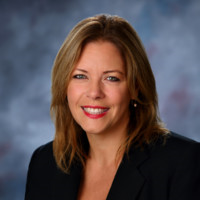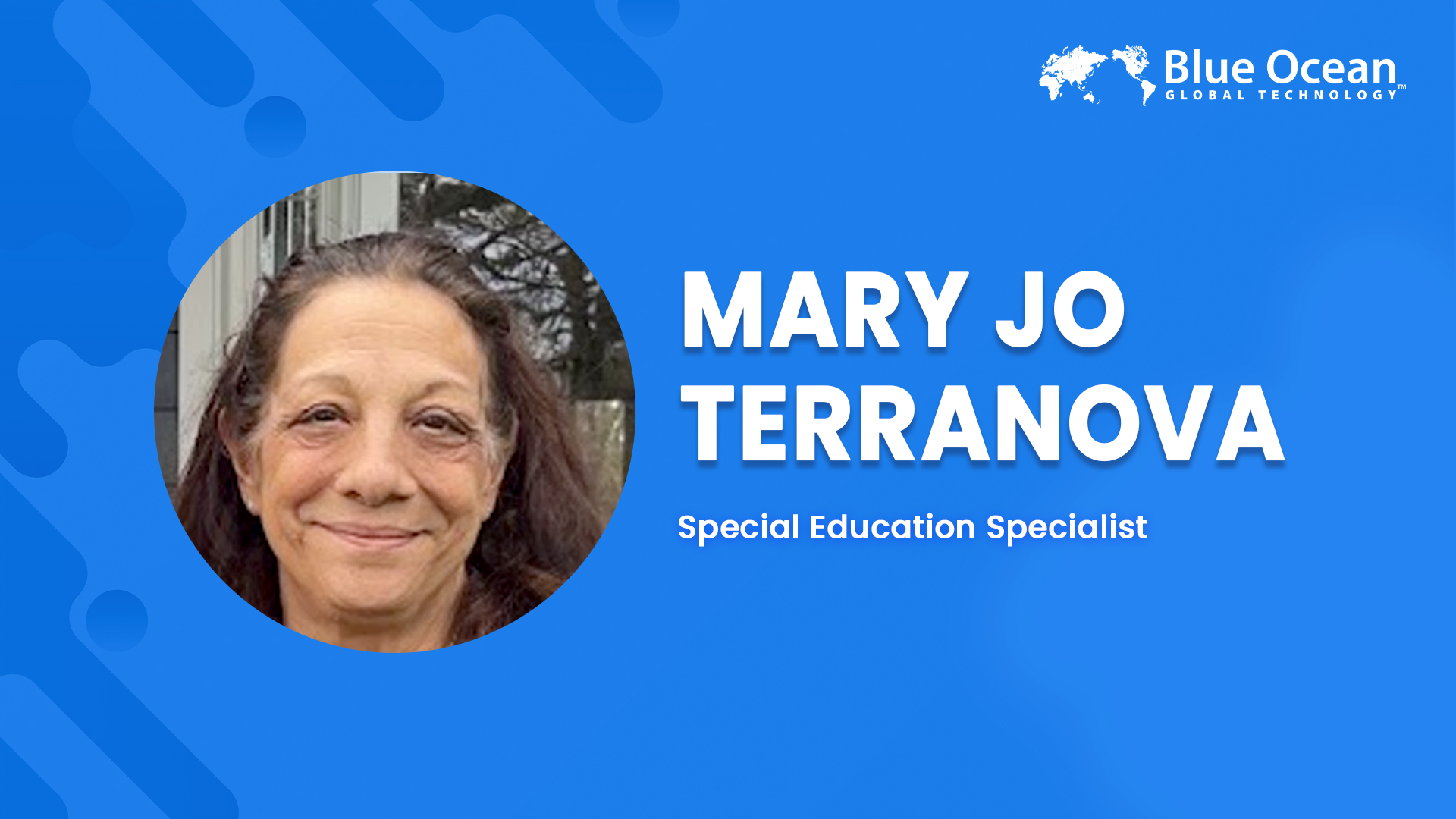
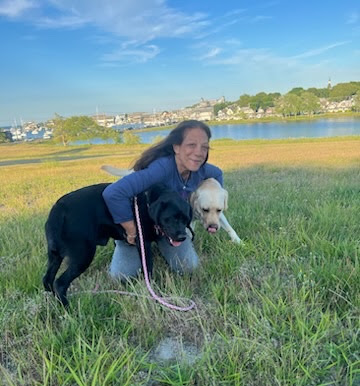
About Mary Jo Terranova:
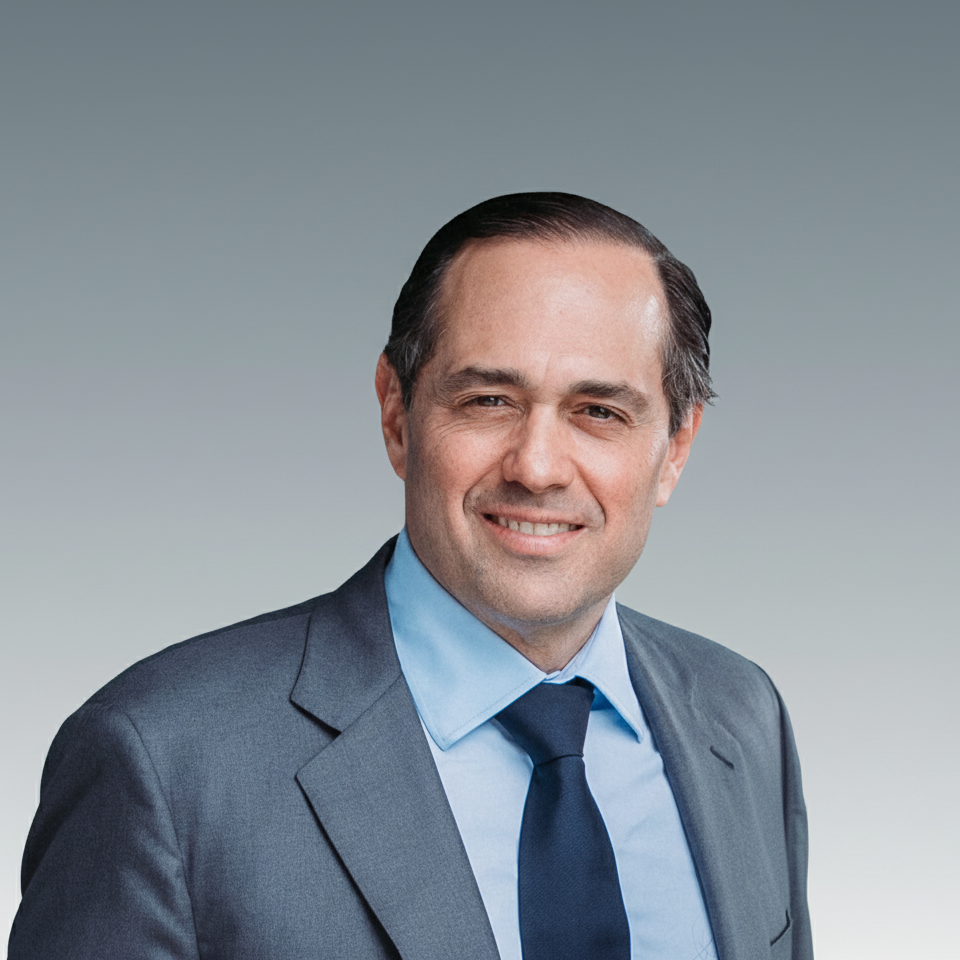
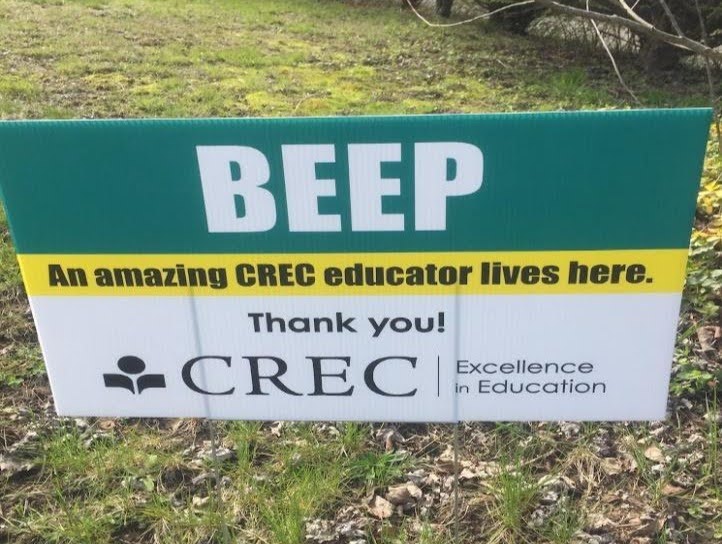
Mary Jo Terranova is an experienced Connecticut educator and special education leader whose four-decade career has spanned classroom teaching, school administration, teacher supervision, and statewide educator development. She spent the final thirteen years of her career as an Education Specialist with the Capitol Region Education Council (CREC). There, she directed an alternative “route to certification” program designed to help address Connecticut’s shortage of special education teachers. Her work has centered on helping educators better understand student behavior and respond to challenges with compassion.
Today, Terranova continues to mentor educators and contribute to the field, drawing on her experience across approximately 75 Connecticut school districts. She advocates for restorative practices, positive behavioral supports, and the thoughtful use of emerging technologies such as artificial intelligence in education. Her approach is grounded in empathy, humility, continuous learning, and a belief that meaningful change begins with understanding others. Outside her professional work, she is an avid hiker, longtime yoga practitioner, and dedicated reader.
Blue Ocean: Could you tell us about your professional journey, what inspired you to pursue a career in education, and what ultimately led you to your role as an Education Specialist with the Capitol Region Education Council (CREC)?
Mary: The most important reason anyone should go into education is a love of children, and that has always been true for me. I graduated from the University of Rhode Island. I took my first teaching job at a private school in Stonington, working with a mixed K-2 classroom, but the position ended after a year since it was structured as an internship. Elementary positions were hard to find at the time, so I went back and earned my certification in special education, which led me to a residential treatment center for children with significant emotional regulation needs. My first real job came at Mitchell Elementary School in Woodbury, Connecticut, where I also met the friends who remain closest to me today. From there, I earned my administrative certification and spent four years as principal of a special education facility serving nonverbal and nonambulatory students, then moved into a supervisory role and returned to teaching as a department chair before a colleague invited me to join CREC. I spent the final thirteen years of my career there as an education specialist, and it turned out to be the role I loved most. I call myself the accidental educator, because so much of this path happened by chance rather than by plan.
Blue Ocean: What does a typical day look like for an education specialist, and what aspects of the role did you find most rewarding?
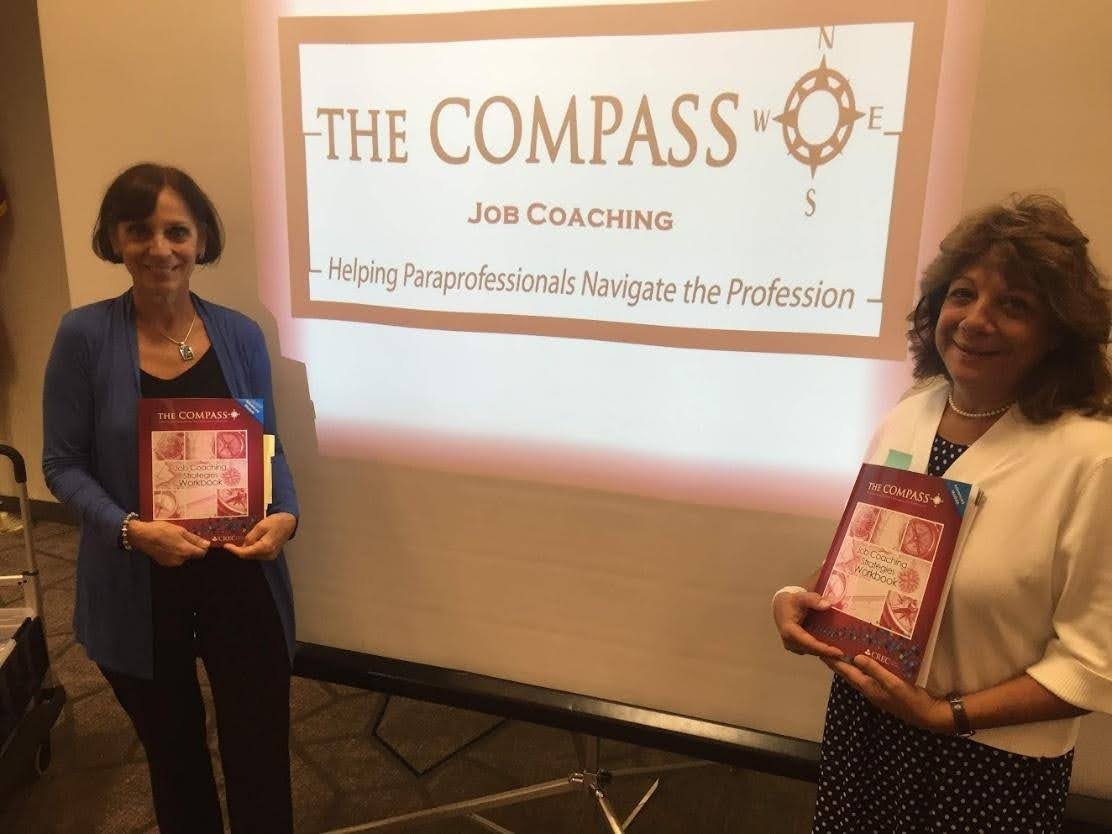
Mary: There was never a typical day, which was part of what I loved about it. One day I might be finishing a presentation I had spent a week preparing, and the next I would be observing a teacher and writing up a report, or coaching someone who was struggling in a specific area like emotional regulation. I am a trained Positive Behavioral Supports and Interventions specialist, and I spent a great deal of time helping teachers understand that a student’s behavior comes from an underlying cause rather than defiance, and that our job is to regulate and teach rather than punish and escalate. My primary role, though, was directing the alternative route to certification program, a cross-endorsement pathway we built starting in 2009 with my colleague Sonia Kunkel to address Connecticut’s shortage of special education teachers. We met with cohorts of working general education teachers over eight Saturday sessions each summer, and watching them go from feeling overwhelmed to confidently supporting their students was, without question, the most rewarding part of my career.
Blue Ocean: Which emerging trends or developments in education most excite you, and how do you see them shaping the way students learn and educators teach?
Mary: Artificial intelligence is a major one, both in how we regulate it and how we teach students to use it constructively rather than fear it, the same way people once feared the internet. I have found real value in AI in my own retired life, and I believe the same will hold in classrooms once teachers are trained to recognize how students are using it. I would also love to see the country move toward universal preschool, which was under discussion during the Biden administration, because reaching children early, especially in underserved rural communities, makes an enormous difference in outcomes. Finally, I am encouraged by the shift away from punishment and toward restorative practices in schools. Understanding that a student who is acting out may be dealing with trauma, exhaustion, or an emotional regulation issue changes the entire approach; that shift toward support rather than punishment is one of the most meaningful changes I have seen in my career.
Blue Ocean: What do you believe has been key to your success in education, and how have you continued to grow and adapt as the needs of students and school communities evolve?
Mary: Compassion and empathy, without question. I come from a large, close-knit Italian family that shaped how I connect with people and read what they need to hear. I also stay current through continuous training and by maintaining close relationships with colleagues at the State Department of Education, since special education laws change every year. I still serve on the state’s paraeducator advisory committee, working to improve conditions for some of the hardest-working and lowest-paid staff in any school district. And I read constantly, fiction and nonfiction alike, which keeps me engaged with new ideas in the field.
Blue Ocean: What is something unique that you bring to your work with students, educators, and the broader school community?
Mary: I would say humility. I know I don’t have every answer, but I know how to find them, and I’m willing to acknowledge when I’m wrong. That openness to being changed by new information, what Carol Dweck calls an open or growth mindset, is something I try to model constantly, because educators who cannot reflect and adjust have a very hard time moving forward. I also bring a love of music, mindfulness, and physical activity into my work, including yoga classes I have started at nearly every school where I have worked.
Blue Ocean: In your experience, what qualities distinguish educators who make a lasting impact on their students and communities?
Mary: An open mindset comes first, because educators who are set in their ways struggle to move forward. Beyond that, it is a willingness to keep learning and to accept feedback without treating it as a threat. When I go into a classroom to observe a teacher, I always tell them I am not there to catch them doing something wrong; I am there to help them grow. Teachers who give students clear, constructive feedback, and those who are simply kind and understanding, are the ones I have seen leave the deepest impression.
Blue Ocean: How do you approach mentoring or supporting students, colleagues, or younger professionals who look to you for guidance?
Mary: I start by listening. I ask people to tell me about themselves and their journey, and then I ask what matters most to them and what they would like to work on. I follow up with a lot of “tell me more,” which pushes me to talk less and listen more, something I have had to work at over the years. I also try to bring humor and honesty into it, including sharing my own early mistakes, like the special education goals and objectives I wrote poorly when I was starting, so people know that growth is part of the process rather than a sign of failure.
Blue Ocean: Looking back, what advice would you give your younger self as you were beginning your career in education?
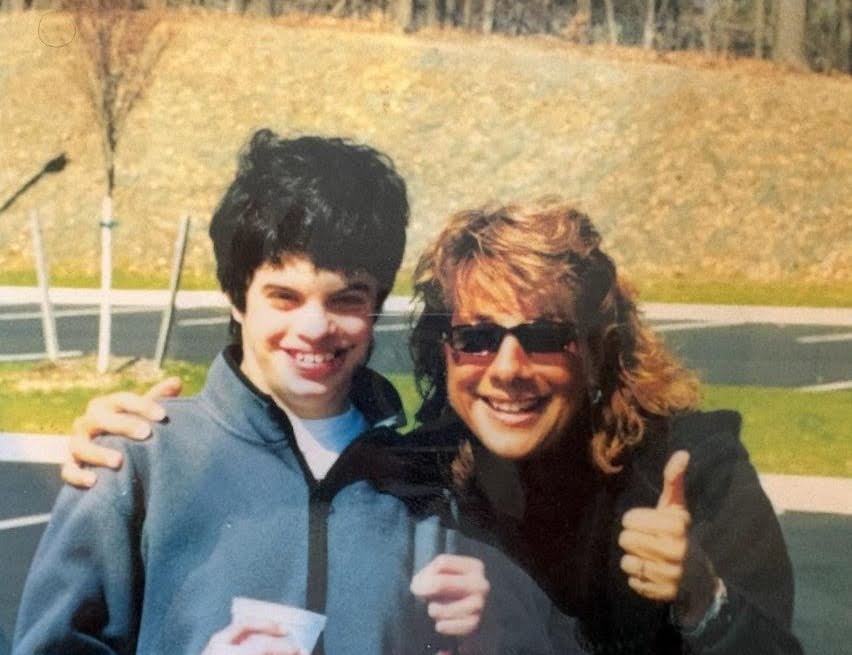
Mary: I would tell her that she is going to be okay, and that she is going to be good at this. I struggled with real insecurity early on, including what people now call imposter syndrome, and there are moments even today when that feeling resurfaces. But former students and mentees from more than a decade ago still call me because they know I will either have the answer or know where to find it, and that has taught me that the difference I hoped to make actually happened.
Blue Ocean: What is something you are most grateful for, either professionally or personally, and how has it influenced the way you approached your work?
Mary: Professionally, it is the people I have worked with, colleagues who share the same commitment to children and the same willingness to collaborate and work hard. Observing teachers in roughly seventy-five districts across Connecticut taught me constantly, often from the very people I was there to coach. Personally, it is my family, including my late husband, who was endlessly supportive, and my father, who told me every day of his life how proud he was of me. I think of the students who do not have that kind of support at home, and that is a great deal of what drives me.
Blue Ocean: What is one lesson, whether learned through your work in education or through life more broadly, that significantly changed your perspective?
Mary: My training as a Positive Behavioral Supports and Interventions specialist was genuinely eye-opening. Learning to ask what function a behavior serves, rather than simply reacting to it, changed how I saw students entirely, because once you understand why a student is acting a certain way, you can actually help them instead of applying a temporary fix. Restorative practices reinforced that same philosophy. More recently, Elena Aguilar’s book “Onward: Cultivating Emotional Resilience in Educators” reshaped how I think about supporting teachers, since we so often pile more responsibility onto struggling teachers when what they actually need is help building resilience before they reach a breaking point.
Blue Ocean: Is there a particular quote, philosophy, or piece of advice that has guided you throughout your career in education?
Mary: Margaret Mead’s line that we should never doubt that a small group of thoughtful, committed citizens can change the world, because it is the only thing that ever has, is one I return to whenever a team starts to lose momentum. I also keep the Prayer of St. Francis close by, particularly the line that it is more important to understand than to be understood, which has shaped how I try to approach people. And I have come to believe, in my own words, that “teaching is an art, but learning is a science”, meaning educators need both the relational skill to engage a student and a real understanding of how that student’s brain actually learns.
Blue Ocean: What hobbies or interests help you recharge and maintain balance outside of your professional life?
Mary: Yoga has been a constant for me. I have started free yoga classes for teachers at nearly every school I have worked in, and I have also brought breathing and mindfulness practices into classrooms for students, which helps far more than people expect once the initial giggling wears off. I am also a serious hiker, and I am planning to walk the roughly five-hundred-mile Camino de Santiago across Spain next year, which I expect to be a meditative and healing experience. And I read constantly, both fiction and nonfiction, which has become one of the great pleasures of my retirement.
Conclusion
Across four decades in Connecticut special education, Mary Jo Terranova has carried the same guiding belief that compassion and an open mindset matter as much as any credential. From the classroom to the principal’s office to building a statewide certification program, she has focused consistently on understanding the reasons behind students’ and teachers’ struggles rather than punishing the symptoms. Now mentoring the next generation of special education teachers, she continues to measure her success the way she always has: the difference made in the child’s life.
Do you have a personal or professional story that can inspire other people into becoming the best version of themselves?
You are welcome to share your journey with our audience.