About Chris Rose:
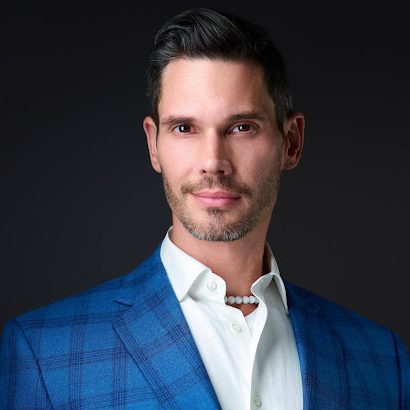
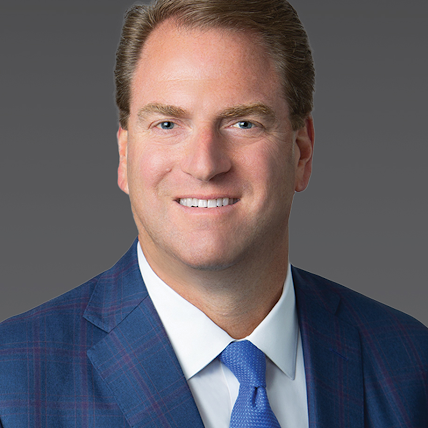
Chris F.N. Rose is an attorney and the founder of LegalFlare, which routes personal-injury leads and referrals to partner law firms under fee-sharing agreements. He is a lawyer by training and a software engineer by practice, and he built LegalFlare around the part of referral work most networks leave to chance: documented fee-sharing, compliance with the rules that govern it, and protection of the client through the handoff from one firm to the next. He works both sides of that line daily — practicing law and running the platform — which keeps the ethical questions concrete rather than academic. His position is that a referral is a transfer of trust, not just a file, and that the paperwork should prove it. And that attorneys require babysitting too.
Blue Ocean: Tell us about your professional journey. What inspired you to become an attorney and ultimately create LegalFlare?
Chris: I had never considered being an attorney.
I went to school in my mid-30s. Initially, I thought I would be a computer engineer, but I took a political science class and did quite well. I enjoyed it, and the professor recommended that I consider going to law school if I wanted to pursue politics. So, at that point, I changed my major, started pursuing political science, and then, immediately after, I became a lobbyist here in Nevada.
There were still a lot of the components of being a lawyer: understanding a topic and advocating on behalf of that. I always thought it would be exciting, like in the movies, where they manipulate everybody and try to change the laws. That definitely happened, but it was like 2% of the time. The other 98% was boring.
I was sitting in committee hearings listening to people talk about budgets or why the school system is terrible. So, after a few years of that, I decided to transition over to sales and marketing because I’m a good advocate, but life is about sales. If you can’t sell your position, you’re not being a good advocate.
I decided to switch over, and while working for a legal services company, the idea occurred to me that I should maybe open my own business and try to systematize legal referrals. So, I decided I would step in and try to clear it all up. It’s like me going into an old garage that no one has been in for a while, turning on the lights, stomping on all the roaches, and cleaning out everything.
It’s exciting to be figuring something out. I’m addressing a problem that not a lot of other people are tackling right now. So, every day is me thinking about something and having to learn something.
And especially as a business owner, I never knew anything about finances. I never knew how to make projections or model the value of my case portfolio. So, I’m having to learn all of that.
Blue Ocean: What does a typical day look like as the founder of LegalFlare?
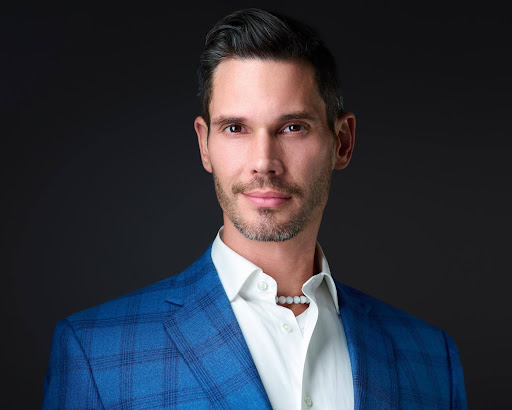
Chris: A typical day is me just sitting here in my office. I talk to robots all day. I do a lot of software engineering now so that I can create my business, my system, and solve problems.
It’s probably 10 hours a day writing software and two hours a day taking meetings. Occasionally, I go to conferences, but that’s not as much as I’d like anymore.
So, a year ago, I didn’t know anything about software engineering or computer design or anything like that. But then suddenly, AI got to the point where now we can create everything.
And I knew I needed to begin building something. I tried to find people to do it, but they all wanted to charge me like my firstborn, and it’s ridiculous. And if they build something for me, then I’m going to be dependent on them forever.
I had been talking to ChatGPT regularly, but nothing serious, just kind of vibing. And that’s when it occurred to me to ask, “Hey, I have this idea. Is there any way I can make this happen and bring this to fruition?”
Slowly, ChatGPT started giving me ideas and saying, “Consider this,” and “Let me teach you about that.” And then, over the past year, it has just accelerated so quickly that now, instead of Claude Code telling me, “Go do this, write this, copy and paste this,” I’m more of a system architect.
I tell Claude what to do, and Claude goes and then brings it back to me. Then I review it and say, “Yes, this is good,” or, “No, it’s not good.” So, we kind of go back and forth.
I’ve created my own software, so I have a user interface, a backend database, a semantic layer, and a case portal. I do all of my own marketing on my website.
So, like a year ago, this would have taken me about 15 people, but now it’s myself, one part-time employee, and my cat, Brady.

Blue Ocean: Which emerging trends in the legal profession and legal referral do you find most significant?
Chris: AI is the emerging trend. It sits on top of everything. If you’re not thinking about AI, then what are you doing?
The biggest thing, and people don’t really think about this, but everyone is kind of thinking, especially in the legal industry, about how AI is coming for my job or how can I get AI to do my job? But the real question should be: How can I use AI to build solutions for me?
Not to do this for me, but to help me do this better or quicker. Some people get it, and other people don’t. But it’s just like cars. Eventually, nobody’s going to know how to take care of your horse anymore. So, learn to drive.
Blue Ocean: Can you walk us through a particular client transition you’ve managed, and explain the strategy you put in place to achieve a successful outcome?
Chris: Originally, my idea was that I would help consumers, regular clients, find better lawyers because everybody is always asking, “Hey, do you know a lawyer?” I was constantly getting these messages on social media.
So, I thought I would market to consumers, but that was tough. I felt like everybody was sitting on top of me.
One day, a lawyer who was connected to me through a friend called me up and said, “Hey, I hear you help people find lawyers. I need to refer these cases out to other lawyers. Do you do that?”
And I said, “Absolutely, I do that. I do that all the time.”
I’d never done that before. But, you know, that’s part of business. It’s just saying, “Yeah, no problem. I can do it.” And in my head, I’m thinking, “Oh, man. I’ve got to figure this out.”
But I started doing it, and I just kept pulling on those threads and kept finding that every time I solved a problem, I found two more problems. And that’s kind of how I knew I was on the right track, because there are so many problems to be solved.
If there are no problems to be solved, you’re in a dead end.
And so, that person was telling me that they didn’t have time to find lawyers, try to get them to take the cases, exchange all of the information, follow up, make sure that they were treating the clients well, or see when they would pay on those referrals.
And I said, “I’ll do all that for you.”
Thus, I just started building that job, and other people started hearing about this and started asking me to do this for them as well.
Suddenly, I have a business where we’re moving hundreds of cases a month, and it’s just kind of how it evolves.
Blue Ocean: Having worked closely with attorneys and referral networks, what core principles should every lawyer uphold?
Chris: Sign the client first. That’s the biggest thing. Your business could be the greatest in the world. You could be solving all of the world’s problems, and it doesn’t matter if nobody is talking to you. If you’re not going out there and getting people to engage with your business, it doesn’t matter.
And so many lawyers focus on lawyering and not on the business, like signing the clients and making sure that they’re talking to the clients, because it’s all service.
I love Rory Sutherland. He talks about how, in London, people were pissed off that the trains were so slow. They’re waiting for the London Underground, and they have to wait forever for these trains to come through.
So, they spent like a billion dollars trying to make the trains faster. And they cut the time; it was like seven minutes, and now it’s five minutes. And they’re saying, “That’s a huge reduction.” And people were still saying, “These trains take forever. I hate this.”
And someone had the bright idea of saying, instead of trying to make the trains get here faster, why don’t we just put a sign that says how many minutes until the next train? Then people are like, “Ah, okay, the train is on its way.”
Because if you don’t know what to expect, if you don’t know that the train is coming, that train might as well not exist until it gets there. That train is never coming.
And it’s that communication that people find reassuring. It’s saying, “Yes, I’m still here.” Understanding that you have to go out and get these people and then hold on to them.
Therefore, I would tell most lawyers to focus less on practicing and more on servicing.
Blue Ocean: What unique value does LegalFlare bring to attorneys and clients compared to traditional referral networks or technology-driven legal marketplaces?
Chris: What I do is add efficiency and accountability. I monitor the performance of all of my firms. And who is really doing that, and how are they doing that?
Right now, we have Yelp reviews, which are good, but they’re clients saying, “This firm did this for me,” and sometimes the clients are wrong, and sometimes they’re right. So, we’re kind of crowdsourcing that from the service and the experience, but not necessarily the expertise.
What my system does is track all of the data so that I can look at it, file reports on all of these firms, and then measure them against each other. That way, the firms that are the best-performing get prioritized in my system.
So, the potential clients who come to me, who are referred by other law firms, don’t know it, but they’re getting some of the best service. They’re getting some of the best attorneys calling them because I’m the one who’s figuring out who’s good.
It’s funny; it’s probably the most thankless thing I do. They have no idea that I’m actually looking out for them.
And what I do for the great attorneys, I bring them more work, more business. And for the ones that aren’t so great, I hold them accountable.
Just last week, I had to kick a firm out of my network. They were good at signing cases, but they were not good at talking to clients or interacting with me or my team. And I recognized that the absence of respect was pervasive within the firm.
Despite the fact that they were good for business, they were not good overall for long-term business. And so, I had a meeting and said, “Hey, I’m replacing you. This is unacceptable, and so you’re out.”
And that’s what firms are being held accountable for now. No one is really able to do that.
Blue Ocean: Your work often involves helping attorneys navigate high-stakes ethical and professional responsibility issues. How do you maintain accountability, objectivity, and trust?
Chris: I’m all carrots, no sticks. I can’t go into these firms and fire the attorneys. All I can do is say, “I have a supply. You have the demand. I need you to perform up to my standards, or I’m going to cut off the supply.”
And that’s what I do.
I’m actually refining my system right now so that I can be better about communicating my expectations and standards. Right now, it’s based on interactions, and I can show them numbers, but I’m refining my system so that it all condenses down into a few specific metrics. That way, they can see what’s important, what’s a priority, and how they measure against other firms.
But other firms are constantly coming back to me and asking, “Hey, how can we do better? What does it look like compared to all of your other firms? And where do you see the best areas for improvement?”
And I love that. The fact that they ask that is incredible.
So, in many ways, I help them improve their processes and systems. I can spot their blind spots, and they get more carrots. They get more cases.
But believe me, I’d love to take a few sticks to a few people.
Blue Ocean: What advice would you give to young attorneys or new entrepreneurs?
Chris: To young attorneys, I would tell them: you only have to do what you want to do.
In law school, they didn’t teach us about being attorneys. It was all theory, which was good. They taught us how to think like attorneys and how to cry like attorneys. It was tough. But I didn’t come out of there knowing how to run a case. I didn’t come out knowing how to do anything.
There was really this mindset that you come out, and everybody fights for these top jobs, and then everybody comes out of law school, and everybody’s ranked into their slots.
And I’ve always felt that, and it was hard for me to kind of push that away. But you don’t have to be a lawyer.
Being a lawyer allows so many things. It’s like a secret handshake. I tell people I’m a lawyer, and suddenly, I get instant respect. People want to work with me, want to be around me.
And that’s great. I think just using it to be a lawyer, if that’s what people want to do, fantastic. Do what you love.
But if you don’t love being a lawyer, you don’t have to be a lawyer. There’s a whole world of other things you can do and be good at.
Blue Ocean: Is there a guiding principle or professional philosophy that has shaped both your career and the way you built LegalFlare?
Chris: At my heart, I’m a capitalist. I really believe that efficiency and good business practices, playing for the long game, benefit everybody. Power does aggregate.
But I don’t want to say “be nice to people” because I’m not. I would say, “Be kind to people.”
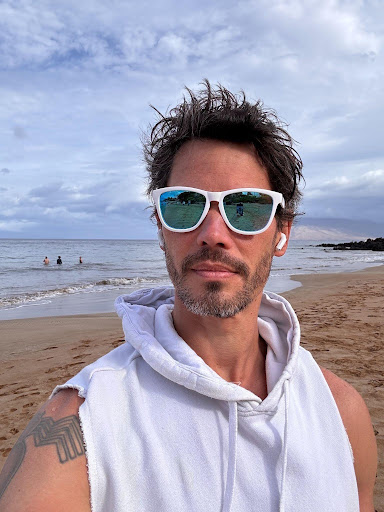
On my LinkedIn profile, it literally says, “Authentic”. That is who I am.
So, if you just embrace whatever makes you the most comfortable and confident, and those are the things that allow you to create your best work product, your best self, that’s what I would say.
Find who you truly are and just follow it all the way down.
When I first was in law school, I would wear a suit and tie to school every day, while other kids were in jeans and a T-shirt or something, and flip-flops. So, I was trying to be very professional, and little by little, it just began to wear on me.
I realized that every day was Halloween. I’m dressing up. I’m cosplaying. And it got to a point where I broke, and kind of had a breakdown. And then that’s when I decided, “This ain’t worth it.”
I’d rather be happy and authentic. And if people don’t really like that, there are some things I can do about it, but in the end, it’s okay to not be liked by everybody. You just have to be liked by yourself.
Blue Ocean: What hobbies or personal interests help you recharge and maintain balance?
Chris: I love to dance. I live to dance. If I’m not working, I’m dancing.
I track in my calendar where my favorite DJs are performing in town because I live in Las Vegas.
Every weekend, I’m either at a pool party or at a nightclub. I’m extroverted, and I recharge by being around people. So, it’s very taxing for me to spend all this time in my closet of solitude on my workdays.
On the weekends, I have to get out and just be around people and dance.

Conclusion
Chris Rose’s journey reflects an authentic approach to both law and entrepreneurship. From lobbying to building LegalFlare, his career has been shaped by a willingness to identify inefficiencies, learn new skills, and challenge traditional ways of doing business. That mindset ultimately led him to develop a referral platform centered on efficiency, accountability, and measurable performance to create better outcomes for attorneys and the clients they serve. His embrace of artificial intelligence illustrates how attorneys and entrepreneurs can use emerging technology to automate existing work and to build entirely new solutions and business models. For Rose, building a successful business is ultimately about solving meaningful problems, continuing to learn, treating people with kindness, and having the confidence to follow an unconventional path.
Do you have a personal or professional story that can inspire other people into becoming the best version of themselves?
You are welcome to share your journey with our audience.