About Paul Genender:
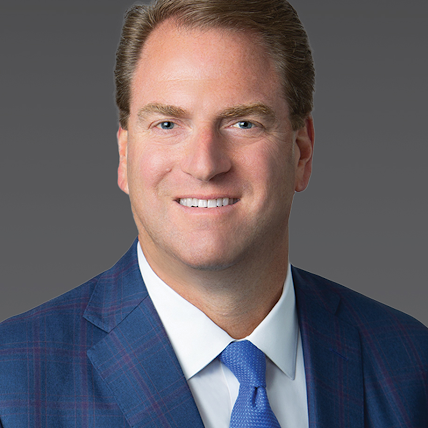
Paul R. Genender is an accomplished trial lawyer and litigation leader who serves as co-chair of the Complex Litigation & Arbitration practice, chair of the Texas Commercial Litigation practice, and co-chair of the Dallas office at Paul Hastings. He represents plaintiffs, defendants, debtors, and creditors in high-stakes business disputes, including antitrust, commercial fraud, breach of contract, breach of fiduciary duty, securities fraud, trade secret, unfair competition, and restructuring litigation. In addition to his litigation practice, he advises clients on antitrust compliance, corporate governance, fiduciary duties, and dispute resolution strategies.
Recognized as one of Texas’s leading commercial litigators, Paul has earned consistent rankings from Chambers USA, Law360, The Legal 500, Best Lawyers in America, and Texas Super Lawyers for his courtroom advocacy and strategic legal counsel. Beyond his practice, he has held numerous leadership roles in legal, educational, and civic organizations, has an extensive record of pro bono service, and is widely recognized for his contributions to the legal profession and community. He earned both his undergraduate and law degrees from Duke University, where he graduated magna cum laude and later served in leadership roles supporting the law school.
Blue Ocean: Can you walk us through your professional journey in law? What initially drew you to this path, and what continues to drive your passion today?
Paul: My family is from Canada, specifically Quebec, so I spent my early childhood in suburban Montreal. The summer before third grade, we moved to Dallas, which is where I ultimately grew up. I later attended both college and law school at Duke University in North Carolina before returning to Dallas in 1994.
During law school and through internships at various firms, I had the opportunity to explore different areas of practice. It became clear early on that I enjoyed trial work and litigation. Litigation has been the focus of my career for nearly 32 years.
I would divide my professional journey into four distinct chapters. The first eight-plus years of my career were spent at a prominent Dallas trial firm, Strasburger & Price. I joined as a brand-new lawyer and remained there through my promotion to partner. It was an incredible foundation. I worked alongside exceptional trial lawyers, tried several cases, and received outstanding training that shaped me both professionally and personally.
In the fall of 2002, nine months after becoming a partner, I moved to another outstanding Dallas-based regional firm, Hughes & Luce, which later merged into an international firm in January 2008. I was a partner there from 2002 through early 2016. That transition was another meaningful step in my development, allowing me to expand my practice, try additional cases, and continue growing as both a lawyer and a professional.
In early 2016, I had the opportunity to join Weil, Gotshal & Manges and help rebuild its litigation practice in Dallas. I spent nearly eight years there building a strong litigation team in Texas and leading that group throughout my tenure. During that period, I handled a substantial amount of commercial litigation and restructuring-related litigation involving some of the largest bankruptcies in the United States. I represented companies in major matters, including the bankruptcies of Sears, J.Crew, Exide, Speedcast, CHC Group, and Chuck E. Cheese, along with several major energy-sector restructurings (EP Energy, Fieldwood Energy, Talen Energy, and others).
The work became especially intense during 2020 and 2021, during the COVID years. In 2020 alone, I handled litigation related to eight separate restructurings within a single calendar year. It was an extraordinarily demanding period and, at times, nonstop. Still, it was a tremendous experience with meaningful opportunities and complex work.
In September 2023, I joined my current, and what I expect will be my final firm, Paul Hastings, to help expand its Texas practices. At the time, the firm had a small Houston office but had not yet established a Dallas presence. Because a substantial portion of my practice already involved Houston matters, the move felt like a natural fit.
Six months later, as part of our strategic growth efforts, we recruited additional lawyers and officially launched the Dallas office in March 2024. For over a year, I co-chaired both the Dallas and Houston offices, and I now serve as co-chair of Dallas. The growth has been exciting, as we now have approximately 45 lawyers in Dallas and nearly 100 across Texas.
Looking back, my career path has always centered on the same core motivation: I genuinely enjoy representing clients in disputes, especially complex disputes, and helping solve difficult problems, whether in the courtroom, in arbitration, or through other avenues. I have also found great satisfaction in building teams and helping grow our Texas practice over the past several years. It has been an incredibly rewarding journey.
Blue Ocean: What does a typical day look like for you? How do you balance trial preparation, client strategy, and firm leadership responsibilities?
Paul: If I’m in town, I get up early and, like every good lawyer, the first thing I usually do is check my email. That’s also when I do my reading, reviewing overnight reports, Law360 updates, news alerts, Bloomberg, and everything else that comes in overnight. I like to get all of that done before the day really starts moving.
I exercise every morning because if I don’t, I feel completely out of sync. It’s become a non-negotiable part of my routine. Once I get to the office, the day typically becomes a mix of work, meetings, and problem-solving. I usually have lunch with someone- a client, a colleague, or a networking contact. Later in the day, there’s often another meeting or event, whether with a client, a prospective client, or even a lawyer we may be recruiting. Sometimes those conversations happen after work or over dinner.
When I get home, family time becomes important. I have a daughter who is starting sixth grade, and two sons in college. During the school year, I try to spend at least a little time with my daughter in the mornings, even if it’s brief, and I enjoy being around during her routines whenever she can spare me a minute, or maybe two or five.
There’s usually an hour or so in the evening when I catch up on work. Beyond that, I’ve become increasingly protective of my sleep as I’ve gotten older. I try to get to bed earlier and earlier because I’ve learned how important rest really is.
I also make a point to stay connected with the people who matter most, whether that’s checking in on my 89-year-old mother, who lives nearby, talking with my sons to hear what’s going on in their lives, or making sure my wife and I carve out time together. It’s a hectic schedule, no question. If you asked me what a typical weekend looks like, I’d say that since weekdays are pretty nonstop, I make a conscious effort to slow things down on weekends whenever I can.
One thing I should add: if there’s something important that absolutely has to get done or reviewed, I’ll either finish it the night before or handle it first thing in the morning. Because once the day starts, all bets are off. It’s not just getting into the office; a client can call with a new matter, an urgent issue, a curveball, or a time-sensitive development that suddenly changes the day. You know how it is: sometimes you feel like a hamster running on a treadmill. That’s the nature of the job.
Blue Ocean: Which emerging trends in commercial litigation, antitrust enforcement, or dispute resolution are you most excited about?
Paul: I’m not going to say AI because I honestly don’t know exactly what that future is going to look like. I know it will have an impact, but I just don’t know precisely what form that impact will take.
While I do think AI will change how certain things are done, when I look back over the last 30-plus years, we’ve already lived through monumental changes in the legal profession. I used to review documents in warehouses filled with dusty boxes. We don’t do that anymore. Then we moved to digital document review, and after that came search technology and increasingly sophisticated systems for organizing and analyzing information. In many ways, these are all earlier iterations of technological advancement that gradually transformed the way we work.
The biggest change I see ahead may not be AI itself, but the speed of dispute resolution. We’re likely to continue seeing efforts to resolve sophisticated disputes more efficiently and more quickly. Whether through specialized courts or new systems, the focus increasingly will be on speed and effectiveness. In Texas, for example, business courts are a relatively recent development that allow certain disputes to move much faster; you may be able to resolve a case in six or nine months rather than waiting two to four years in the traditional court system.
People have been predicting the end of the billable hour for years. I’ll believe that when I see it. At the same time, the demand for high-end dispute resolution and sophisticated legal work remains very strong at the top of the market. I still believe there will always be substantial demand for practical, efficient legal advice delivered at a very high level.
I had a client make an observation I found particularly relevant because people often ask whether AI is going to replace lawyers. I don’t think it’s going to eliminate most of the work I do, and I don’t think it’s going to eliminate junior associates either, as it’s more likely to change the nature of their work. A general counsel at a large company recently told me that AI may actually create more work rather than less. Plaintiff’s lawyers, for example, will also have access to AI tools and may be able to generate and prepare new lawsuits more efficiently and more frequently.
There will always be disputes, and there will always be demand for legal services, particularly at the high end of the market, where matters are complex, significant, and carry major consequences. Today, billion-dollar transactions are no longer unusual. There was a time when that would have been extraordinary. The same is true with billion-dollar litigation. We’re seeing these matters more and more frequently.
I think the real differentiator going forward will be the ability to address legal issues in ways that align with business objectives, not just legal objectives. Clients increasingly want solutions that fit the realities of their business. That has always mattered, but I think it will become even more important as the stakes continue to rise.
Many of today’s disputes are existential for businesses. They touch technology, competitiveness, and even long-term viability. Companies may need to rethink or completely transform their business models in response to technological shifts. That’s what makes practicing law both intimidating and exciting, since you are operating at the intersection of legal challenges, business strategy, and constant change.
Blue Ocean: Can you share an example of a particularly complex or high-profile case you’ve handled? What was your strategic approach, and how did you navigate the key challenges?
Paul: One of the more memorable cases I handled during COVID involved the restructuring of a battery recycling company that was going through bankruptcy. We represented the debtor, and the company had potential environmental liabilities across multiple locations throughout the United States. To successfully guide the company through bankruptcy, whether through a sale, reorganization, or another outcome, we needed to resolve all of these outstanding issues.
Rather than litigating each dispute separately, we decided to pursue a global mediation strategy involving approximately 13 different states. We developed a framework to bring everyone to the table and approached the process in a highly unconventional way. Instead of using a single mediator, we assembled a team of five mediators working together. Four were retired federal judges, and the fifth was an experienced mediator and former general counsel in Dallas whom I knew personally.
The group included retired judges from South Texas, Pennsylvania, Delaware, and California, alongside the Dallas mediator. It was a unique structure, and to our knowledge, no one had attempted a mediation of that scale using that many mediators simultaneously. The approach gave everyone greater confidence in the process because no one felt the outcome depended too heavily on a single mediator or a particular relationship. The mediators communicated extensively among themselves, creating a dynamic that was fascinating to watch.
Remarkably, we resolved all of the disputes through this global mediation process. It felt like a tremendous success and an example of creativity meeting necessity.
However, because state governments were involved, every agreement required state approval. And then came California, perhaps not entirely surprisingly, which declined to approve the settlement.
At that point, we had resolved matters with everyone else, so California became the lone remaining dispute. We ultimately had to litigate it the traditional way. We tried the case against California, and we won. They appealed, and we won again. They appealed a second time, and we won yet again.
What made the case especially interesting was that we simply did not have the luxury of time. We couldn’t spend years litigating these issues. The entire mediation process, from beginning to end, occurred over just two or three months during the summer of 2021. If we had not resolved the disputes quickly, the company would have run out of money.
At the center of the dispute was a practical question: who would ultimately bear responsibility for addressing alleged environmental contamination at multiple sites around the country? Who would pay for remediation? Who would manage those obligations after the company emerged from bankruptcy?
We found a way to resolve nearly all of it quickly and efficiently. The process required a tremendous amount of strategy, creativity, and practicality. When one state ultimately chose not to participate, we handled it the old-fashioned way: we went to court and won.
Blue Ocean: Across your work in litigation, client advisory, and governance matters, what core principles guide your decision-making and advocacy?
Paul: The principles are actually very simple. First, you have to listen and genuinely understand what the issue is. You have to be transparent. You need to get quickly to a clear understanding of the problem because if everyone cannot agree on what the issue actually is, then any solution you develop may ultimately have little value. Once you understand the problem, you have to be diligent in finding the right answer.
You also have to be candid with your clients about what that answer is. Too often, lawyers rely on two words that can absolutely frustrate clients: “It depends.” That, by itself, is not an answer. Clients are looking for judgment.
The better approach is: Based on everything I know, everything I’ve seen, and all the research I’ve done, I recommend that you do this. Then explain why. Explain the reasons supporting the recommendation. Also, explain the risks, A, B, and C, and acknowledge them directly. But ultimately, provide your professional judgment: In my view, the reasons for taking this approach outweigh the risks.
I think that requires honesty and straightforwardness. You have to say what you know, and you also have to say what you do not know. There are never guarantees, but clients deserve your best advice.
Otherwise, clients start to feel like they are simply receiving an opinion letter that tells them very little rather than what they actually need to hear.
Everything has to be grounded in candor and clarity, and you have to provide real guidance. The advice itself has to remain front and center. The qualifications and caveats cannot overwhelm the advice.
Of course, you should identify and explain the risks. But if the risks and disclaimers become so extensive that they swallow the recommendation entirely, then the advice loses much of its value. At that point, you may as well say, “Don’t do it.”
I was taught as a young lawyer to frame it this way: The stronger arguments support taking this course of action. Here are those arguments. There are risks, and here they are. But ultimately, the stronger arguments outweigh those risks. That approach has stayed with me throughout my career.
Blue Ocean: What are some common misconceptions clients or the public have about complex litigation or the trial process?
Paul: One common misconception is that jurors are not smart, that if you put a case in front of a jury, you’re dealing with people who won’t be able to understand complex issues.
I categorically reject that idea. Jurors absolutely get it. You simply have to explain things clearly. They take their responsibilities very seriously, and they genuinely want to reach the right outcome. In my experience, jurors are often among the best judges of witness credibility. They can tell when someone is being dishonest, when someone is withholding information, and when someone is genuine and candid.
Another misconception is that the legal system is so inefficient that meaningful results are impossible. I don’t agree with that either. Real results can come not only from trying a case before a jury and obtaining a judgment, but also through the process of litigating, positioning, and preparing a case effectively. Doing that often creates leverage that leads to a strong resolution. After all, the vast majority of cases, 95 percent or more, ultimately settle.
And often, the parties themselves can arrive at a better outcome than a court or jury could provide. I regularly tell clients: I understand what you want, but even if you win your case, a court or jury may not be able to give you that result. If they truly want a particular business solution, they may have to achieve it through agreement rather than through a verdict. That’s usually the point where clients pause and realize they need to think about the case differently.
I also think people have become very cynical about the court system, and I refuse to adopt that perspective. There are certainly frustrating moments. The process can sometimes be slow, and at times it can be inefficient. But in my view, nobody has a better system than we do.
When I’m in trial, I often tell people that the American judicial system is not perfect. No one would claim that it is. But I believe it remains the best system available because it gives people a structured, civilized way to resolve disputes. That’s something we should never take for granted.
So, going back to your original question, I think the misconceptions are that jurors will not understand complex issues, and I reject that. Also, that the system is always inefficient- I reject that as well, and that the adversarial process is inherently flawed. In reality, the adversarial system can often produce the most effective and efficient outcomes.
At the end of the day, what many clients do not want is for 12 strangers to make business decisions on their behalf. They would rather have a direct role in shaping the outcome instead of simply testifying and turning the decision over to someone else. And often, that reality drives better and more practical resolutions. Hopefully that helps.

Blue Ocean: What advice would you offer to aspiring litigators who hope to build a career in complex commercial disputes?
Paul: Be curious. I think curiosity is essential. You have to want to understand, not just the legal issue, but the bigger picture. Know your client. Know your client’s business. Think like a lawyer, but also think like a businessperson.
And never forget to ask a very important question: What does a good result actually look like? What does success mean to the client?
Because ultimately, success has to be defined from the client’s perspective, not just the lawyer’s. They are the ones running the business, managing the risks, and living with the consequences of the outcome.
The other piece of advice I would give is very simple: do the things that make you indispensable to your team.
Always try to be the person who does more than what is simply asked of them. Don’t just complete the assignment, but find one additional thing you can contribute that adds value. Bring a new idea, identify an issue others may have missed, solve a problem before someone asks you to, or think one step ahead.
If you consistently do that, you become more than someone who simply completes tasks. You become an intrinsically valuable member of the team. And over time, that mindset can make all the difference.
Blue Ocean: How do you maintain focus, resilience, and clarity when managing high-pressure or sensitive matters?
Paul: Exercise absolutely helps keep my mind sharp.
I like to say that when I don’t know what to do, I do nothing, at least initially. I think about it. I don’t make rash decisions. That becomes especially important in high-pressure situations. Don’t make decisions when you’re angry. Don’t make decisions when you’re frustrated. Decisions made in those moments may feel satisfying in the short term, but they are often not the most rational or effective long-term choices.
I think one of the best ways to stay focused is to empower the people around you, including your team and your clients, and bring them into the decision-making process. If I have junior associates working with me, I want to know what they think. I want to put them in situations where they can tackle an issue under real pressure and feel comfortable thinking out loud about possible approaches.
Even if their suggestion is completely different from what I ultimately think we should do, even if I believe it’s the wrong answer, I still value it. I love hearing those ideas because I want everyone to contribute. And even when I disagree with a particular recommendation, the thought process behind it can lead us somewhere valuable. A comment, reaction, or suggestion may not itself be the answer, but it can change how we think about the problem and point us toward a better solution.
I also think there’s real value in stepping away. Sometimes you need to take a walk, step away from the computer, or simply create a little distance from the issue. Gather information, collaborate with your team, and allow space for ideas to develop.
That’s often when clarity happens.
There’s a reason people say to “sleep on it.” You often wake up with a better perspective. Figuratively speaking, we do not always have time to literally sleep on every issue, but sometimes we do. And even when we don’t, I’ll occasionally tell a client: Here’s the situation. I think you should think about it, I’ll think about it, and let’s talk first thing tomorrow morning.
Because the truth is, most important decisions do not have to be made immediately. If something truly matters, you can often afford a day, or at least some time, to think through it carefully.
One of the biggest temptations in stressful situations is to fire back an email immediately, return the call in the heat of the moment, or jump directly into conflict. I think the better approach is to pause, think strategically, and resist reacting emotionally.
Be strategic, not reactive. That mindset has served me well.
Blue Ocean: Is there a guiding principle, philosophy, or quote that has significantly influenced your approach to advocacy, leadership, and long-term success?
Paul: There are a few principles and sayings that have stayed with me over the years. I had a senior lawyer once tell me to remember that no client’s case is good enough to jeopardize your professional integrity. Sometimes you may have to remind a client that their case is not more important than your law license. That’s a way of communicating where the ethical boundaries are.
I haven’t had to say that often, but I’ve always kept it in mind.
I’d also paraphrase something passed down through my family. My late father, who was a surgeon, used to quote his father, who was a self-made businessman. The paraphrased message was simple: You only have one last name. Don’t mess it up.
In other words, your reputation matters. To me, that may be the most important principle of all.
When I’m in court, I don’t expect special treatment. I don’t even think of it as special treatment, but rather as earned trust. If I say something to a judge, I want her to know that I’m being straightforward and candid. I want her to know I’m shooting straight.
Because of that, one of the few things that can truly agitate me in court is when someone suggests otherwise. A few months ago, during a hearing, a lawyer who didn’t know me accused me of “playing fast and loose.” I told the judge I found that to be a reckless statement, an irresponsible accusation, and frankly, a ridiculous thing to say. I explained that I was being extremely careful and deliberate in what I was saying and that I strongly resented the implication because it had no place in the courtroom.
Now, if a lawyer says they disagree with my argument, that’s perfectly fair. That’s advocacy. That’s part of the process. But questioning someone’s integrity is something entirely different.
I think all of that comes back to reputation and credibility.
I also have a quote of my own that ties into those ideas. I like to say: The high road has less traffic on it for a reason.
I genuinely believe that. Taking the high road is always the right decision, even if it means accepting a short-term setback. In the long run, integrity wins. People notice how you conduct yourself. They notice whether you do the right thing, especially when nobody is watching.
Those are some of the principles that come to mind and that have guided me throughout my career.
Blue Ocean: Is there a guiding principle, philosophy, or quote that has significantly influenced your approach to advocacy, leadership, and long-term success?
Paul: There are a few principles and sayings that have stayed with me over the years. I had a senior lawyer once tell me to remember that no client’s case is good enough to jeopardize your professional integrity. Sometimes you may have to remind a client that their case is not more important than your law license. That’s a way of communicating where the ethical boundaries are.
I haven’t had to say that often, but I’ve always kept it in mind.
I’d also paraphrase something passed down through my family. My late father, who was a surgeon, used to quote his father, who was a self-made businessman. The paraphrased message was simple: You only have one last name. Don’t mess it up.
In other words, your reputation matters. To me, that may be the most important principle of all.
When I’m in court, I don’t expect special treatment. I don’t even think of it as special treatment, but rather as earned trust. If I say something to a judge, I want her to know that I’m being straightforward and candid. I want her to know I’m shooting straight.
Because of that, one of the few things that can truly agitate me in court is when someone suggests otherwise. A few months ago, during a hearing, a lawyer who didn’t know me accused me of “playing fast and loose.” I told the judge I found that to be a reckless statement, an irresponsible accusation, and frankly, a ridiculous thing to say. I explained that I was being extremely careful and deliberate in what I was saying and that I strongly resented the implication because it had no place in the courtroom.
Now, if a lawyer says they disagree with my argument, that’s perfectly fair. That’s advocacy. That’s part of the process. But questioning someone’s integrity is something entirely different.
I think all of that comes back to reputation and credibility.
I also have a quote of my own that ties into those ideas. I like to say: The high road has less traffic on it for a reason.
I genuinely believe that. Taking the high road is always the right decision, even if it means accepting a short-term setback. In the long run, integrity wins. People notice how you conduct yourself. They notice whether you do the right thing, especially when nobody is watching.
Those are some of the principles that come to mind and that have guided me throughout my career.
Blue Ocean: Outside of your legal practice, what activities or interests help you recharge and maintain balance?
Paul: Exercise is very important to me. Spending time with my family is equally important, as is spending time with friends. My wife and I play a lot of tennis together, which I really enjoy. I also like to play golf, although I’ll probably play a lot more once I retire because it’s a sport that can take quite a bit of time. But I absolutely love it.
I enjoy traveling whenever we can. My wife and I also have a standing Saturday night date tradition where we go out together. We’re foodies, so we enjoy exploring fun and interesting restaurants. Beyond that, I actually love watching golf. I find it incredibly relaxing. I’m a bit of a sports enthusiast in general, and I enjoy attending sporting events, concerts, and experiences like that. I like staying active and keeping busy.
At the same time, I think it’s important to find the things you genuinely love and make time for them. For example, my wife and I enjoy visiting the California wine country, particularly Sonoma and Santa Barbara. When we are there, we can slow down and recharge. Those are some of the things that immediately come to mind.
I also think balance is incredibly important, even though lawyers are not always known for being especially good at maintaining it. Usually, what ends up getting sacrificed is sleep.
I grew up with parents who were always present. My father worked constantly, being a physician, but despite his demanding schedule, he never missed the things that truly mattered. I made a promise to myself that I would follow that example. I know I can’t be present for every single thing involving my children, but I never want to miss the truly important moments.
Because those are the things you don’t get back.
And if that means working from nine o’clock until midnight because you attended an important event earlier in the day, I think that’s a perfectly good reason to work late. Some things are simply worth prioritizing.
Conclusion
From leading high-stakes litigation and navigating complex restructurings to mentoring younger attorneys and building thriving legal teams, Paul’s approach reflects a philosophy grounded in preparation, candor, and trust. He rejects common misconceptions about juries and the legal system, emphasizing the value of credibility, strategic thinking, and practical problem-solving. Equally important, he underscores the importance of family, personal balance, and protecting one’s reputation by recognizing that long-term success is shaped not only by professional accomplishments but also by the principles that guide decisions along the way. As law and technology continue to evolve, his perspective remains optimistic: while tools and processes may change, the enduring need for thoughtful counsel, strong relationships, and trusted judgment will remain at the heart of the profession.
Do you have a personal or professional story that can inspire other people into becoming the best version of themselves?
You are welcome to share your journey with our audience.