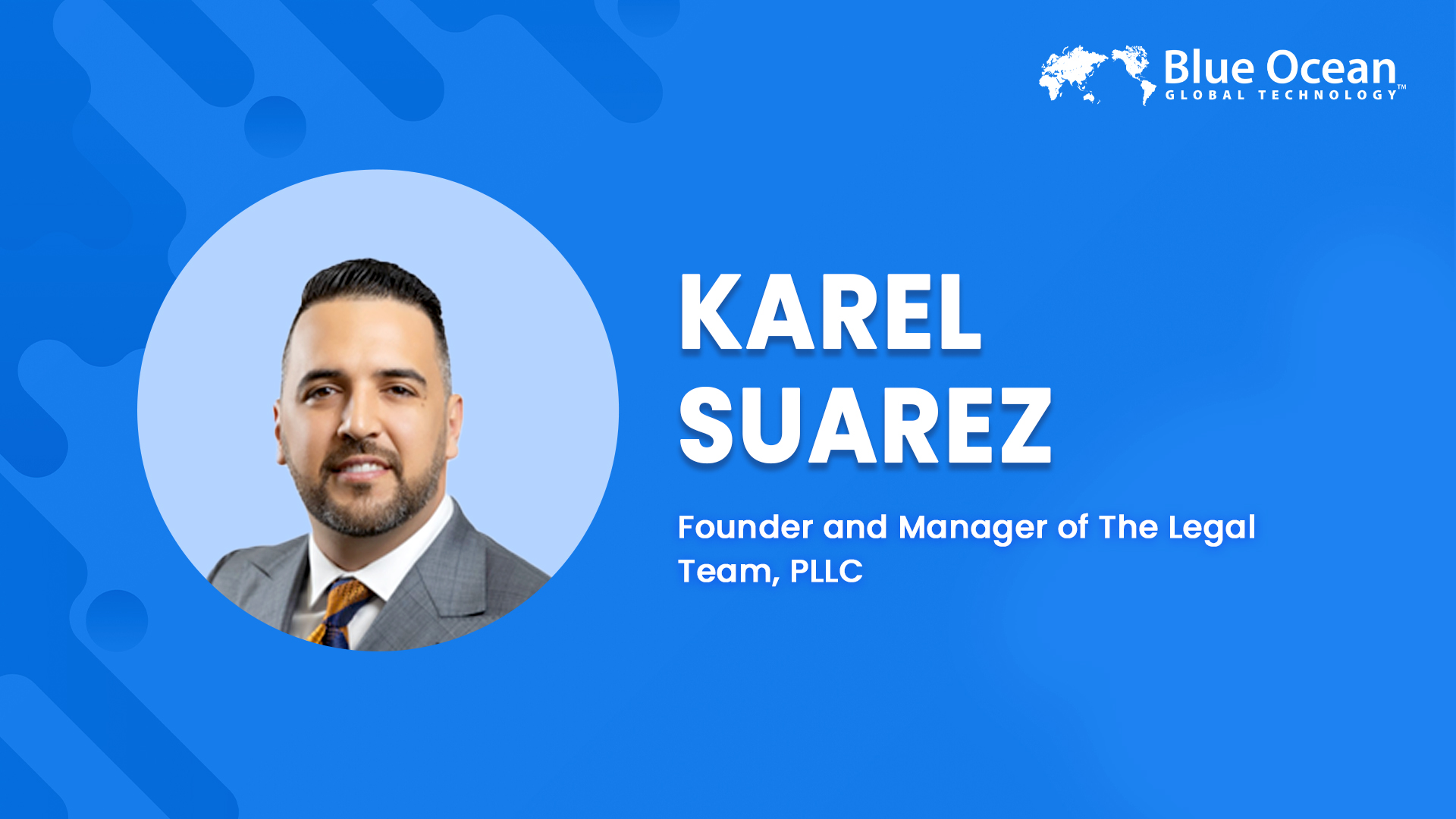
About Karel Suarez:
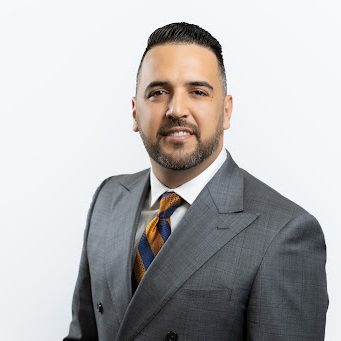
Karel Suarez embodies the American dream. Born in Cuba, he came to the U.S. alone at 19, intending to become an attorney. After years of balancing restaurant jobs with his studies, he graduated from law school and launched his career at Diaz Reus & Targ, LLP and Berger Singerman, LLP. In 2020, he founded The Legal Team, PLLC, a minority-owned business law firm that has since served over 670 clients across diverse practice areas, including commercial litigation, corporate law, real estate, intellectual property, and international law.
Karel has represented major clients such as Centurion Restaurant Group in the acquisition of Havana Harry’s, linking his early restaurant roots to his legal success. His achievements have earned him recognition as a Best Lawyers: Ones to Watch, Florida Super Lawyers Rising Star, and Miami-Dade Bar 40 Under 40 honoree. An AV Preeminent–rated attorney and Certified Anti-Money Laundering Specialist, he also served as a leader in organizations including the Hispanic National Bar Association and the Cuban American Bar Association.
Blue Ocean: What inspired your journey from Cuba to the United States, and how did your early experiences shape your decision to pursue a career in law?
Karel: I was born in Cuba and lived there until I was 19 years old. From a very young age, I knew I wanted to become a lawyer. What always drew me to the legal profession was the trust people place in good lawyers, the reassurance they provide when they have answers that bring clarity and calm, and the confidence clients feel when they know their contracts, decisions, and future are being handled correctly and without surprises. I wanted to be that person for people.
Like many aspiring lawyers, I grew up watching courtroom dramas and films that portrayed the profession in a certain way. Of course, reality is very different. The movies never show lawyers working until three or four in the morning, the way I do today. Still, the core idea of helping people through complex moments stayed with me.
During my first year in law school in Cuba, I began thinking more seriously about what my future might look like. Law school is extremely demanding and competitive to enter, and I had already achieved that milestone. But I also had to confront a difficult reality: even after years of study, lawyers in Cuba often earn very little. So, I started asking myself what opportunities would realistically be available and whether I would be able to practice the kind of law I truly wanted.
Ultimately, I realized I needed to pursue that path in the United States. I was only 19 years old when I told my mother, “I want to become a lawyer, but in the U.S.” She supported the idea, but understandably asked the practical questions: How would I get there? Where would I live? How would I learn English well enough to study law? I told her, “Help me get to Mexico, I’ll cross the border, and then I’ll find a Cuban family in Miami where I can stay for a year while I figure things out.” Looking back now, it sounds almost straightforward when I put it that way, but it certainly wasn’t. I had grown up very close to my family. My mother and grandmother had always taken care of me. I didn’t even know how to cook or wash my own clothes. Leaving home was a major step.
When I arrived in the United States, I quickly realized how much I still needed to learn. Internet access had been extremely limited in Cuba, so I hadn’t been able to research schools or understand the full educational path required to become a lawyer here. I soon learned that before law school, I first needed to complete a four-year undergraduate degree, and only after that could I apply to three additional years of law school.
At that point, I understood that the journey would take longer than I had expected. Looking back today, choosing to pursue my legal career in the United States was one of the best decisions I have ever made.
After graduating from law school, I began my career at an international law firm, Diaz, Reus & Targ, where I worked for three years before moving to a mid-sized Florida firm, Berger Singerman, where I spent about a year continuing to build my litigation experience.
Then the pandemic hit, and I was laid off. At that moment, I had $200,000 in law school debt, rent to pay, and a family to support. There were no jobs available. So I started reaching out to mentors and contacts, including leaders in the legal community such as presidents of the Florida Bar and former U.S. Attorneys for the Southern District of Florida. Everyone was supportive, but the reality was the same everywhere: no one was hiring.
I wasn’t ready to start my own firm yet, but I was out of options. So I decided it was time. That’s when I created The Legal Team.
From the beginning, my vision was clear. I wanted to build something specifically for small and mid-sized businesses, especially Hispanic and immigrant entrepreneurs like me. Whether someone owned a landscaping business, a small construction company, or a family-run service operation, I wanted them to have access to the kind of legal support that larger corporations typically receive.
For me, relationships matter more than transactions. I like working directly with business owners. I like knowing their story, their struggles, and what it took for them to build their companies. That personal connection has always been central to the firm’s philosophy.
When I launched the firm in 2020, I had zero clients. I built a simple website and started working out of my home garage. Then I began reaching out to people one by one through Facebook, LinkedIn, WhatsApp, Messenger, and I would ask: Do you have a few minutes to meet?
This was June 2020, right in the middle of the pandemic, so most people understandably said no. But I kept trying. That’s how the firm started, conversation by conversation, relationship by relationship.
From those early meetings in parking lots and outdoor cafés to today, the firm has grown to represent over 600 small and mid-sized companies. At the beginning, it was just me. Then my wife joined me and began supporting the corporate side of the practice while I focused primarily on commercial litigation. Together, we built strong relationships with our clients, and those relationships became the foundation of the firm’s growth.
Today, we are a team of seven attorneys, and our services have expanded well beyond litigation and corporate work. We now also support clients in areas such as trademark law, trusts and estates, employment law, and entertainment law. The firm has evolved organically based on what our clients needed, and that client-driven growth continues to guide us.
Blue Ocean: What does a typical day look like managing complex commercial and international litigation matters?
Karel: My typical day now is intense. Some days I start at 8 a.m. and look up before realizing it’s already noon and I haven’t eaten breakfast. Sometimes I have breakfast at noon, lunch at 5 p.m., dinner at 10 p.m., and go to sleep around 2 a.m. It’s a demanding schedule, but it reflects how much responsibility comes with building and leading a growing firm.
Sometimes people see photos online, such as travel, conferences, and meetings in different places, and assume things happened quickly or easily. But what they don’t see is the work behind the scenes that made all of that possible. Building this firm required persistence, relationships, and a willingness to keep moving forward even when the path wasn’t clear.
Blue Ocean: What trends or developments in complex commercial and international litigation are you finding most impactful today?
Karel: Recently, I worked on a brief submitted to the Florida Supreme Court involving an important issue at the intersection of international law and commercial litigation. The case arose from an appellate decision that effectively allowed service of process on defendants located anywhere in the world by email, without first attempting service through established international frameworks such as the Hague Service Convention or the Inter-American Service Convention.
Under U.S. law, treaties like the Hague Convention are considered part of the “supreme law of the land,” meaning courts are generally expected to follow those procedures when they apply. In our case, we argued that bypassing those conventions and allowing alternative service by email alone could undermine fundamental due-process protections.
The concern is practical as well as legal. If email service alone is considered sufficient notice, it could open the door to situations where individuals are sued in U.S. courts without ever truly becoming aware of the lawsuit. For example, someone living abroad might receive an email that gets overlooked, or never meaningfully reviewed, and later discover years afterward that a judgment has already been entered against them. That raises serious questions about fairness and proper notice in cross-border litigation.
After the appellate court’s decision, we sought further review by the Florida Supreme Court because of the broader implications this issue could have for international service of process. The outcome has the potential to shape how courts approach notice requirements in cases involving foreign defendants and could influence how future litigants navigate international service obligations.
For me, being involved in a matter like this is especially meaningful. Cases like this can contribute to the development of the law itself and aid in creating precedent that other courts and practitioners may rely on in the future. Having the opportunity to participate in shaping how these procedural standards are interpreted is one of the most impactful experiences of my career so far.
Blue Ocean: Can you walk us through a particularly challenging commercial or international case and share the legal strategy you used to navigate it successfully?
Karel: I think one of my strengths is that I have a dual perspective. On one hand, I think like a U.S. lawyer because I was trained and practiced within the American legal system. On the other hand, I also understand how many people in Latin America approach business and legal issues, because I lived in Cuba until I was 19. In many ways, I’ve spent nearly half my life in Cuba and half in the United States. That combination allows me to approach problems more creatively and proactively, rather than relying only on the most traditional procedural path.
For example, sometimes there are practical solutions that can resolve issues more efficiently than immediately moving through formal litigation steps. Instead of assuming the only option is to follow a lengthy service process, I might suggest simply contacting the other party first to see whether they are willing to cooperate. In some cases, that alone can move things forward without unnecessary delay or expense.
I remember one of the first international matters I worked on early in my career at Diaz, Reus & Targ. We needed to serve a party in Guatemala in connection with a case pending in Miami. Initially, we considered using the Hague Convention, but Guatemala is not a party to that treaty. Instead, we identified another mechanism that is less commonly used but still very effective, the Inter-American Convention on Letters Rogatory and Additional Protocol on Service of Process.
What I found particularly interesting about that convention is that it allows service to be carried out in a way consistent with the procedures used in the requesting country, as long as the destination country is also a participant. In this case, we arranged for a notary in Guatemala to personally serve the documents, as if service would be completed in the United States. That approach was unusual under local practice, but it was permitted under the framework of the Inter-American Convention.
Experiences like that shaped how I approach cross-border legal work. Understanding both the legal framework and the cultural context helps me identify practical solutions that others might overlook. It allows me to guide clients more efficiently through international matters and find ways to move cases forward even when the process initially appears complicated.
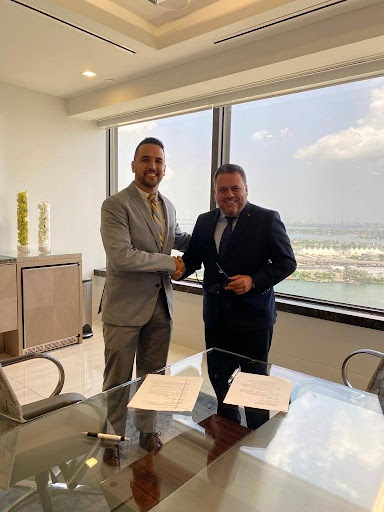
Blue Ocean: With your experience in both trial and appellate advocacy, including oral arguments before the Third District Court of Appeal, how do you approach building a case from initial filings through appeal?
Karel: For me, my goal in every case is to avoid going to trial whenever possible, and certainly to avoid appeals if they can be prevented. Because I have close relationships with my clients and genuinely care about them, I always try to resolve disputes in the most efficient and practical way.
Part of that mindset comes from my early experience before becoming a lawyer. When I arrived in the United States from Cuba in 2006, I worked for six years in the hospitality industry at a restaurant called Booyah. I started as a valet parker and later worked as a busboy, food runner, and server. Interestingly, today I actually represent that same restaurant as its lawyer. That experience shaped the way I approach my profession. Working in hospitality teaches you that client service comes first, and I’ve always believed that law, in many ways, is also a service profession.
I often say that lawyers provide a form of customer service, just at a different level of specialization. Of course, part of our responsibility is to guide clients when they are heading in the wrong direction and help them make better decisions. But ultimately, our role is to support them and help them solve problems effectively.
That perspective strongly influences how I approach litigation. When one of my clients becomes involved in a dispute, I see it as an obstacle standing in the way of their business growth. Many of my clients rely on us not only for litigation but also for corporate work, contracts, transactions, and strategic planning. Litigation shifts their focus away from building their businesses and toward stress and uncertainty.
Because of that, my priority is always to remove that obstacle as quickly and cost-effectively as possible. Trials and appeals can take years and require significant financial and emotional investment. In many cases, they are not the best outcome for the client. My goal is to help clients resolve disputes efficiently so they can return their attention to what matters most: growing their businesses and moving forward.
That philosophy guides how I evaluate cases from the moment they come in. I’m always thinking about the fastest, most practical path to resolution that protects my client’s interests while allowing them to stay focused on their long-term success.
Blue Ocean: You frequently advise clients on international law and compliance issues related to Cuba. What are some of the key challenges businesses face when navigating OFAC regulations and the Helms-Burton Act?
Karel: When President Barack Obama began normalizing relations with Cuba, I had just become a lawyer and had started working at the firm I mentioned earlier. One of the things that made my position somewhat unique at the time was that I had actually lived in Cuba until I was 19 and had even completed my first year of law school there. I often say I am “Cuban Cuban,” because many people in Miami are of Cuban heritage but were born and raised in the United States and have never lived on the island. My experience gave me a different perspective and a deeper familiarity with how things function there.
During that period, especially after the announcement in December 2014 that the United States would begin restoring diplomatic relations and expanding engagement with Cuba, there was significant interest from U.S. companies exploring opportunities on the island. My role involved helping support efforts connected to businesses that were considering investment or commercial activity in Cuba and needed guidance on what was permitted under U.S. regulations.
At the time, many companies were motivated less by immediate profit and more by the opportunity to establish an early presence in the Cuban market. Some clients would tell me very directly that their goal was simply to be the first U.S. company in their industry operating there since the early years after 1959. Being first in the market was, for them, strategically more important than short-term returns.
That dynamic changed later as U.S. policy shifted and certain travel and business openings were rolled back, including restrictions affecting cruise lines and commercial engagement. After that, companies became much more cautious and began focusing more heavily on regulatory risk and financial viability rather than market positioning alone.
Working in this space requires a strong understanding of what is permitted and what is not under U.S. law. Clients are often very creative in trying to structure transactions, and part of my role is helping them understand where the legal boundaries are. Sometimes they suggest alternative routes or indirect approaches, and I have to explain clearly when something crosses the line and cannot be done.
Ultimately, clients want to make business opportunities work, and that’s their main objective. My responsibility is to help them do that within the regulatory framework. That means understanding sanctions rules, export limitations, and compliance requirements, and making sure they have the proper documentation and structure in place. There are still opportunities in areas such as authorized exports, including food, vehicles, and energy-related transactions, but success depends on careful planning and compliance. In most cases, the key is simply having the right legal guidance and understanding what is realistically possible under current regulations.

Blue Ocean: As a Certified Anti-Money Laundering Specialist (ACAMS), how does your compliance expertise enhance your litigation strategy and client advisory work?
Karel: That actually started early in my career when I was working at Diaz, Reus & Targ. At the time, the firm handled many matters involving international compliance and anti-money-laundering issues, particularly related to Venezuela during the Chávez era. Because of that exposure, our managing partner, Michael Diaz, encouraged and really required all of us to become ACAMS-certified.
At first, I remember thinking I had just finished law school and passed the bar, and I wasn’t expecting to go back to studying again so soon. The ACAMS certification is not an easy exam, and I wasn’t excited about preparing for another test. But I’m very grateful today that he pushed us to do it, because it gave me a completely different perspective on how financial crime risks actually arise in practice.
One of the most valuable things that certification taught me is how to better understand client behavior. Often, especially at the beginning of a relationship, clients present what they believe is their version of the story rather than the full picture. They’re not necessarily trying to mislead you; they’re trying to protect themselves. The training helped me recognize patterns, ask more precise questions, and better understand what might be happening behind the surface of a situation.
It also helped me understand how money-laundering risks develop, not just when someone is intentionally doing something wrong, but also when they may unknowingly be engaging in practices that could be interpreted that way. Many clients do not have a criminal mindset at all, but certain financial structures or habits can still create legal exposure. Having that background allows me to guide them more effectively and say, “I understand what you’re trying to do, but this approach could raise compliance concerns, and here’s how we should handle it instead.”
Ultimately, that certification became another important tool in my professional toolbox. It strengthened my ability to advise clients, identify potential risks early, and help them structure their activities in a way that protects both their businesses and their legal position.
Blue Ocean: What unique perspective do you bring to clients when handling cross-border disputes or entering complex international markets like Cuba?
Karel: When it comes to my perspective on working with clients connected to Cuba, or more broadly, with clients from Latin America. I think it really comes from the fact that I lived in Cuba until I was 19. Even beyond Cuba specifically, that experience helps me understand how many people from outside the United States approach business relationships. In some ways, I still think like that myself.
For example, in much of Latin America, business is often built on trust and personal relationships rather than formal contracts. People may lend significant amounts of money or enter into agreements based on a handshake or a verbal understanding. That approach reflects how business has traditionally been done in many places. However, the challenge is that the legal system in the United States operates very differently. Here, documentation is essential. Even something as simple as a written note, a text message, or an email can become critical evidence if a dispute arises.
Because most of my clients are immigrants, many from Latin America and other parts of the world, I often find myself helping them bridge that gap. I tell them that I understand how things may have worked in their home countries, and there’s nothing wrong with that context. But once you are operating in the United States, especially as a business owner, it’s important to adapt to the legal framework here. Without proper documentation, it becomes extremely difficult to protect your rights or enforce agreements if something goes wrong.
What surprises many people is that this issue affects even very successful businesses. I’ve worked with companies generating tens of millions of dollars in revenue that still rely heavily on informal agreements simply because that’s how they’ve always done business. Then, when a dispute arises, and they want to pursue legal action, the first question I ask is whether there is a contract or written communication. Sometimes the answer is no, and without that documentation, it becomes very difficult to move forward effectively.
Living and practicing in Miami adds another layer to this dynamic. The city feels culturally familiar to many immigrants, especially those from Cuba and other parts of Latin America. But I often remind clients that while the environment may feel like home culturally, the legal system underneath it is still the American legal system. To succeed here as a business owner, it’s important to understand and follow those rules.
That ability to understand both perspectives, the cultural approach many immigrants bring with them, and the legal expectations of the United States, has become one of the most important ways I support my clients. It allows me to guide them through the transition and help them protect their businesses more effectively.
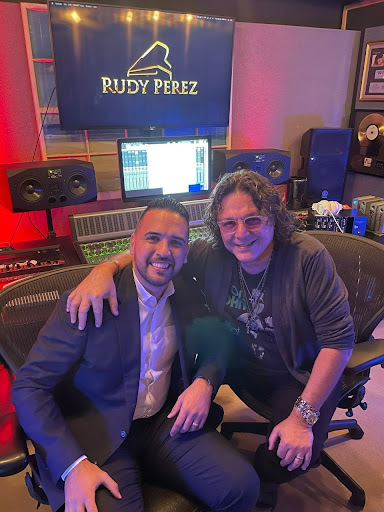
Blue Ocean: Your career reflects a strong work ethic and perseverance. How has that journey influenced your approach to advocacy and client service?
Karel: For me, clients are more than just clients; they have become friends. When you build that kind of relationship, you naturally care deeply about their success and well-being. I know some experienced lawyers have advised me to create more distance, because becoming too personally invested can be demanding at times. And it’s true, it can take a toll. But I’ve always believed that forming genuine connections with clients is one of the most meaningful parts of my work.
Early in my career, I noticed that some larger firms would decline smaller matters, for example, a simple NDA that might only take an hour, because they preferred larger engagements. I saw things differently. To me, one hour of meaningful work for a client matters just as much. Over time, those smaller engagements build trust, relationships, and long-term partnerships. Whether it’s one hour on one matter or ten hours on a single project, the value is in supporting the client consistently.
I’ve always wanted to truly know my clients and understand their businesses. In fact, I believe the strongest marketing any lawyer can have is simply doing good work and building real relationships. When clients feel supported and respected, they naturally recommend you to others. Since opening my firm six years ago, we’ve grown to represent more than 670 companies, and much of that growth has come through referrals. Business owners talk to one another, and when they trust your work, they share that trust with their networks.
It’s actually quite common now for two people who are negotiating a business deal to discover that they both already work with our firm. At times, that even creates conflicts of interest that prevent me from representing both sides, but I see that as a positive sign that the relationships we’ve built are strong and widespread within the community.
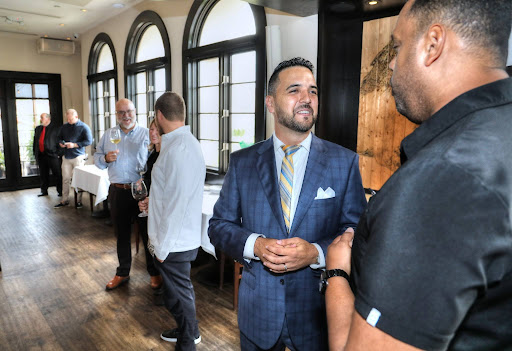
Each September, I host an annual event to celebrate both the firm and our clients. I invite everyone together, not just to recognize milestones, but to create a space where they can meet one another, network, and build connections. Last year, for example, we organized a large celebration featuring musicians who are also clients of the firm. My goal has always been to create something that feels like more than a traditional law practice, a network of entrepreneurs and professionals who support each other and share similar journeys.
I sometimes say I never wanted to be what I call a “mechanic lawyer”, someone a client visits only when something breaks. Instead, I want to be part of their broader story. I like knowing how their businesses are growing, how their families are doing, and what goals they’re working toward next. Of course, maintaining that level of connection becomes more challenging as your client base grows, and that’s something I continue learning to balance. But for me, building genuine relationships has always been at the heart of how I practice law.
Blue Ocean: What are some common misconceptions clients have about complex commercial or international litigation?
Karel: One common misconception people have about cross-border business is that it’s inexpensive. In reality, it’s often quite the opposite, as it can be very expensive, especially when something goes wrong, and there isn’t proper documentation in place.
I frequently speak with business owners, particularly those operating internationally, for example, between Miami and countries like Costa Rica, who are conducting transactions without adequate written terms. I understand that many people hesitate to use formal contracts because they feel they are too complicated or unnecessary. But at the very least, they should include clear terms and conditions in their invoices. If a dispute arises later, those details can determine where a case can be brought and how easily it can be resolved. Otherwise, you may find yourself trying to pursue a claim in another country’s legal system, which can take years and significantly increase costs.
Another important issue involves attorneys’ fees. In Florida, for example, if there is no written agreement stating that the losing party must pay the prevailing party’s attorney’s fees, each side typically pays its own legal costs, even if you win the case. That can make litigation impractical for smaller claims. I often advise clients to include a clause specifying that the losing party is responsible for attorney’s fees. Without that provision, pursuing a claim may not make financial sense.
For instance, someone may come to me with a $5,000 dispute involving an international transaction. But if legal fees quickly approach or exceed that amount, even a successful outcome may not be worthwhile. Including provisions about jurisdiction, attorney’s fees, interest, and late-payment penalties in invoices or agreements can make a significant difference. These tools help ensure that, if enforcement becomes necessary, the process is more efficient and economically viable.
In short, even when businesses prefer not to use formal contracts, they should still include clear terms and conditions in their documentation. Doing so provides protection, clarity, and leverage, and can make all the difference if a dispute arises later.
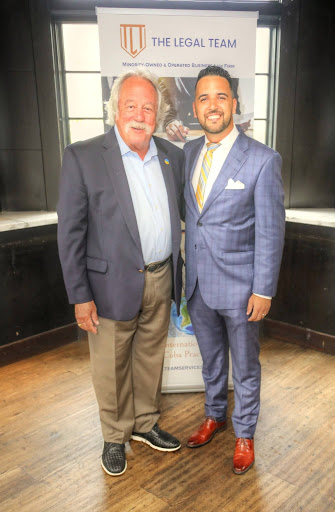

Blue Ocean: For young lawyers interested in commercial litigation, international law, or compliance, what advice would you offer as they begin building their careers?
Karel: My advice to young lawyers is to try to begin their careers at a law firm, whether it’s small or mid-sized, doesn’t matter as much as the type of cases the firm handles. What really matters is the experience you gain. If possible, take time to research the firm’s practice areas and the kind of work you’ll be exposed to.
That said, I understand that sometimes it’s not about choosing the ideal opportunity. Many new graduates have significant law school debt and need to accept the position that’s available. It’s not always like selecting from a menu of options. But if you do have the chance to decide, then it’s worth being intentional about where you start and what you’ll be learning there.
Some lawyers open their own firms right after law school. Personally, I would not recommend that path. When you graduate, you’ve learned how to think like a lawyer, but you haven’t yet learned how to practice law. Law school teaches analysis, reasoning, and legal frameworks, but real-world practice is something you develop through experience and mentorship.
Opening your own firm immediately also means becoming both a lawyer and a business owner at the same time. You’re responsible not only for legal work, but also for bringing in clients, managing finances, handling administrative responsibilities, and running the organization. It’s a tremendous amount to manage all at once.
Even if someone else supports the administrative side, you still need guidance as a young attorney. Who teaches you what works and what doesn’t? Who helps you avoid mistakes? Some people say you’ll learn along the way, and that’s true, but in law, learning only through mistakes can carry serious risks, including consequences for your clients and your license.
That’s why I believe it’s very valuable to spend at least two or three years working with experienced attorneys and learning from them. And sometimes those mentors may not even be people you naturally connect with. I’ve worked with supervisors whose leadership styles I didn’t always agree with, but I still learned a great deal from them. Those experiences helped shape the kind of lawyer and leader I want to be.
You take the good lessons from those experiences and use them to guide how you support others in the future. For me, that’s been an important part of professional growth, and it’s the advice I would share with anyone starting in the legal profession.
Blue Ocean: Looking back on your journey so far, is there a guiding principle or philosophy that has shaped how you approach your career and life?
Karel: For me, it has always been about perseverance. But at the same time, I’ve learned that sometimes you need to pause and appreciate your accomplishments along the way.
For most of my life, my mindset was always, ” What’s the next goal? Ever since I was a child, I wanted to become a lawyer. When I finally achieved that, I realized something surprising: I found myself asking, what comes next? I had spent so many years focused on reaching that milestone that once I achieved it, I had to redefine my purpose and set new goals for myself. From there, my focus became not just being a lawyer, but becoming a truly strong and respected one over the next decade.
What keeps me grounded is remembering where I started. Twenty years ago, I crossed the border without speaking English. Today, I’m here speaking with you about my journey and my work. In law, language is everything; you speak it, and you write it. That’s the core of what we do. Unlike some professions where technical skill can stand alone, our entire profession depends on communication. So learning the language and building a career in it required persistence and determination.
That’s why I always come back to perseverance. If you keep pushing forward and stay committed to your goals, you can accomplish more than you think.
Even now, I still feel that drive. I have colleagues who manage large teams, families, and demanding careers, and I often wonder how they do it all. I now have a three-year-old daughter myself, and that motivates me even more. When I think about where I started, with very little compared to what I have today, I remind myself there’s no reason to slow down now.
In my mind, I’ve reached the point where I’m standing alongside people who were born and trained here in the United States. And now my goal is to keep going, to keep growing, improving, and moving forward. That mindset continues to push me every day.
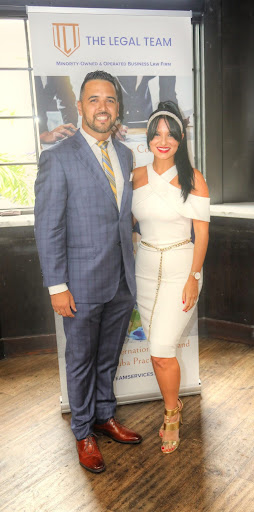
Blue Ocean: How do you spend your free time and maintain balance?
Karel: My wife loves to travel, so we make time to do that often. Just two weeks ago, we spent ten days in Spain. Before that, we were in Argentina in December, Iceland in November, and Japan last March.
In the past, even while traveling, I still felt like I had to stay fully connected to work. I was always the lawyer handling everything, no matter where I was. But over time, I’ve learned to approach things differently.
Someone asked me recently how I manage to travel without feeling stressed about what’s happening back home. Honestly, I’ve become very good at being present in the moment. I’m not thinking about what’s next on my schedule or what might be waiting for me afterward.
And when I’m walking through a plaza or sitting in a park in Spain, I’m truly there in that moment. Everything else can wait until later. Once that moment ends, then I shift my attention to what comes next.
That ability to compartmentalize has really helped me maintain balance and stay grounded, both professionally and personally.
Conclusion
Karel Suarez’s story is rooted in perseverance, adaptability, and a deep commitment to client service. From arriving in the United States at 19 without a clear roadmap to building a growing minority-owned law firm serving hundreds of businesses, his career illustrates how determination and relationship-driven advocacy can shape both professional success and meaningful community impact. Whether guiding clients through complex commercial disputes, navigating cross-border regulatory challenges, or mentoring the next generation of attorneys, Suarez approaches the practice of law as both a profession and a service. His story is a reminder that long-term success in law is built not only on technical skill but on trust, perspective, and the willingness to keep moving forward.
Do you have a personal or professional story that can inspire other people into becoming the best version of themselves?
You are welcome to share your journey with our audience.