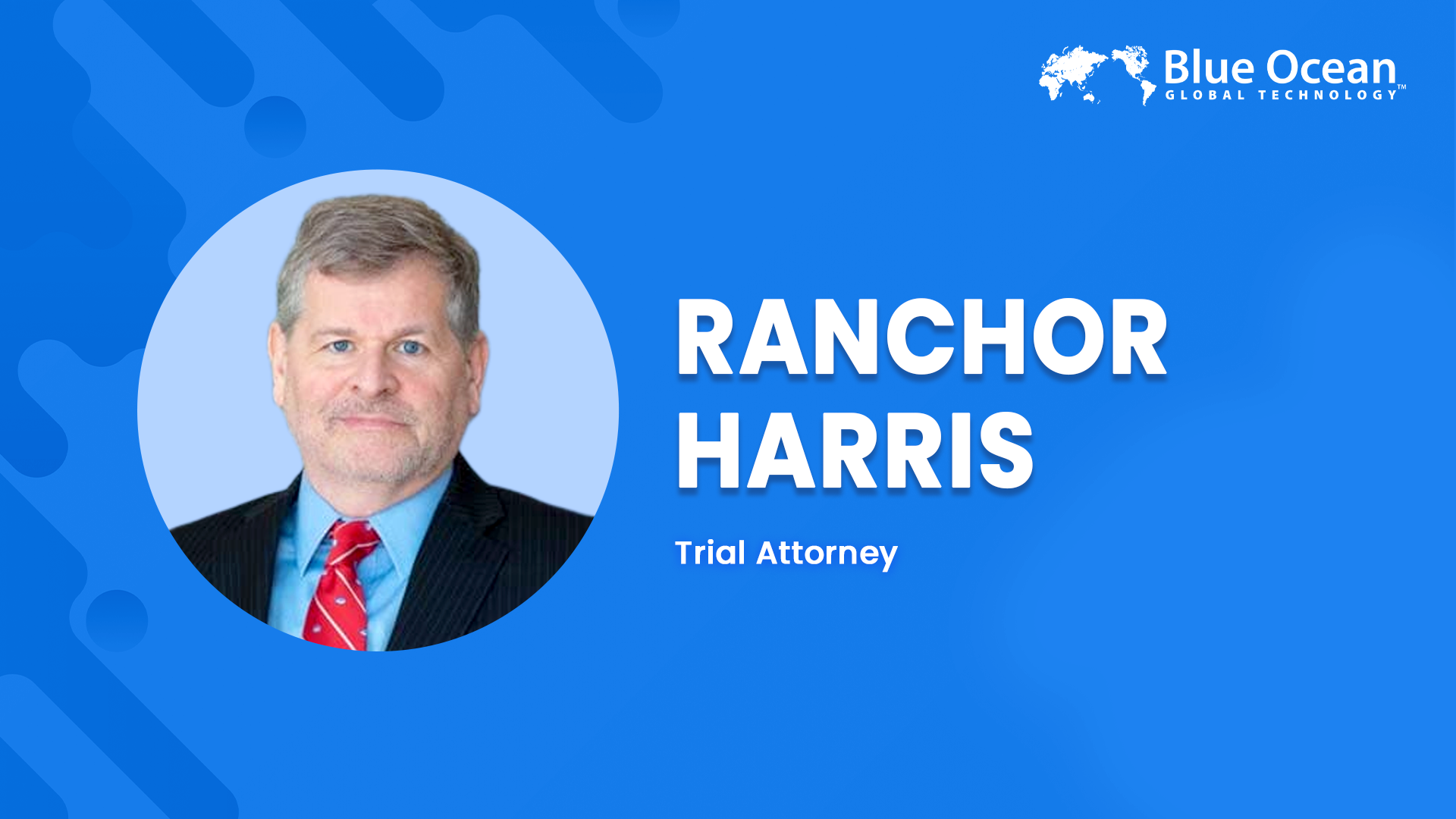
About Ranchor Harris:

Ranchor Harris is a veteran trial attorney at Ranchor Harris Law with more than 30 years of legal experience representing individuals facing serious personal, professional, and reputational harm. Throughout his career, he has built a practice centered on integrity, strategic advocacy, and personalized client representation, working closely with each client to navigate complex, often high-stakes legal challenges.
Mr. Harris earned his law degree from Whittier Law School in 1994, beginning his career as a defense attorney representing institutional clients and insurers. That experience provided valuable insight into litigation strategy from both sides of the courtroom. Over time, he transitioned his practice toward representing individuals, an evolution that shaped his client-focused philosophy and strengthened his commitment to helping people facing difficult legal circumstances.
Today, a substantial portion of his practice focuses on defamation and privacy matters, where he has developed a practical, holistic approach that emphasizes early intervention, strategic correspondence, and, whenever possible, efficient pre-litigation resolution. He also maintains a strong presence in complex civil litigation involving personal injury, malicious prosecution, abuse of process, and related claims affecting reputation and livelihood.
Recognized by his peers for his legal ability and professional standing, Mr. Harris was selected to the Super Lawyers list (2022). Based in Wake Forest, North Carolina, he represents clients statewide and, in select matters, beyond North Carolina when strategic needs require a broader reach.
Known for his sincerity before juries and his commitment to treating clients with fairness and respect, Mr. Harris approaches every case with a simple guiding principle: effective advocacy begins with credibility, preparation, and a genuine commitment to solving problems for the people he represents.
Blue Ocean: What inspired you to pursue a career in law, and what motivated you to represent individuals seeking justice and compensation?
Ranchor: My father and close cousins were physicians, and that sparked an early interest. At the same time, I always enjoyed studying history and developing strong logical reasoning skills.
I eventually graduated from the University of North Carolina at Chapel Hill with a degree in political science and communications. Those experiences strengthened my ability to think critically and communicate effectively, and these skills naturally led me toward the legal profession.
With the benefit of strong support and opportunities, I was fortunate to attend law school at Whittier College in Los Angeles. It was an important step in my development. The experience gave me confidence in the practice of law and exposed me to life in a large city environment for the first time. During that period, I also built valuable connections within the legal community and had the opportunity to clerk for a prominent law firm. That experience became a turning point in my career, as I observed firsthand how high-level legal teams operate.
When I returned to North Carolina, I joined a defense firm, where I primarily represented insurance companies. I worked in that space for approximately ten years across two firms. During that time, I lost both a son and a brother who were killed in action while serving in the military. Those events shaped my perspective and ultimately influenced my decision to transition back to representing individuals rather than institutions.
Representing individuals allowed me to reconnect with the aspects of legal practice that first drew me to the profession. The relationships you build with clients are meaningful, and you can feel the impact of your work in their lives. While the work brings its own challenges, it is deeply rewarding to advocate for people on a personal level and help them navigate difficult circumstances.

Blue Ocean: After decades in the courtroom and representing clients facing serious injuries or life-altering events, what core values do you believe every trial attorney must uphold to effectively serve their clients?
Ranchor: You have to be honest in this profession. With your clients and with the jury. If a jury is persuaded because you are overly aggressive or trying to be something you’re not, that’s not the kind of advocate I ever wanted to be. Maintaining credibility with the jury was always essential to me. I never wanted to risk losing their trust by adopting a style that wasn’t genuine.
If you’re going to practice law for a living, you really have to develop your own voice and approach. That takes time and experience. I was fortunate to have opportunities to try a wide range of cases, which helped me grow into my style as a trial lawyer. Over the course of my career, I’ve tried around 40 jury trials. That may not sound like a large number, but in today’s legal environment, it’s actually quite significant and reflects substantial courtroom experience.
The foundation of effective advocacy is sincerity—being honest with your clients and with the people you are presenting your case to, whether that’s a judge or a jury. When you approach the work with that level of integrity, it not only strengthens your credibility but also leads to better outcomes.
Blue Ocean: What does a typical day look like for you as a trial attorney managing high-stakes matters?
Ranchor: There really isn’t a typical day in my practice. Every day brings its own challenges, and much of my time is spent working closely with clients and helping them understand the realities of their cases.
Recently, I had a conversation with a client where I had to explain that his case was quite limited in scope. He had already paid a meaningful retainer, but I told him that if he decided not to move forward, I would return it even though I had already invested a substantial amount of time in the matter. Delivering difficult news is never easy for me, but I believe honesty with clients is essential.
During that conversation, he shared more about a prior experience he had with a large firm in Raleigh, North Carolina, where he believed he had been billed over $100,000 without achieving the result he hoped for. He told me I could have simply continued billing his time without being candid about the strength of his case. That’s not how I practice. I explained that if there wasn’t a viable claim to pursue, I would rather return his retainer and ensure he understood the legal landscape clearly. We ended up having a thoughtful discussion about the law and his options moving forward.
Moments like that reinforce the importance of being forthright with people. At the same time, I’m naturally someone who wants to solve problems and help clients find a path forward. If anything, I sometimes take their challenges a little too personally because I care deeply about the outcomes they’re facing.
That being said, my day involves a significant amount of communication with clients and careful attention to detail across multiple matters. I’ve also found that advances in AI tools have helped improve efficiency in my workflow. Of course, I always review everything carefully to ensure accuracy, but these tools allow me to move matters forward more effectively and stay ahead of deadlines.
They tend to start early and end late, but I make a deliberate effort to maintain a highly personalized practice. I try to stay responsive and organized—what some people call maintaining a “zero inbox”—so that clients know their matters are being handled attentively and promptly. It makes for long days, but they are meaningful and rewarding ones.
Blue Ocean: Throughout your career, you’ve handled many challenging cases. Can you walk us through a particularly complex matter and explain the legal strategy you used to secure a successful outcome?
Ranchor: Today, about 90% of my practice focuses on defamation and privacy matters. I didn’t set out to specialize in this area—it developed naturally over time. One of my earliest cases involved a very bright student who had been accused of sexual misconduct at a private school. His parents were understandably distressed because he was being ostracized, and they felt the school was not doing enough to support him. He was also an exceptional athlete, so the allegations placed his scholarships and college opportunities at serious risk. The accusations were significant and potentially life-altering. That case led me to become deeply involved in this area and ultimately helped shape the approach I use today.
Over time, I’ve developed what I describe as a holistic strategy for handling defamation and privacy matters. Many attorneys begin and end with a cease-and-desist letter, which can leave clients having spent several thousand dollars without a meaningful resolution. My approach is different. I stay engaged with these matters and work persistently toward a result, often focusing heavily on pre-litigation strategies because trials can be extremely costly and time-consuming.
That strategy includes addressing not only the primary source of the defamatory statements but also others who may be repeating or amplifying them. I make sure individuals within that chain of communication receive appropriate correspondence directing them to stop. At the same time, I pursue the primary actors firmly and strategically when necessary. I have also developed effective methods for addressing defamation on social-media platforms and other digital channels, where reputational harm can spread quickly and widely.
Defamation law itself is relatively straightforward in principle, but in practice, it involves important nuances, procedural challenges, and strategic considerations.
Over the years, I’ve refined a process that is both practical and responsive to the realities of modern reputational harm. Much of my work today grows through word-of-mouth referrals. That kind of grassroots development has allowed me to build this practice in a way that feels both sustainable and closely connected to the clients I serve.
Blue Ocean: What unique perspective or value do you bring to your clients when navigating high-stakes litigation?
Ranchor: I often tell people that I couldn’t practice the way I do today if I were only five years into my career. Much of what I bring to my work comes from having spent decades around excellent lawyers and learning from them along the way. I sometimes joke that if you want to be good at something, you borrow—but if you want to be great, you “steal”.
Over the years, I’ve been fortunate to learn from many outstanding practitioners, and those lessons have shaped how I approach my cases today.
With more than 30 years of experience, I’ve had the opportunity to appear before a wide range of courts and tribunals, including the North Carolina Court of Appeals, the Fourth Circuit, the North Carolina Banking Commission, the Industrial Commission, Occupational Safety and Health Administration proceedings, and federal courts across the country. Exposure to different forums, judges, and legal environments gives you perspective.
For example, someone recently came to me believing they had a defamation issue because their Facebook content had been copied and shared. In reviewing the situation, I explained that they might also have a potential U.S. copyright infringement claim. Recognizing that distinction can make a significant difference.
That kind of perspective comes with experience. Often, clients come in thinking their issue is one thing, but after careful review, it turns out to involve several overlapping areas of law. Being able to identify those connections is one of the real advantages that develops over time in practice.
Blue Ocean: What are some common misconceptions people have about the legal process or about lawyers?
Ranchor: Lawyers sometimes get a bad reputation, but in my view, without the legal profession, there would be far less order in society. There’s a common misconception that lawyers simply want to fight or escalate disputes. While we absolutely advocate strongly for our clients, I believe one of our most important roles is solving problems whenever possible.
Much of my life’s work has been guided by that mindset of “how do we resolve this effectively and fairly?” I learned that approach from an outstanding lawyer named Gray Wilson, whom I worked with years ago and still respect greatly today. Watching him interact with clients and opposing parties showed me that there are often thoughtful, constructive ways to resolve disputes without unnecessary conflict.
That experience shaped how I see the profession. At their best, lawyers are problem solvers. Our role is to help people navigate complex situations and reach workable solutions.
Blue Ocean: How do you maintain resilience and focus while advocating for clients during such difficult circumstances?
Ranchor: My father was a physician, and he was a very focused and disciplined person. Growing up around that example had a strong influence on me and shaped the way I approach my work today. I’ve always believed in staying committed to moving things forward for the people I represent. At times, that means I don’t really stop working—I often find myself up late at night thinking through issues or preparing the next steps in a case.
That level of focus comes from wanting to help people at the highest level possible. When you’re driven by a sense of responsibility to your clients, you naturally keep pushing forward. I wouldn’t say I’m perfect at maintaining balance—far from it—but I do make a conscious effort to give clients the attention they deserve, especially because they are trusting me with both their time and their resources. I try to be respectful of that and to let them know I genuinely appreciate the opportunity to work with them.
Building strong relationships with clients is an important part of my practice. Many of the matters I handle involve sensitive issues, so people often need reassurance, communication, and consistent engagement. When I take the time to provide that support, clients are usually very appreciative, and that mutual respect helps maintain focus and momentum.
So what keeps me motivated is a combination of background, experience, and the opportunity to work closely with people during difficult moments in their lives. Being able to assist them in a meaningful way is what continues to drive my commitment to the work.

Blue Ocean: For young lawyers interested in trial work, mass torts, or personal injury litigation, what advice would you offer as they begin building their legal careers?
Ranchor: Early in my career, I was very fortunate to spend a great deal of time in the courtroom—sometimes actively participating, and sometimes simply observing. That kind of exposure was invaluable. I don’t think many young lawyers today have the same opportunities as consistently, but if they can place themselves in environments where they can watch experienced attorneys in action and absorb how things work, that would be my strongest recommendation.
My son is actually graduating from law school now. He’s had the benefit of exposure to the profession through assisting me and working with two excellent firms during his summers. If he ultimately decides to follow a similar path—which I think he will—I’ve encouraged him to dedicate his first couple of years entirely to learning the practice and building a strong foundation. Those early years are critical.
Another important lesson is understanding that mistakes are part of the process. That was not always easy for me to accept. Years ago, I represented a physician who told me something that stayed with me: he said he probably made a thousand small mistakes in a day, but as long as he did his best and didn’t harm a patient, that was what mattered most. I found that perspective both humbling and reassuring.
For a long time, I believed you had to be perfect in everything you did. Over time, I’ve come to understand that growth comes from experience—including setbacks. While mistakes are never the goal, they often teach the most important lessons and help shape you into a stronger professional.
It’s also important to stay grounded in something that gives you perspective and balance. For me, that foundation is my faith. It’s something I found later in life, but it has been a source of strength and clarity. My encouragement to others is to find whatever keeps them grounded early on—it can make a meaningful difference.
Finally, I would encourage young lawyers to take care of themselves and maintain healthy habits. The legal profession can be social and demanding, and it’s easy to get caught up in routines that aren’t always sustainable. Staying disciplined and maintaining balance will serve you well over the long term.
Blue Ocean: After 30 years in the legal profession, is there a guiding philosophy, principle, or quote that has shaped the way you approach both your career and life?
Ranchor: One grounding principle I try to follow in my practice isn’t anything especially complicated or dramatic—it’s simply to treat people with respect and fairness. I believe in charging clients a fair fee for representation and doing everything I can to help solve their problems. That’s the foundation of how I approach my work, even though it can be frustrating at times when a solution isn’t possible.
At the end of the day, it really comes down to the golden rule: treat others the way you would want to be treated. Be fair in your dealings, be respectful in your interactions, and approach people with integrity. That mindset continues to guide me throughout my practice.
Blue Ocean: Outside of the courtroom, how do you spend your time? Are there hobbies or interests that help you recharge and maintain balance?
Ranchor: Maintaining balance is something I’m still actively working on. There isn’t always as much balance as I’d like, especially during demanding periods. I’m fortunate, though, to have an incredible wife who is very supportive—even when I’m going through particularly intense stretches, like the past couple of weeks, when I’ve been putting a lot of pressure on myself.
My faith is the number one grounding force in my life. It gives me perspective and stability, especially during challenging times. We’re also part of a wonderful church community, and every Wednesday we meet with a small group of thoughtful and supportive people. That time together is a real breath of fresh air—it allows me to step back, reflect, and appreciate what truly matters. This week in particular, with Easter approaching, has been especially meaningful in that regard.
I do have hobbies, although they sometimes get neglected when work becomes busy. Our dog certainly helps keep us active, and our greatest joy is our five children. They’re spread across five different states, so instead of traditional vacations, we often spend our time traveling to visit them. That’s a big part of what keeps us grounded as a family.
At the same time, running a small firm makes stepping away for extended breaks challenging. It’s not always easy to disconnect completely or take long trips when you’re responsible for everything day to day. Finding that balance is something I continue to work toward.
I think the key is simply staying aware of the need for balance. If you remain intentional about it and keep perspective on what matters most, things tend to stay on the right track.
Conclusion
Throughout his career, Ranchor has built a practice grounded in integrity and a commitment to solving problems for the people he represents. From early courtroom exposure to decades of experience across appellate courts, federal tribunals, and complex reputational matters, his approach reflects both technical depth and a deeply personal sense of responsibility to clients. Influenced by strong mentors, guided by faith, and supported by family, he continues to emphasize honesty, fairness, and meaningful client relationships as the foundation of effective advocacy.
Do you have a personal or professional story that can inspire other people into becoming the best version of themselves?
You are welcome to share your journey with our audience.