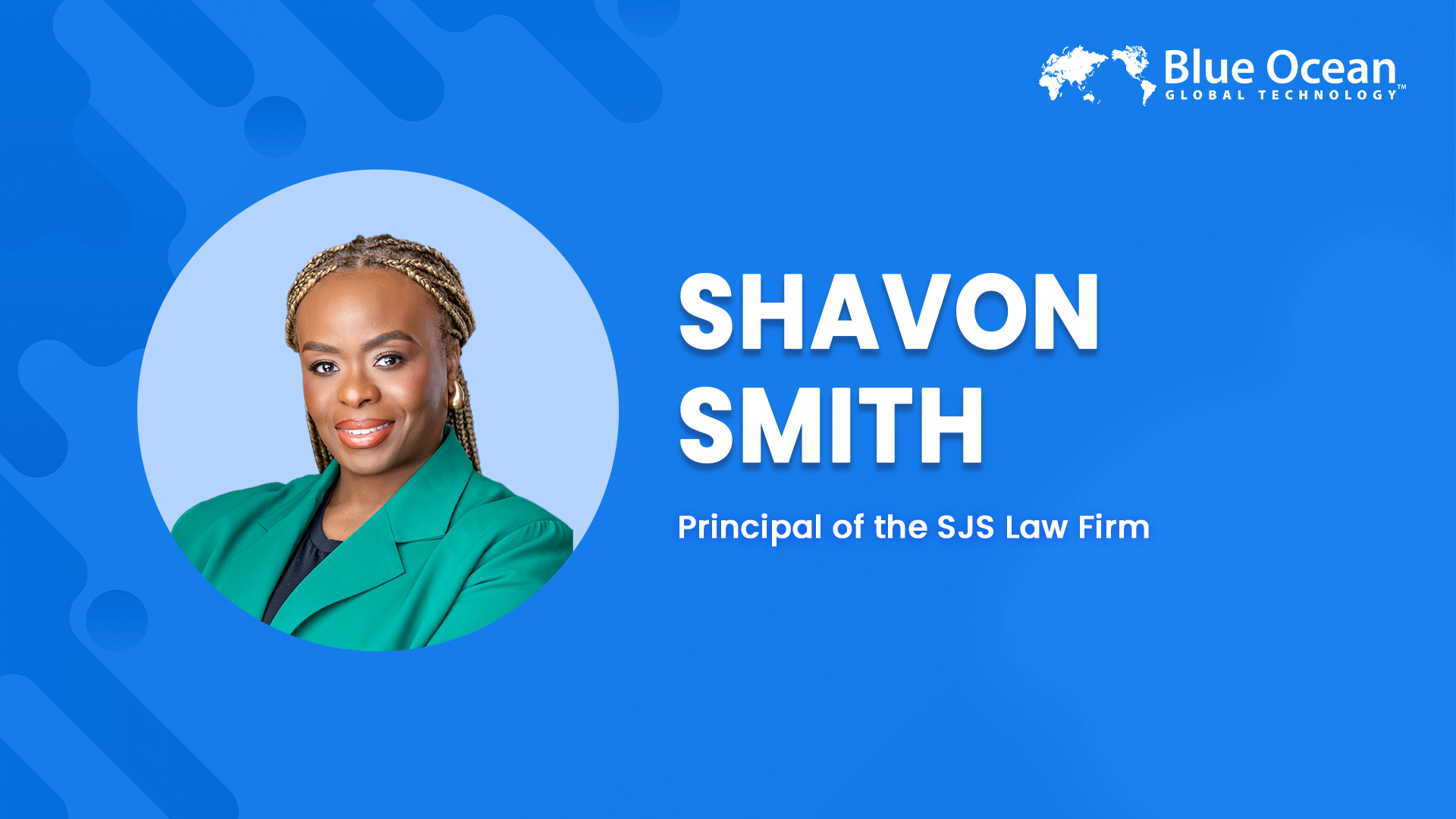
About Shavon Smith:

Shavon Smith is the principal of The SJS Law Firm, PLLC, where she serves as Fractional General Counsel to business owners, startups, and entrepreneurs in D.C. and Maryland. Her clients span diverse industries, including franchise operations, government contracting, professional services, construction, and retail. She provides strategic legal counsel on commercial leases, business acquisitions, financing, contracts, and employment matters, such as NDAs, independent contractor agreements, and employee handbooks.
An active speaker and educator, Shavon lectures on legal readiness, growth strategies, and teaming arrangements. She is the author of “Tell Me About the Hard Part” and an instructor at the Prince George’s Center for Entrepreneurial Development. Shavon volunteers with local organizations, co-chairs the D.C. Bar Pro Bono Committee, and serves on the board of the Council for Court Excellence. A graduate of Howard Law and Michigan State, she is a former law clerk and litigation associate, and a Super Lawyer (2023–2025).
Blue Ocean: What does a typical day look like for you as a business attorney advising clients?
Shavon Smith: It varies greatly. I usually start work between 8:30 and 9:00, depending on the day of the week. On Mondays and Wednesdays, I have status checks and check-ins with my team. My day often includes client meetings as well as meetings with potential new clients.
A significant part of my time is spent drafting and reviewing contracts, including asset purchase agreements, consulting agreements, and subcontracts in the government contracting space. I may also assist clients with drafting employment policies and handbooks. We handle some litigation as well, so if there is an active matter, my day could involve discovery work.
I am also involved in bar associations and other business organizations, so my schedule sometimes includes meetings related to those commitments. I volunteer my time in those spaces as well.
In addition, I spend time having conversations with business owners about strategy, the legal implications of their decisions, and sometimes even broader business planning. I value being part of those discussions and helping clients think through their next steps.
Blue Ocean: What inspired you to pursue a career in business law, and what initially drew you to serving entrepreneurs and companies?
Shavon Smith: I often say that I was born out of business ownership. My parents met in a store that my grandfather owned in my mother’s neighborhood. My father worked there, and that is how they became acquainted.
Beyond that, I have always had many friends who were business owners. I was very intrigued by the work and the level of initiative it takes to start something on your own without the security of a paycheck.
Around the time I started thinking about my career, I knew I wanted to start a firm. At the same time, I was thinking about working with business owners I respected and admired. I appreciated their work and wanted to use my legal services to support them.
While I have respect for other areas of law, such as family law, I knew those paths did not align with my personality. I wanted to be a business owner myself, and as a lawyer, the service I offer is legal expertise. It made sense for me to provide that service to other business owners.

Blue Ocean: What recurring legal blind spots do you see among small business owners, and how can they proactively address them?
Shavon Smith: I see a lot of small business owners drafting contracts on their own. I understand why, because there is so much technology available that helps with that. However, many do not fully understand the implications of the language they are using or what each provision actually means.
Even if a contract looks well-drafted, there are often nuances that may not be clear without legal guidance. I am seeing this more frequently with AI-generated contracts. Clients bring in agreements that were created using AI, and then a dispute arises. When I review them, I often find that the language says something different from what the client intended.
Another common issue is that many business owners approach legal support reactively rather than proactively. They do not always plan for legal needs in advance or allocate a budget for ongoing legal counsel. Bringing in legal support earlier and treating it as part of overall business planning can help avoid problems later.
Blue Ocean: What inspired you to write “Tell Me About the Hard Part: Five Steps to Help Businesses Face, Solve and Prevent Problems,” and what core lesson do you hope readers take away?
Shavon Smith: I wrote the book as a guide. The title came to me naturally, but it was also shaped by my experience working with business owners. As you get to know them, you begin to see that many of the problems they reach out about are not always legal in nature, or they have developed into larger issues that could have been addressed earlier.
The book reflects my approach to problem-solving and is meant to give readers a framework they can use to work through challenges in their businesses.
What I hope readers take away is that there is a solution to whatever they are facing. Instead of avoiding problems or putting them aside, it is important to address them directly and figure out the next steps. In doing that, you can build a stronger business and also become more resilient as an individual.
Blue Ocean: In your experience, what separates businesses that scale successfully from those that struggle from a legal and strategic standpoint?
Shavon Smith: From both a legal and a strategic perspective, the key difference is understanding that you cannot do everything on your own.
The businesses that struggle are often the ones that try to be their own lawyer and their own strategic planner. They do not seek outside help and take on too much themselves.
Those are typically the businesses that face challenges on both the legal and strategic sides.
Blue Ocean: How does your experience as an instructor influence your perspective as a practicing attorney and a strategic advisor to entrepreneurs?
Shavon Smith: My experience in instructing has helped me better understand where people struggle. I have taught entrepreneurship at a community college and have also worked with various cohorts.
Through that experience, I have been able to see patterns in the questions people ask, which helps me identify where they are in their journey. That allows me to serve my clients more effectively.
When I started my firm, I also spent time speaking directly with business owners.
Blue Ocean: What role does pro bono service play in your professional mission and values?
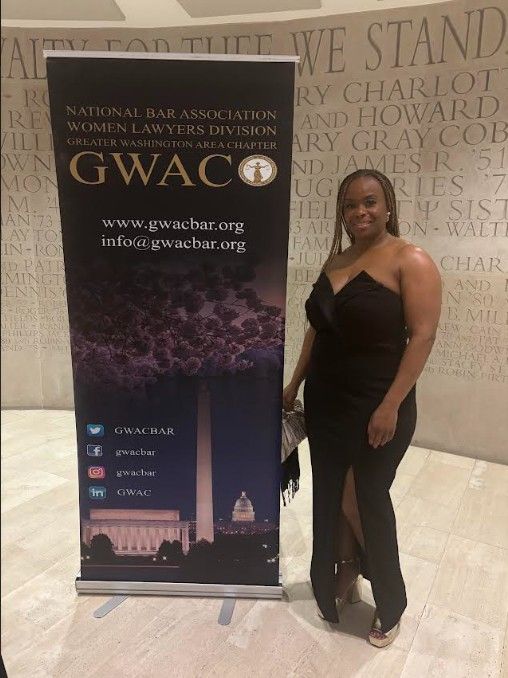
Shavon Smith: Pro bono service is a significant part of my values. I serve as the chair of the DC Bar Pro Bono Committee, which supports a range of efforts, including family law, housing, bankruptcy, and assistance for small businesses, nonprofits, and startups.
For me, service is essential. Practicing law is a privilege, and as attorneys, we understand a system and a language that many people do not. Because of that, I believe we have a responsibility to help others navigate legal challenges.
For many individuals, interacting with the legal system happens during a difficult crisis. Without the financial resources to manage that, it can become even more overwhelming. Providing pro bono support helps bridge that gap.
It is also valuable for attorneys, especially those early in their careers. It provides opportunities to build skills, work directly with clients, identify legal issues, and gain experience that may not always be available in other settings. I encourage attorneys to engage in pro bono work, including outside their primary practice areas, to broaden their understanding of the legal field.
Blue Ocean: What leadership qualities are most essential for attorneys serving today’s business community?
Shavon Smith: I think one of the most essential leadership qualities is empathy. Being able to understand people, read the room, and lead from where individuals are is very important.
In today’s environment, leaders often work with people across different generations who have had very different experiences. Having empathy allows you to connect with them and lead them effectively.
I also think transparency is important because it helps build trust. People are more likely to follow you if they trust you, and transparency is a key part of developing that trust.


Blue Ocean: How do you balance the demands of firm leadership, speaking engagements, authorship, and community service?
Shavon Smith: My view on balance is that it does not really exist in a fixed way. There are days, weeks, and even months that are not balanced.
I look at balance more as a spectrum over time. If you want to have a meaningful impact, do good work, stay engaged in your firm, participate in speaking engagements, contribute to your community, and also show up for your friends and family, there will be very busy periods.
There will be times when the demands are high, and things feel unbalanced. But I think that is part of the process. Over a longer period, those intense phases are balanced out by slower periods.
So instead of trying to achieve balance in a short span of time, I focus on whether things even out over time.
Blue Ocean: What has been one of the most meaningful moments in your journey as an advocate for entrepreneurs?
Shavon Smith: I would not point to one single meaningful moment. For me, the most meaningful experiences come from the feedback I receive from clients.
The most rewarding thing is when a client tells me they were worried about a particular issue, and now that I am involved, they feel a sense of relief. They know that the matter is being handled and that part of their business feels secure.
Another meaningful aspect of my work is seeing entrepreneurs grow over time. Watching someone who started their business at home move into their own office space, expand their team, or reach important revenue milestones is very rewarding.
Those moments, where I can see both the impact of my work and the growth of my clients, are the most meaningful to me.
Blue Ocean: What guiding principles shape your approach to problem-solving and client relationships?
Shavon Smith: My approach to problem-solving is grounded in perspective. I remind people that we are not operating on lives, so it is important to stay calm. I believe that there is always an answer to whatever problem may arise, and that mindset helps guide how I approach challenges.
When it comes to client relationships, my focus is on transparency and trust. I want my clients to know that I am there to help them and that I am on their team, working to solve their problems.
I also try to ensure that the relationship does not feel transactional. I do not want clients to feel like every interaction is tied to a cost or that they are being charged for every small exchange. I aim to build relationships where clients feel comfortable, supported, and confident that I am genuinely invested in helping them.

Blue Ocean: Outside of your professional commitments, what activities help you recharge and maintain perspective?
Shavon Smith: Traveling is one of the main ways I recharge. Getting outside of the routine of work and experiencing different places, people, and cultures helps me gain perspective.
I also value spending time with family and friends. That time allows me to step away from work and reconnect on a personal level.
In addition, staying active is important to me. I enjoy going outside and hiking, and being in nature helps me refocus and reset.
Conclusion
Shavon Smith’s journey reflects a thoughtful and grounded approach to both law and leadership. From advising entrepreneurs on complex legal matters to empowering them through education and strategic guidance, her work is rooted in clarity, trust, and service. She emphasizes the importance of proactive legal planning, seeking the right support, and approaching challenges with perspective. Whether through her client relationships, teaching, or pro bono efforts, she remains committed to helping individuals and businesses navigate uncertainty with confidence. Her insights highlight that sustainable success is built not only on expertise but also on empathy, transparency, and a willingness to grow over time.
Do you have a personal or professional story that can inspire other people into becoming the best version of themselves?
You are welcome to share your journey with our audience.