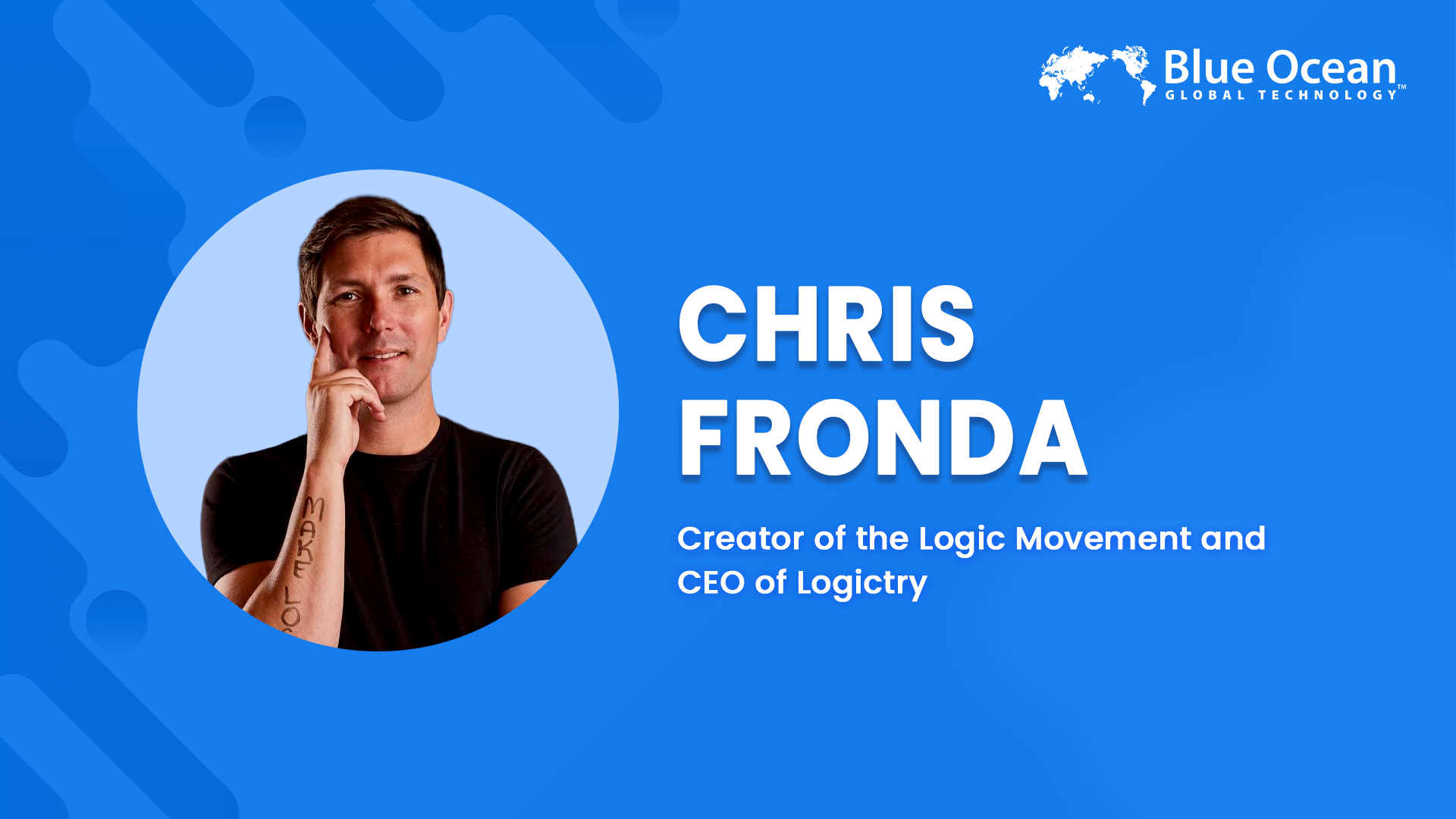
About Chris Fonda:
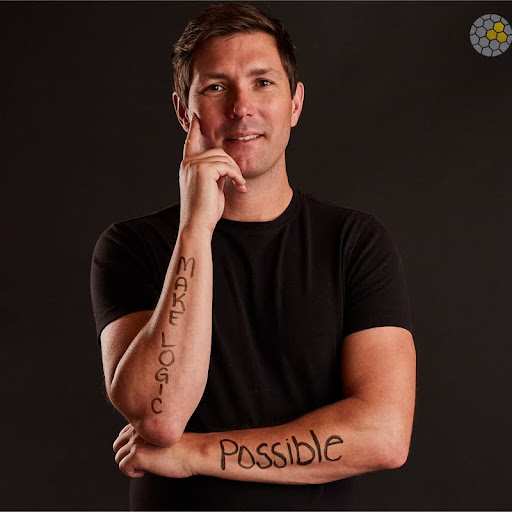
Chris Fronda is the creator of the Logic Movement, a global initiative focused on elevating genuine expertise into thought leadership. He believes that the loudest voices are not always the most informed, and that society needs a new model of thought leadership, grounded in logic, transparency, and real expertise.
Chris founded Logictry on the same day UNESCO proclaimed World Logic Day, a coincidence that reflects his lifelong belief that logic can strengthen institutions, improve collective decisions, and expand access to wisdom. Logictry’s work has since been recognized under the United Nations Sustainable Development Goal 16 for its contributions to peace, justice, and strong institutions.
Throughout his career, Chris has focused on democratizing access to knowledge and empowering people to understand not only what decisions are made, but why they are made. Through Logictry, he works to help experts share their insights in more transparent and interactive ways, making complex reasoning easier for a broader audience to follow and understand.
He champions a future where human reasoning grows alongside artificial reasoning, allowing people to better understand the logic behind the choices that shape their lives.
Chris’s mission is to build a world where expertise is valued, thoughtful voices rise above noise, and every person has the tools to reason, decide, and thrive.
Blue Ocean: Tell us about your professional journey and the creation of the Logic Movement. What inspired you to build a platform focused on elevating true experts and reshaping thought leadership?
Chris: I majored in physics and mechanical engineering in college, and then went on to work for a company called National Instruments. I loved working for the founder, who was deeply committed to making the world a better place. He wasn’t driven by profit, despite being a billionaire. He drove to work every day in a beat-up truck that was barely holding together. What truly mattered to him was how many jobs he could create and the advancement of science.
My mom was the Director of Inclusion and dedicated her entire career to ensuring that children with special needs, especially those from low-income families, were fully included in the education system. She made sure that kids, regardless of their challenges, had access to the same opportunities as other students.
The values instilled in me by both my mom and the CEO have had a profound impact on my journey. After a career in technology, I realized there was a better way for technology to improve online education and drive better outcomes by increasing the quality and effectiveness of learning.
Blue Ocean: Logictry was founded on World Logic Day, reflecting your strong belief in the power of logic. How has this philosophy shaped your career and the mission behind your work?
Chris: Part of the inspiration behind this is that we live in an age of overwhelming information. Especially now, with chatbots generating content at an increasingly rapid pace, there’s a surge of content and noise. The real challenge lies in making sense of that information and using it to make informed decisions. Just because ChatGPT is right at your fingertips and you can ask it anything doesn’t mean it’s always giving you the right advice.
Many AI experts, such as CTOs of large companies who’ve been in the field for 20 or 30 years, acknowledge that AI still lacks logic. It doesn’t yet have the reasoning capabilities that humans do.
So the question becomes: how can we build better, more democratized tools that empower people with the right reasoning and logic to make sound decisions? AI companies excel at boosting productivity, but decision-making is not always the primary focus. For us, that’s where the real focus lies, in improving people’s decision-making processes.
Blue Ocean: What does a typical day look like for you as you balance building a global movement, supporting experts, and advancing innovation at Logictry?
Chris: I’m a software developer, so I spend a significant part of my day working on software development. It’s a big part of what I do. My wife, Chelsea, who’s also my co-founder, dedicates her time to building a powerful community.
The reason we partnered with the United Nations for World Logic Day is largely due to the incredible work she’s done in community building. Every day, I focus on developing the technology, while she works on strengthening and growing the community.
Blue Ocean: You often speak about democratizing access to knowledge. What does that look like in practice, and why is it so important today?
Chris: It all comes down to a central idea: how are we improving the decisions people are making? This isn’t a critique of AI companies—productivity is their primary focus, and rightfully so. They want to make people more productive. But for us, our main concern is improving decision-making. How are we helping people make better decisions? That’s the core of our mission, and it’s why democratizing this process is so important to us.
Another key aspect of what we’re doing is understanding. Right now, we live in a polarized world, with heated debates and arguments on many issues. What we really care about is creating safer spaces for difficult conversations, where people can engage with one another and, importantly, understand each other.
How do we handle situations where we don’t agree with someone’s beliefs? How do we dig deeper into why they believe what they do? This is crucial for improving our ability, as humans, to understand one another. It ties back to understanding the decisions people make. For example, if someone votes for a candidate we disagree with, we may not like their decision, but we want to understand why they made that choice. How can we engage in that process with more people to help reduce polarization and foster a more nuanced understanding of the decisions others make?
Blue Ocean: The idea of human reasoning growing alongside artificial reasoning is central to your work. Which emerging trends in this space excite you the most?
Chris: What excites me the most is that humans are irreplaceable by AI systems, especially at a time when there’s uncertainty about AI’s role in things like job displacement and productivity. While AI is making strides in many areas, there are still aspects where it simply cannot replicate human intelligence and reasoning. We’ve seen examples where AI’s reasoning has fallen short, and discussions about how it hasn’t met expectations for certain applications.
That’s why I’m most excited about how we’re shaping the future of work and the future of jobs. We’re playing a role in ensuring that, even as things shift during this AI transition, new jobs are created, and humans remain central to the process.
Blue Ocean: Building a new model of thought leadership is ambitious. What has been one of the biggest challenges you’ve faced, and how did you approach overcoming it?
Chris: One of the biggest challenges I’ve faced is that a lot of money is made through misinformation. Many people are making substantial profits by spreading falsehoods or presenting information that doesn’t present the whole truth.
When you’re building a platform where misinformation isn’t shared, it’s a tough battle, especially when so many profit from it. That’s one of the greatest challenges—you’re essentially fighting against a powerful incentive. While money is an important tool that helps us value the work we do, just because money flows in one direction doesn’t mean it’s flowing toward the right information or reaching the right people. That’s one of the hurdles we have to contend with.
Blue Ocean: Logictry’s work has been recognized under the United Nations Sustainable Development Goals. How do you and your team maintain credibility and stay ahead while working at the intersection of technology, expertise, and social impact?
Chris: My co-founder, Chelsea Toller, is incredible. She’s the one who’s worked with the UN and helped develop the amazing partnership we have. Every single day, she works closely with community members and leaders, building the relationships that are essential for this kind of work. It truly takes a community to make something like this happen, and Chelsea’s strength lies in her ability to build and nurture that community.
Blue Ocean: What core principles do you believe are essential for experts and leaders who want to create meaningful, lasting impact?
Chris: First, many experts tend to tell you what to think, rather than teaching you how they think and how they approach problems. What we look for in experts is a willingness to teach how to think about something rather than pushing a single agenda or presenting just one option. We want experts who are committed to helping people understand all their options, even if they don’t agree with them. They should acknowledge that sometimes there are valid reasons for choosing something that may not align with their personal preference, but may still be the right choice for someone else. So, the first key quality is a focus on promoting options and not pushing an agenda.
The second quality is a commitment to avoiding the spread of misinformation. These are experts who align with the role of teachers, striving to make people smarter and encouraging learning. It really comes down to avoiding advocacy.
We live in a world where many experts make a living by trying to push a single agenda. Even when there is a valid reason to consider alternative options, some will do everything they can to prevent people from being educated about those alternatives, just to ensure their own choice prevails. This contributes to a more polarized world, where everyone claims, “My way is the only way.” But that’s simply not the case. We need to carefully consider these decisions, as they can be complex and vary from person to person. We need to understand why one choice might be right for one person and not for another.
Blue Ocean: What distinct value do you aim to bring to experts and organizations through the Logic Movement and Logictry, especially when navigating complex decision-making environments?
Chris: We’ve built a couple of key components. First, we have our own creator platform, designed to work with experts who want to promote optionality. It offers many features similar to other platforms, such as Substack, where people can send newsletters, and Kajabi, where they can create paid courses. Essentially, it’s a creator platform that allows experts to stand out and get paid for their work.
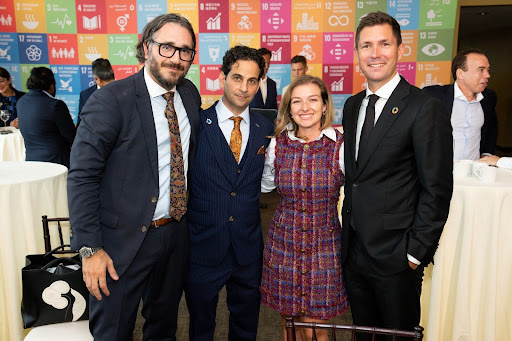
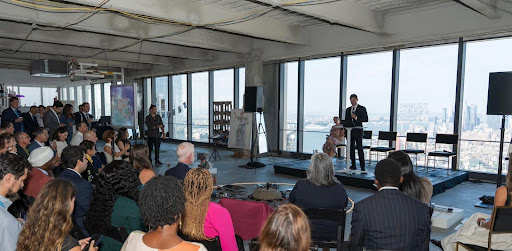
In addition to the platform, we also host in-person events. We partner with the UN and other organizations to bring these events to life, where experts can engage in face-to-face interactions. This is where we find the balance between technology and community—it’s not just about living in a tech-driven world. In-person connections are invaluable, and that’s something we truly emphasize.
As I mentioned, I spend most of my day working on the technology side, while Chelsea Toller focuses on building the community. She dedicates her time to organizing and managing these in-person events, where human connections can really happen.
So, in essence, our creator platform amplifies experts who are truly aligned with our values, helping them rise above the noise of everything else on the internet.
Blue Ocean: In a world filled with noise and competing voices, how do you maintain clarity, resilience, and focus on your mission?
Chris: What we’re doing is especially relevant. It’s not necessarily about competition, but about fostering more collaborative discussions around differing opinions. A key part of this is understanding the concepts of straw manning and steel manning.
Straw manning is when you misrepresent someone’s view, often intentionally, to discredit them. This is done to undermine their argument and prevent them from “winning” the discussion. But when you misrepresent their position, you’re committing a logical fallacy.
Steel manning is the exact opposite. It’s when you intentionally represent the opposing viewpoint in its strongest form. For example, if you and I were debating a topic and I were steel-manning your argument, I would take a moment to explain why your position has merit, rather than just focusing on why you’re wrong and I’m right. I’d try to show your perspective with sincerity and accuracy, and by the end of it, you would feel that I genuinely understood and represented your point of view.
In this world of competing voices, what’s truly important is how we engage in these conversations and how we approach differing opinions with respect, understanding, and the intention to learn and collaborate rather than just win.

Blue Ocean: Many people equate thought leadership with visibility or personal branding. What are some common misconceptions you see about your field?
Chris: One question we often get is, “Why logic?” or “What is logic?” For us, logic is simply about human reasoning—our ability to think critically, learn, and make sound decisions. It’s not something cold or devoid of emotion. Emotions and humanity are at the heart of what we stand for.
Logic is about better understanding our own values and emotions, as well as those of others. It’s a tool for improving human connections and decision-making.
So, the first misconception is that logic is some abstract, esoteric concept or a cold, detached idea. In reality, it’s deeply connected to improving humanity and fostering understanding.
Blue Ocean: What advice would you give to emerging professionals or future thought leaders who want to make a real difference rather than simply be heard?
Chris: We’ve built a platform for thought leaders who are values-aligned. If there are thought leaders out there who resonate with this and find value in it, then we’ve created a platform that amplifies their work.
However, as a word of caution about the current state of the internet: I can barely open my apps now without questioning whether the video I’m watching is real. It’s crazy. How can we be sure we’re even reading posts written by the person who claims to have written them? Is this their true voice? Did they actually make this video, or was it created artificially?
We’re living in an already polarized world where people are telling you what to believe, and now more than ever, content is becoming increasingly artificial.
Being a thought leader today is incredibly challenging because you’re competing with AI-generated content and bots. Many of the likes and followers you see on social media aren’t real; they’re fake accounts, bought and paid for. These platforms are flooded with these bots and fake followers, which create a distorted sense of influence. It’s tough because we often judge thought leaders based on how many followers they have, but we don’t know how many of those followers are actual people who genuinely believe in their message versus those paid to follow them.
It’s a challenging time for genuine thought leaders and experts who want to be heard and stand out online. In this artificial world, it’s going to be tough. That’s one of the reasons we’re doing what we’re doing, which is creating a space that isn’t driven by bots or artificial content.
And that’s why in-person conferences are so crucial. You can’t fake that. Sure, your AI avatar can create content for Instagram and other platforms, but it can’t show up to a conference in person. The human-to-human connection is something that can’t be replicated artificially, and it’s only going to become more important moving forward.
Blue Ocean: Is there a guiding philosophy or principle that has consistently shaped your vision for empowering people through logic and transparency?
Chris: My mom was a major influence on me. She dedicated her life to ensuring that everyone had access to education. That’s why I truly believe education is one of the most empowering and uplifting tools we have. It’s not only transformative, but it also allows us to progress and build the incredible things that improve our lives, like delivering on sustainability.
We’re achieving that through education, raising awareness, and building better, more sustainable solutions. That is a huge motivation for me. I think if we can play our part in elevating the real experts, those who genuinely want to provide education rather than profit from misinformation, that’s the space we’re in. It’s about contributing to something meaningful and impactful.
Blue Ocean: Outside of your professional work, what interests or activities help you recharge and continue thinking creatively?
Chris: I try to stay active by running, and I’m playing tennis in a few days. I think it’s really important to spend time outdoors, connect with nature, and take a break from screens, especially since I spend so much time in front of one. Whenever I can, I make an effort to get outside and enjoy some fresh air.
Conclusion
Chris Fronda’s leadership through the Logic Movement and Logictry reflects his dedication to strengthening society through education, transparency, and credible expertise. He is committed to democratizing knowledge and aligning human reasoning with emerging technologies, highlighting a future where individuals are better equipped to evaluate information, make thoughtful decisions, and contribute to stronger institutions.
Do you have a personal or professional story that can inspire other people into becoming the best version of themselves?
You are welcome to share your journey with our audience.