About David J. Kent
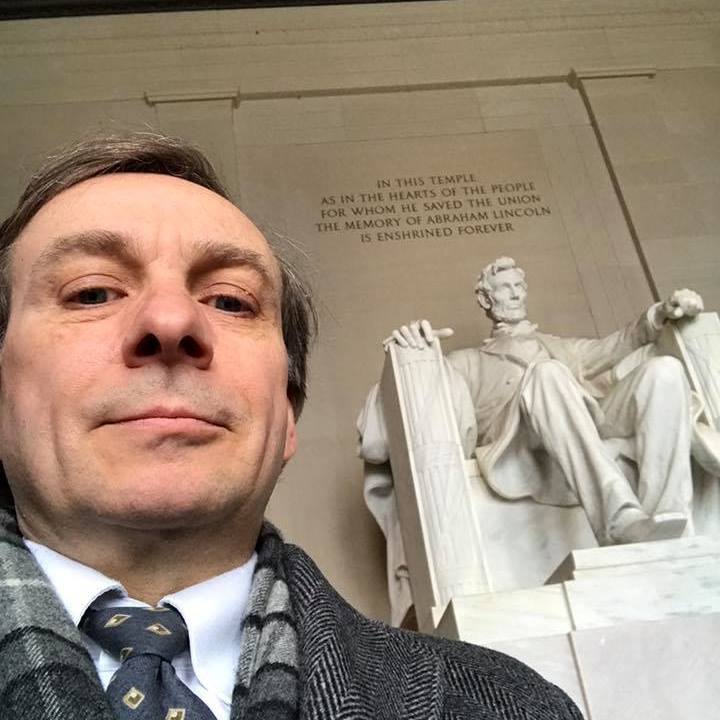
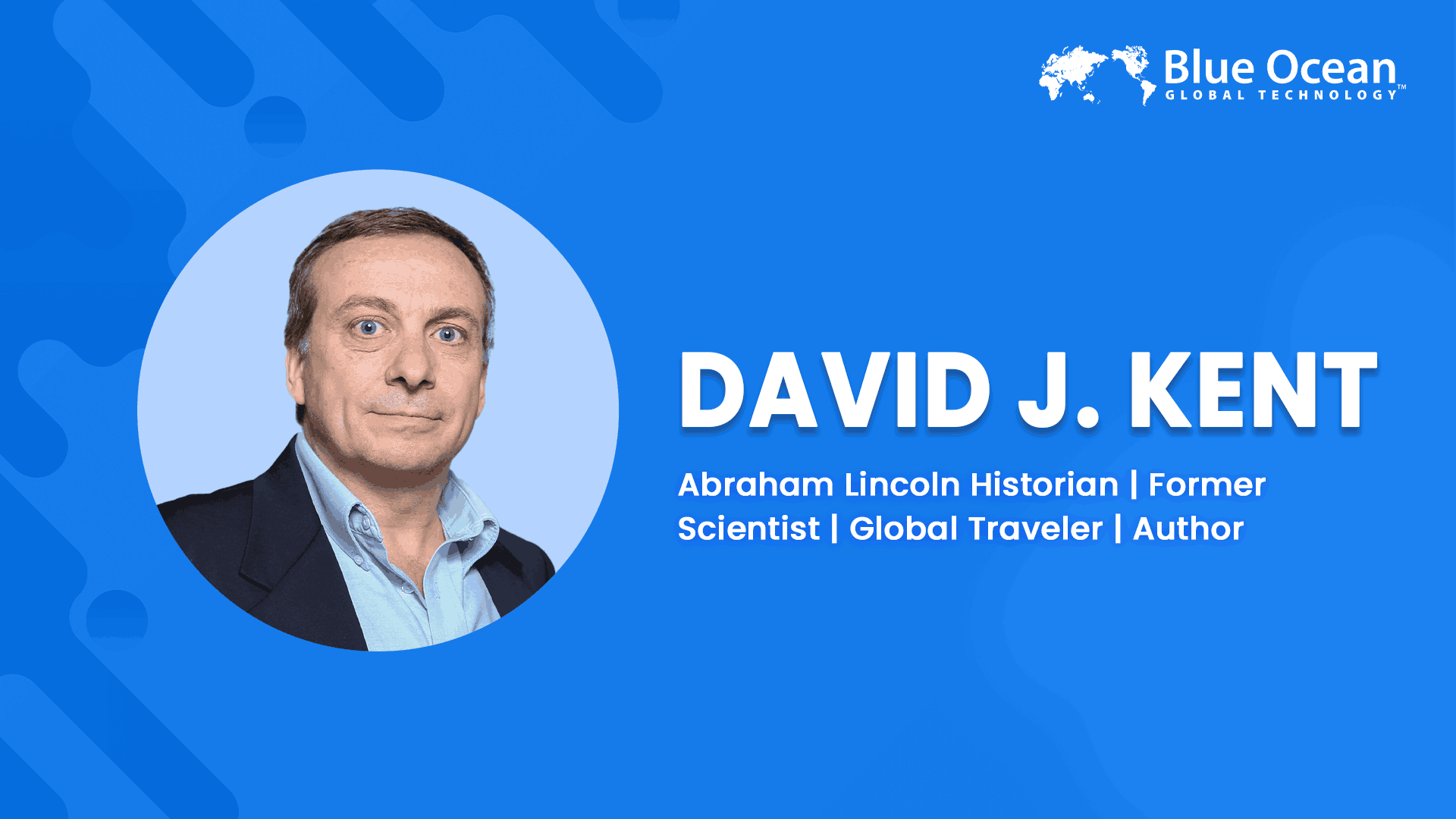
David J. Kent is an Abraham Lincoln historian, a former scientist, an avid world traveler, and an author of nine books. He is the Immediate Past President and current Historian of the Lincoln Group of the District of Columbia, on the Executive Committee and Board of Directors of the Abraham Lincoln Institute, and a member of the Board of Advisors of the Lincoln Forum. He is a frequent speaker on Abraham Lincoln topics and served as Master of Ceremonies for the Lincoln Memorial Centennial program in 2022. David has won numerous awards both for his scientific work and as an Abraham Lincoln historian, including the Wendy Allen Award from the Lincoln Forum for the Lincoln Group of DC, the Lincoln Legacy Award, the SETAC Outstanding Regional Chapter Member Award, the CPRC Distinguished Service Award, and the Biology Major Award from the University of Bridgeport. He has written several books, including Lincoln: The Fire of Genius: How Abraham Lincoln’s Commitment to Science and Technology Helped Modernize America, Lincoln: The Man Who Saved America, both of which were finalists for several book awards, and Tesla: The Wizard of Electricity, a worldwide bestseller translated into many languages. His newest book, released in March 2026, is Lincoln in New England: In Search of His Forgotten Tours.
Blue Ocean: Could you tell us about your professional journey—what inspired you to pursue this industry?
David J. Kent: I grew up in a coastal town in Massachusetts that was deeply rooted in history, especially the colonial period and the Revolutionary War. At the same time, being by the ocean meant I was surrounded by science, particularly marine science. As I grew up, I became interested in both history and science.
During that time, Jacques Cousteau was very prominent on television, exploring ocean science around the world, and that influence pushed me more strongly toward science. I went on to study science for my degrees and worked as a scientist for about 30 years.
Throughout that entire period, I continued studying Abraham Lincoln on my own. Even though my hometown focused more on the Revolutionary War, I was particularly drawn to Lincoln and that historical period. About 15 years ago, I decided I had reached a point where I wanted to focus on Lincoln full-time. I quit my job, joined the Lincoln Group of DC, and became a full-time Lincoln scholar, studying and writing about Lincoln. That is how I transitioned from science into history and writing.
Blue Ocean: What does a typical day in your life look like?
David J. Kent: My days are usually split into four parts, and they vary quite a bit rather than being focused on one single activity.
The first part is writing. I am always writing in some form. I write for my author website, a personal blog, the Lincoln Group of DC’s website, and a new site connected to Lincoln 250 that links Lincoln to America’s founding and the Declaration of Independence. I am also about to start writing for another Lincoln-related website, in addition to writing articles. Writing takes up a significant portion of most days.
The second part of my day is research. I am either researching the book or article I am currently working on, or preparing for the next project. Right now, I have a new book coming out soon, but I am already reading and gathering material for the book I plan to write after that.
The third part is reading purely to take a break. This reading is not directly tied to my current work. I read around 75 to 100 books a year, and only about a third of those are fiction. The rest are nonfiction, including biographies, history, science, historiography, and writing.
The final part of my day involves organizational responsibilities. I am on the board of the Lincoln Group of DC and a past president, serve on the board and executive committee of the Abraham Lincoln Institute, and am on the board of advisors for the Lincoln Forum and several other organizations. That involves regular calls and meetings.
All this changes when I am traveling, either overseas or for book tours, which I do frequently, and will be doing a lot of when promoting a new book.

Blue Ocean: Which emerging trends in your industry most excite you?
David J. Kent: What excites me right now is seeing historians become much more public-facing. For a long time, historians mostly spoke to other historians. That is important, but the public really needs to know more about history. I encountered the same issue in science, where scientists often spoke only to other scientists.
It is our responsibility to provide historical context so people can better interpret current events. That feels especially important right now. Looking back at how things were handled in the past helps us understand where we are going.
Most of my writing is focused on reaching the public. My first book about Lincoln, The Man Who Saved America, was intentionally designed to reach a broad audience. It included numerous graphics to make it more accessible, and it has become very popular, especially with teenagers. Recently, a high school history teacher contacted me about purchasing several dozen copies to use in his class.
That kind of public outreach is what excites me most about where the field is going, and it is what I continue to focus on in both my earlier work and my newer books.
Blue Ocean: What do you believe is the key to your success, and how do you stay ahead in such a competitive environment?
David J. Kent: I think the key to my success has been adaptability and energy. Much of my earlier career in science was spent working as a consultant, which meant I often had to become an expert very quickly, sometimes overnight, to help clients meet their obligations.
That experience trained me to transition smoothly from one subject to another and to identify connections that others might miss. When I transitioned into history, with a particular focus on the Civil War and Lincoln studies, I brought that mindset with me. I noticed patterns and links that many historians had not focused on before.
That perspective directly led to my book The Fire of Genius, which explored Lincoln’s interest in science and technology. Others had written about individual pieces of this, but I was able to show how those elements fit together and how Lincoln thought scientifically, mathematically, and logically.
Staying adaptable, continuing to learn, and being willing to move across disciplines are what help me stay engaged and relevant, even in a competitive environment.
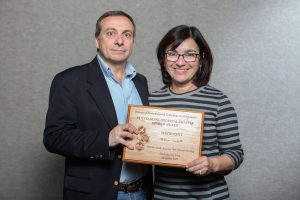
Blue Ocean: What is something unique you offer to your clients?
David J. Kent: My science background. Because of that training, I approach Lincoln studies from a different perspective than many historians. A lot of Lincoln scholarship focuses heavily on the Civil War itself, the battles, and Lincoln’s interactions with generals.
I tend to focus more on how Lincoln thought. I examine how he collected information, how he assessed it, and how he tried to understand what it was telling him before deciding on the best path forward. That analytical process, the way he reasoned through problems, is something I’m particularly interested in.
That perspective comes directly from my scientific training. Most Lincoln researchers have not been trained to think in that way, so they often would not notice or emphasize those aspects of Lincoln’s thinking the way I do.
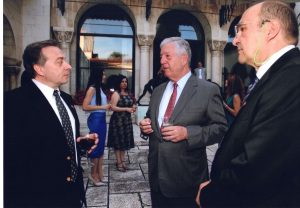
Blue Ocean: In your experience, what qualities separate those who excel in their field from those who don’t?
David J. Kent: Perseverance separates those who excel from those who do not. There are always roadblocks, with people, institutions, or even in collecting data. You will hit walls, but if you keep working, you can find a way through them. I am not the most focused person, and I have many varied interests, but I always keep moving forward. I think of Lincoln’s idea that you may not always move fast, but you never walk backward. You keep pushing ahead and reaching for the things that genuinely interest you.
Blue Ocean: How do you approach mentoring or guiding those who look up to you?
David J. Kent: I strive to be accessible with my time and experience so people can reach out to me. I am not a professor, and I work as an independent researcher, so I do not have a built-in mentorship role, but people approach me regularly.
When I was working on my doctorate, a professor once gave me a B in a class, even though I had earned A grades on exams and writing. When I questioned him, he told me it was because I did not speak up enough in class. He explained that participation was not just about speaking for myself, but about helping others learn from my experience and perspective. At that point, I had already spent time in the workforce, and he felt I had insights that could benefit the rest of the class.
I never forgot that lesson. Since then, I have tried to be open, accessible, and willing to share what I have learned, because people learn from each other’s experiences, not just from formal instruction.
Blue Ocean: What advice would you give to your younger self as you were starting your career in this multifaceted industry?
David J. Kent: I would tell my younger self not to be afraid to take chances and to speak to people. When I was younger, I was very shy. I kept to myself, did not talk much, and spent most of my time buried in books, which is something I still enjoy. But I stayed too closed off.
Over time, I began to open up. Today, I would tell my younger self to be open to different perspectives, because people often see the same things in very different ways, and there is a lot to learn from that.
I also remember attending my first conference and seeing well-known figures in the field. I was intimidated and afraid to approach them. Later, I learned that most of these people are very open to interaction and wish others would talk to them. They are willing to share their knowledge and experience, but younger people must take the first step. Lincoln gave this same advice to his young law partner, William Herndon.
That willingness to speak up, connect, and learn from others is critically important because it enables you to build on what others have already learned rather than having to relearn everything on your own.
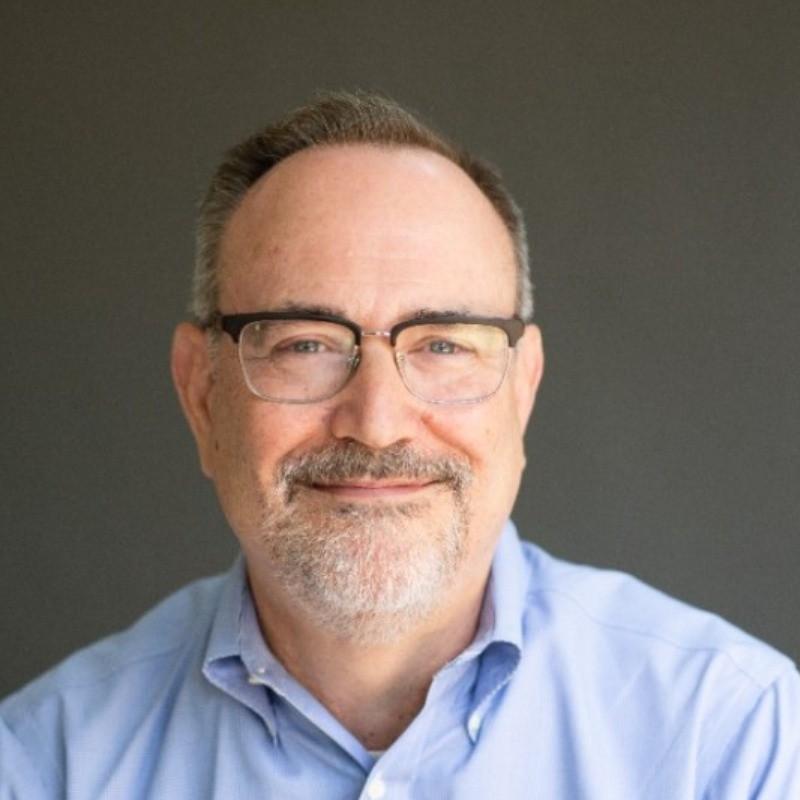
Blue Ocean: What is something you are most grateful for, either professionally or personally?
David J. Kent: I am most grateful for the opportunities I have had to do things I never imagined I would be able to do. Becoming involved with the Lincoln Group of DC, eventually serving as its president and now as its historian, opened doors I never expected. Through that work, I have met many Lincoln scholars over the years and been deeply involved in meaningful historical projects.
One of the most significant moments was helping organize and then emceeing the Lincoln Memorial Centennial Celebration in 2022. Standing on the steps of the Lincoln Memorial, speaking about its hundred-year history in front of scholars, media, and the public, was incredibly meaningful. The Memorial’s history spans from its dedication to segregated audiences, through its central role in the civil rights movement, including Martin Luther King Jr., and into its continued relevance today. Being part of that reflection was humbling.
Beyond events, I am grateful for the people I have met through this work. While researching my earlier book on Nikola Tesla, I had the opportunity to travel to Serbia, visit the royal palace, and meet the current Prince and Princess to discuss Tesla’s legacy. These experiences came from being active, engaged, and willing to step into leadership roles. I am most grateful for that combination of meaningful work and extraordinary human connections.
Blue Ocean: What’s one lesson in life that changed your perspective?
David J. Kent: One lesson that really changed my perspective came when I lived in Europe for three years, working in Brussels, which is essentially the Washington, D.C. of the European Union. Living and working there allowed me to travel across Europe and interact with people from diverse backgrounds and cultures.
I realized that, despite very different perspectives, rules, and ways of life, people everywhere share the same basic desires. They want to be happy, raise their families, support their interests, and live meaningful lives. People are people, no matter where they are.
I also learned that there is more to life than just your day job. While I was working extremely hard during those years, I also had the chance to travel, experience new places, and continue learning outside of work. That helped me understand the importance of enjoying life and staying curious about the world.
That realization stayed with me. After I moved back to Washington, D.C. and worked a few more years in my field, it played a significant role in my decision to transition from science to Lincoln studies, which has been deeply fulfilling ever since.
Blue Ocean: Is there a particular quote or piece of advice that has guided you through your career?
David J. Kent: One quote that has really guided me comes from a lecture Abraham Lincoln gave called Discoveries and Inventions. It was not a political speech. It was more about the history of humanity, framed through technological progress. At the very end, Lincoln said that the patent system “added the fuel of interest to the fire of genius in the discovery and production of new and productive things.”
That idea has always stayed with me. You can have brilliant ideas, but if they remain only ideas and are not connected to a goal or a way to bring them into the world, they have little impact. The fire of genius matters, but it must be directed somewhere. There must be a purpose behind it.
For me, that translates into always asking: what is the goal of this work? What am I trying to accomplish with this research or this writing? It is not just about producing a book or an article. It is about communicating, helping the public understand historical context, and showing why that history is relevant today.
That quote helps guide me because it reminds me that what I do should have meaning beyond myself. It should help other people learn, think, and make better decisions.
Blue Ocean: What hobbies or interests help you maintain a balanced lifestyle outside of work?
David J. Kent: Outside of work, reading and travel are what really help me maintain balance. I read extensively beyond my research, and I especially enjoy traveling. When I lived in Europe, it was very easy to move between countries, sometimes visiting multiple countries within a few hours. That experience really stayed with me, and when I returned, I made a conscious effort to keep traveling as much as possible.
I have now visited approximately a hundred countries and territories, as well as nearly all fifty U.S. states. Travel helps me understand how other people live, think, and see the world. Mark Twain famously said that travel is fatal to prejudice, bigotry, and narrow-mindedness, and I completely agree with that. When you meet people from different cultures, you realize that while they may appear very different on the surface, they often want the same basic things in life.
Travel also directly influences my writing. My upcoming book, Lincoln and New England in Search of His Forgotten Tours, is very much a travel-oriented history book. I take readers along as I visit the places Lincoln spoke, explain what happened there, who he met, what buildings still exist, and how local people remember him today. That combination of travel, history, and human perspective is something I deeply enjoy, and it continues to shape my approach to work.
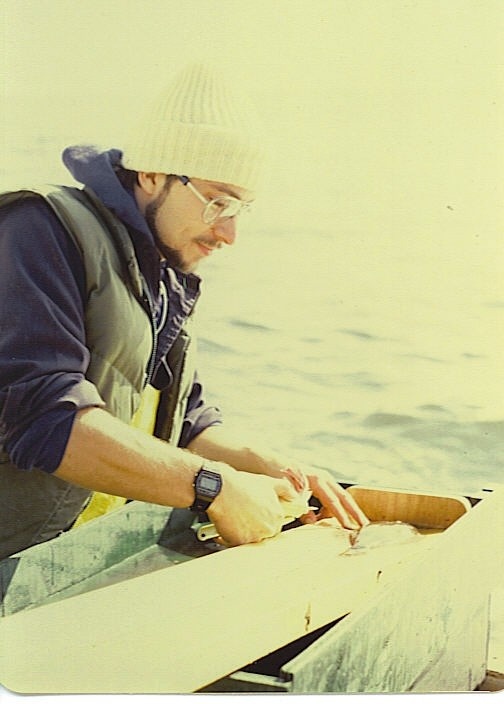
David J. Kent at Sandy Hook.
Conclusion
David J. Kent reflects on a career shaped by curiosity, adaptability, and purpose. From a scientific foundation to becoming a leading Abraham Lincoln historian, he shares how interdisciplinary thinking, perseverance, public engagement, and global travel inform his work. His journey highlights the importance of connecting ideas to meaning, communicating history beyond academia, and remaining open to learning from people, places, and perspectives across the world.
Do you have a personal or professional story that can inspire other people into becoming the best version of themselves?
You are welcome to share your journey with our audience.