About Jonathan Locust
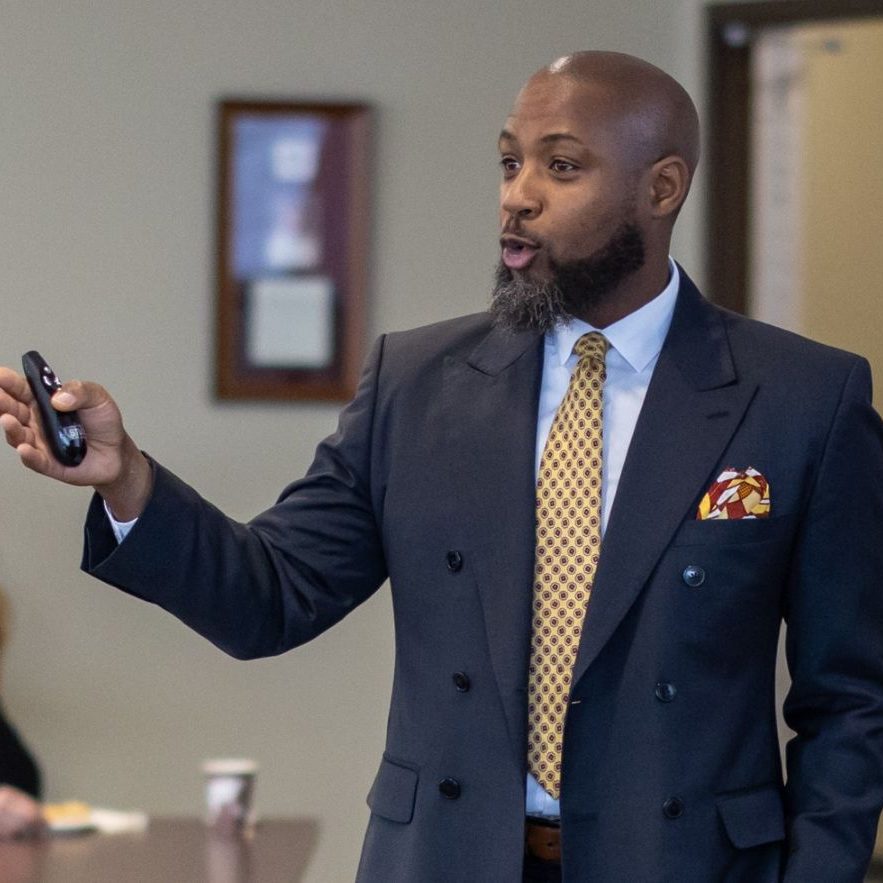
Dr. Jonathan Locust is the CEO and Founder of ConsciRise, a platform dedicated to advancing conscious leadership and holistic workplace wellbeing. With over 13 years in higher education as a Chief Diversity Officer and adjunct professor, he witnessed firsthand how stress, burnout, and disconnection impact both performance and human flourishing. After navigating personal health challenges and exploring consciousness-based healing modalities, he founded ConsciRise to bridge traditional wellness with deeper needs for meaning, resilience, and connection at work.
Holding a Ph.D. and Certified Six Sigma Black Belt, Dr. Locust blends data-driven research, equity-centered strategy, and trauma-informed care. He has led multi-million-dollar research initiatives, published award-winning work, and advises organizations seeking to move beyond surface-level wellness toward whole-person support—mind, body, and spirit.
Blue Ocean: Could you tell us about your professional journey—what inspired your transition from higher education into conscious leadership and holistic workplace wellbeing?
Jonathan Locust: My background is in higher education, and I aspired to become a university president. After completing my PhD in Theory, Social Foundations, and Research Measurements, I worked at a university in Ohio for six years. When a vice president position opened, I applied but didn’t get an interview, later discovering it was due to racism. This experience was devastating, especially as I had just married, bought a house, and welcomed a child. Unable to quit financially yet unhappy, I decided to start my first company to create a way to eventually leave my job.
Later, I spent about five and a half years at a University in Minnesota. My work there focused on improving graduation outcomes for underrepresented students, particularly Black and brown men, who had the lowest graduation rates when I arrived. We implemented simple yet impactful initiatives, such as bringing a barber to campus so that students wouldn’t have to travel an hour for a haircut. Additionally, we placed tutors in the barbershop to provide academic support. By the time I left, those students were graduating at higher rates than white students across the entire state.
My journey toward conscious leadership began during a personal health crisis. Traditional medicine informed me that I would need to take medication for the rest of my life, and that if my wife and I wanted to have another child, there was a risk of disabilities for the baby. This was one of the most challenging times in my life. It motivated me to explore how other cultures achieve higher levels of consciousness and healing. Eventually, I completed a 24-day water fast, learned meditation, and upon retesting, I found that my health issue had completely healed.
During my search, I discovered that people outside of traditional medicine often tried to take advantage of individuals like me. I had assumed there would be protections similar to those found in higher education or healthcare, such as accreditation and oversight, but I was mistaken; none existed. I learned that millions of people in the United States fall victim to scams while seeking these types of services. This realization inspired me to create ConsciRise, a platform designed to protect individuals from exploitation and connect them with diverse practitioners who offer legitimate modalities to help achieve higher levels of consciousness.
Blue Ocean: What gap did you see in traditional wellness approaches that led you to create ConsciRise?
Jonathan Locust: What I observed in traditional wellness and medical systems greatly influenced the creation of ConsciRise. The primary issue is that these systems are not designed for healing; instead, they are structured around capitalism rather than a focus on causation. I recently attended an integrative medicine conference in Kentucky, where research was presented demonstrating that the leading cause of death in the U.S. is, in fact, the U.S. healthcare system itself.
In my own journey, I have come to realise that the system often focuses on temporary solutions, addressing symptoms rather than uncovering the root causes of illness. This approach leads to ongoing dependence on pharmaceuticals and various treatments. When you examine the situation more closely, you discover that many hospital CEOs are also sitting on pharmaceutical boards, earning hundreds of thousands of dollars just for their presence. This reality clearly indicates where the incentives are aligned.
Many major institutions are raising billions of dollars for cancer research. However, if you examine their mission statements, you’ll see that their primary aim is not to find a cure, but rather to fund research. While I support both jobs and research, my top priority is ensuring that people receive the healing they need. Unfortunately, most of these organisations do not provide individuals with the information necessary to actually improve their health.
So the gap was clear to me: traditional approaches weren’t helping people heal or uncover the root cause of their illness. That’s what pushed me to build ConsciRise.
Blue Ocean: Which emerging trends in your industry most excite you?
Jonathan Locust: The emerging trend that excites me most is the shift Pew Research is tracking, where people are becoming more spiritual and less religious. I believe in religion and in God, but the outcomes of spirituality and religion are different, especially in how people view health and integrative wellness. The people who are most likely to use our services tend to identify as more spiritual. Our modalities, like hypnosis, past life regression, life-between-lives sessions, and sound and music therapy, naturally resonate with that audience. We have sound and music therapists all over the world, and individuals drawn to that work are usually in the spiritual category rather than the religious one.
So that trend is exciting to me because it matches the trajectory of our services. And if more people are looking for these kinds of experiences, it opens up real business and marketing opportunities for us to capture market share.
Blue Ocean: What do you believe is the key to your impact as a leader, and how do you continue evolving in a rapidly changing landscape?
Jonathan Locust: The key to my impact as a leader has been showing people different possibilities and helping them see that they can create something even if it does not already exist. I did not grow up with parents who went to college, and I was not raised in the best environment, so part of my leadership comes from showing others that they really can achieve what they want. There is a process to it: networking, connecting with people, and having strategies to move forward.
Another part of my impact is encouraging people to think bigger than their original ideas. I have seen that not only with students but also in my work on jury outcome prediction. My background in diversity and the fact that I have personally experienced discrimination give me a perspective others may not have. When you have lived through gaps and under-representation, it becomes a unique advantage in solving problems others might overlook. What feels like a weakness can actually become a strength because it gives you a viewpoint most people do not have.
Blue Ocean: From your perspective, what qualities define effective leadership, especially when it comes to equity, wellbeing, and human flourishing?
Jonathan Locust: It starts with empathy. As a leader, you never know what people are going through. You never know what they are experiencing or what their family situation is, so empathy has to come first.
Alongside empathy, leadership also requires transparency and honesty. When you supervise people, you sometimes have to have difficult conversations. When I worked for the state, we had to complete annual evaluation forms. Those conversations could be tough, but you carry them with love and empathy.
Another key quality is listening. I usually got along very well with the people I supervised because I always asked about their goals. Every conversation included not just the university or institutional goals but also their personal goals. The question was always, where do these align? If we can find that alignment, everyone can be on the same page. So for me, leadership is about empathy, transparency, honesty, and truly understanding the goals of the people you work with, rather than imposing your own.
Blue Ocean: What is something unique that ConsciRise offers organisations that you believe has been missing from traditional wellness models?
Jonathan Locust: A unique element that the organisations have been missing from traditional wellness models is “hypnosis”. There is a significant amount of research on hypnosis, and people can gain a lot from the process. This includes modalities such as past life regressions and life between life sessions. These experiences can help people understand lessons they may be repeating, who they were, why they were there, and the people involved, which can have major significance.
ConsciRise is moving toward a concierge-style model where individuals complete a brief survey and then receive a customized package designed to support their desired outcomes. Hypnosis is also something that can be purchased using health savings and flexible savings accounts, and it can be offered at a more affordable cost when done at scale.
Many people in the U.S. are not aware of these modalities, but once they learn about them, they become very interested. I also signed up two people for larger monthly packages that include sessions like past life regression and life between lives work. I realised that my ex-fiancée in this life was connected to a previous-life relationship, and that I think was a repeated lesson I had not learned before.
This area excites me because the research is growing, and ConsciRise is positioned to help people access both the information and the practitioners who provide these services.
Blue Ocean: How do you approach mentoring or guiding those who are seeking more purpose-driven and human-centred careers?
Jonathan Locust: When mentoring individuals seeking purpose, I help them explore their true desires and what they aim to accomplish. I believe purpose is shaped by experience, and while one must navigate challenges to clarify their goals, it’s important to actively consider one’s purpose from the start.
For those unsure of their purpose, I recommend starting with self-discovery. Jungian dream analysis has been particularly useful for me. Carl Jung describes the conscious mind as a small bottle in a vast ocean representing the unconscious. Dreams serve as a communication bridge from the unconscious, and interpreting them feels like learning a new language.
Practices like dream interpretation and active imagination have shown me that various roles in my life, such as being a father, CEO, or mentor, are interconnected. Understanding my unconscious has helped align my perspective and clarify my purpose.
Blue Ocean: What advice would you give to your younger self as you were starting your career in this industry?
Jonathan Locust: I would remind myself that “everything is going to be alright.” Growing up poor, I mistakenly thought money would come easily after graduation, but it didn’t. I wish I had known not to worry. I’d also tell myself to never stop learning and providing value. There were times I didn’t give my all, thinking I deserved better, but I learned that adding value creates positive energy.
Everything is energy, and focusing on what’s valuable leads to higher vibrations than negativity.
I always try to approach every situation with a friendly mindset, asking how I can add the most value while making sure I’m not taken advantage of. Also, if I could give my younger self some advice, it would be to “let go of any ego”. There were moments when I thought I was above certain tasks, and I didn’t give it my all, even though I wasn’t really better than them. I’m still working on that, and these days, I focus on doing my best for my team and going the extra mile.
Blue Ocean: What is something you are most grateful for, either professionally or personally?
Jonathan Locust: When I think about what I am most grateful for professionally, the first thing that comes to mind is mentorship. There is a particular person, Dr. McKnight, who had a major impact on me. I had my first research internship with him, and he taught me everything about predicting jury outcomes.
I started learning about these concepts during my sophomore year in college. With my parents not having attended college, I was unaware of such possibilities. My father was a pastor, and while education was valued in our religious household, I had limited exposure.
My first project was assisting Dr. McKnight in changing political campaign outcomes. The local government struggled for three years to pass a bill for a new building. As his intern, I conducted a sentiment analysis and discovered that replacing “building” with “facility” improved the bill’s chances. People associated “building” with something concrete, while they associated a “facility” with glass and open space. I am grateful for mentorship because it gave me experiences I did not grow up with and did not even know existed.
I am grateful for the transparency to ask for mentors and for my willingness to learn from others. If someone has knowledge I want, I respectfully ask them to teach me. I’m also thankful for my family, who motivate me to strive for greatness, and for the wonderful people I connect with. I appreciate living in a mindset of gratitude and being present in the moment.
Blue Ocean: What’s one lesson in life that changed your perspective?
Jonathan Locust: A key life lesson for me is recognising that every struggle carries a lesson. During my health issues, fasting and meditating revealed negative childhood experiences that influenced my mindset. Addressing these experiences involved a process of forgiveness, including forgiving those who hurt me.
At the time, I thought it was the worst experience of my life. I was depressed, and I could not understand why it happened to me. But once I learned that it was tied to a lesson I needed to learn, everything changed. I told myself that I have a PhD in research, so I can research my way through understanding it.
The lesson I’ve learned is that all experiences, no matter how difficult, are part of a larger lesson plan that spans multiple lifetimes. Through past life progressions, I recall being an indigenous Indian, a white corn farmer, and now living this life as Black. Those seven and a half hours of hypnosis revealed that our experiences are linked to a comprehensive, multi-lifetime learning plan.

Blue Ocean: Is there a particular quote or piece of advice that has guided you through your career?
Jonathan Locust: One piece of advice that has guided me throughout my career is understanding that everything is energy. I think about the energy I give off when I talk to people, the energy I surround myself with, and the energy I consume.
Let me share an experience that really left an impression on me. One of my closest friends tied the knot in Barcelona, and while we were there, we had the opportunity to go on a wine tour. Since I have a passion for wine, I was excited to learn from the guide that they used the same grapes but played different types of music to the barrels. They experimented with rap, classical, and various other genres. Using light spectrography, they measured how much light passed through each wine. I was amazed to discover that the music not only influenced the taste but also altered the structure of the wine. It was truly fascinating!
Even now, I keep this book near me called “The Hidden Messages in Water”. In it, Dr. Masaru showed how water crystals changed based on the words placed on the containers. One would say “I love you,” and another would say “I hate you,” and the crystallisation patterns were different. Since our bodies are about 80 per cent water, this became even more important to me. I ask myself what energy I am carrying and what the crystallisation of the water in my body might be.
I strive to maintain a mindset rooted in love. Even when challenges arise or I’m faced with difficult situations, I make an effort to send out loving energy. Our thoughts and energy hold real power. Life is not solely about material science; there exists a consciousness and elements that often go unnoticed.
I read a lot, and in electron experiments, it’s found that electrons behave differently when observed, showing an intelligence that changes their movement. This has led me to focus on carrying high vibrations, particularly love.
While I do experience anger, I try to step back and consider how I can infuse love into the situation, which often changes my response.
Blue Ocean: What hobbies or interests do you enjoy outside of work?
Jonathan Locust: I’m 40 and still enjoy running and playing pickleball. I love being around people, meeting new faces, and learning about different situations, especially through communication and listening.
Honestly, I consider myself an anthropologist. I love learning about people’s experiences, as it helps me grow and become a better person. I also enjoy meeting and connecting with new people.
I also realise the value of making connections; through my past life as a corn farmer, where I had no family or friends, leading to loneliness. As an outgoing person, I didn’t learn to balance that connection then, but it taught me to value communication and even conflict, since it fosters growth. Now, I appreciate genuine connections with others, alongside my passions like running and pickleball.
I consider myself really helpful, and so I ensure that I let people know that if I can ever be of help or service, whether career-wise or with advice, I may not always know the answer, but I am good at finding answers.
Conclusion
Dr. Locust offers deep insight into leadership, purpose, and personal growth. Through his emphasis on empathy, transparency, and truly listening to others, he showed how meaningful leadership begins with understanding people. He also shared how self-discovery, reflection, and practices like Dream work can guide us toward our purpose. His stories about mentorship, gratitude, and the lessons carried across life experiences reminded us that growth is continuous and shaped by both challenges and connections. Above all, he taught us the value of showing up with love, maintaining positive energy, and seeking genuine human connection in everything we do.
Do you have a personal or professional story that can inspire other people into becoming the best version of themselves?
You are welcome to share your journey with our audience.