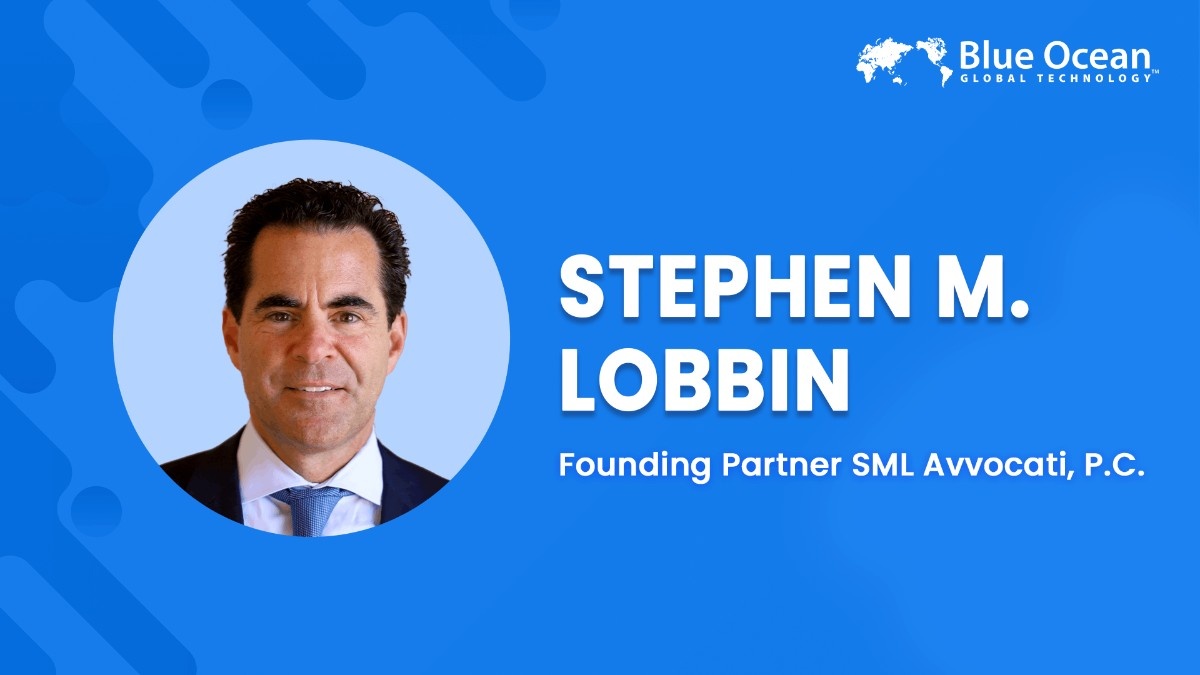
About Stephen M. Lobbin
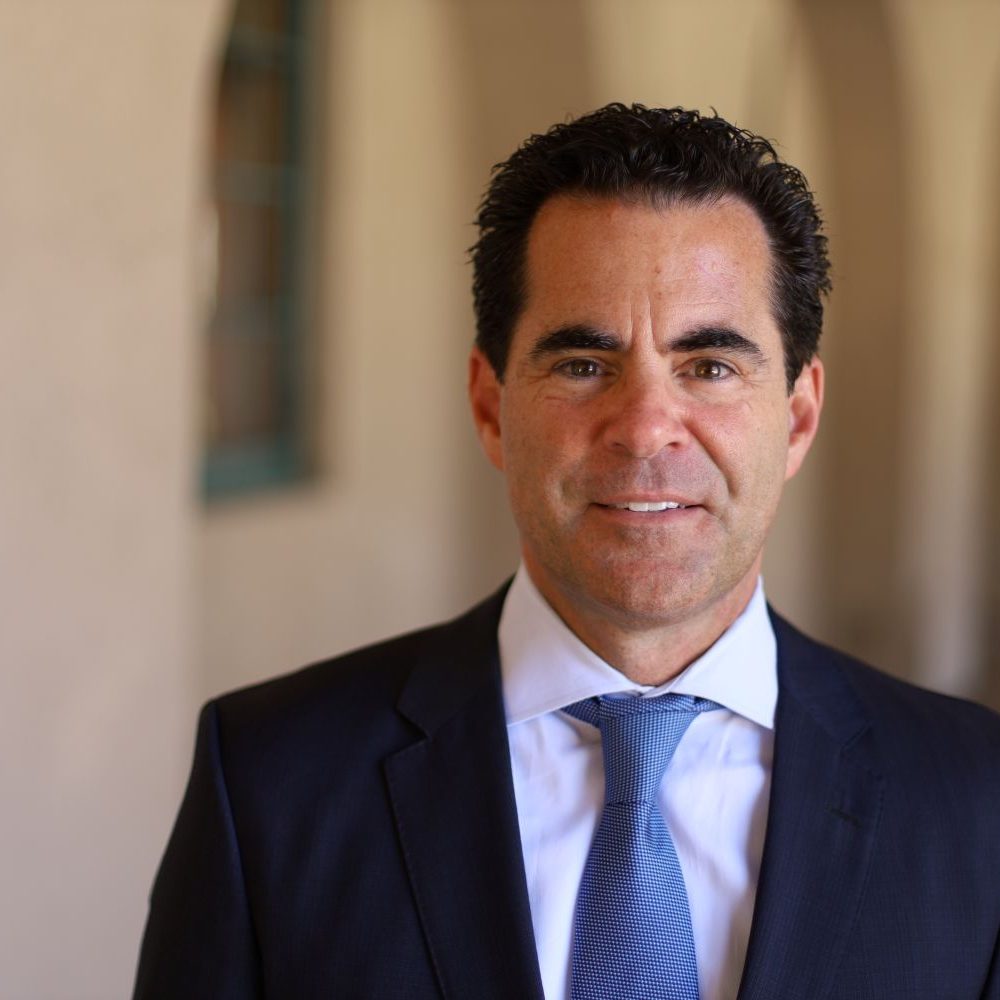
Stephen M. Lobbin has a wide array of experience handling all aspects of intellectual property and business matters, including assisting clients with litigating matters involving IP rights, obtaining and registering IP rights, and negotiating licenses and other agreements concerning IP. He is also skilled and experienced as a mediator and expert witness.
Stephen’s specialties are all aspects of intellectual property, patent, trademark, copyright, and entertainment law, including litigation.
Blue Ocean: What inspired you to pursue a career in law and specialize in intellectual property?
Stephen M. Lobbin: I was born in the 1970s and grew up in the 1980s. School was a great experience for me, and I was always a diligent student. My favorite subjects were math, science, and English writing. Early on, one of my teachers suggested to my parents that I skip a grade because I was academically ahead, so I moved up and skipped the fourth grade. From then on, I was always the youngest in my class.
I graduated from high school at 17 without a clear idea of what major to pursue. My father, a nuclear engineer, was a major influence, and I felt drawn to the subjects he worked with. I decided to challenge myself by choosing electrical engineering and completed my degree at 21. Although I performed well academically, I eventually realized I didn’t want to be an engineer. I excelled in the academic side of engineering, but I saw that others had a natural technical instinct that I didn’t feel I matched. I began to sense that engineering might not be the best long-term fit for me.
After working for a year as an engineer, I decided to pursue graduate studies and enrolled in law school at UCLA in Los Angeles, attracted by the open, sunny atmosphere of Southern California. I finished law school at 25 and chose to specialize in technology law. Over the years, I worked at large and small law firms to eventually start my own firm about a decade ago. Today, I have three associates and the independence of being my own boss. It has been both fun and challenging—I still work hard, but I have the freedom to manage my own time.
I’ve had the opportunity to work across nearly every aspect of intellectual property and technology law. I’ve handled litigation, taking cases all the way through trial, speaking to juries, and experiencing both wins and disappointments. I also work closely with clients on protecting their trademarks and patents, drafting agreements and licenses, and helping them navigate their business and technology deals. My goal for the next decade is to continue training the next generation of lawyers to eventually take over much of the work. When they’re prepared to handle trials, I hope to focus more on managing cases and only stepping in at key moments.
Blue Ocean: What does a typical day look like for you?
Stephen M. Lobbin: I start my day with the flexibility to choose where I want to work. I have an office I can go to, but I also have a gym with a great lounge area to do my job, or I can stay in my home office. It’s nice not being expected to sit at a desk in one place all day. I can move between different environments, fit in activities with my children, and then return to work even later in the evening.
The big advantage is that I can take breaks whenever I need to. I spend some days entirely on the computer, while others involve going to court or attending meetings. On other days, I can simply work from home. The flexibility makes the work demanding but very manageable.
Blue Ocean: Intellectual property law is evolving quickly, especially with emerging technologies and AI. Which trends or developments in your field most excite you right now?
Stephen M. Lobbin: Technology is a field that is constantly evolving. We handle everything from microchips, Wi-Fi, and electronics to consumer products, chemicals, and pharmaceuticals. We are always on the cutting edge, dealing with whatever the next major trend or breakthrough might be.
On the other hand, the legal profession as a whole is much more conservative. Lawyers tend to adapt slowly, especially when it comes to new tools like AI. There’s a real concern about using AI improperly. We’ve already seen cases where lawyers allowed AI to draft documents that contained fabricated case law or incorrect citations, which judges quickly identified. So while some legal tasks can certainly be automated, the practice of law ultimately involves human judgment and decision-making.
In intellectual property, a major concern is how AI learning models use information that may be protected by copyright. The law hasn’t yet addressed this fully. For example, if I write a novel, I own the copyright. But AI systems can absorb vast amounts of data, including copyrighted works, and use them to train their models. Technically, that can amount to copyright infringement. This is particularly troubling for artists, musicians, and creators, who rely on the exclusive rights to their work.
Creativity depends on incentives, and creators deserve to benefit from their efforts. This principle is rooted in the United States Constitution. Written nearly 250 years ago, it grants inventors and creators the exclusive rights to their ideas and works. That constitutional protection provides a powerful incentive for people to take the risks involved in inventing, innovating, and producing original content. Without those incentives, we would lose a critical driver of creativity and progress.
Blue Ocean: Can you walk us through a particularly challenging case or legal matter you’ve handled, and explain your strategy for resolving it?
Stephen M. Lobbin: One example is a two-week trial I handled for a San Diego technology client that manufactures small Wi-Fi hotspots. They were sued by a shareholder seeking $117 million in damages. I presented the evidence showing the company acted responsibly and had no way to prevent the issues alleged. The jury’s choice was either $117 million or nothing, and in the end, they found only three of the six directors liable—for just 99 cents. The outcome saved the company from bankruptcy, and the client was understandably grateful.
Another major case involved a patent and advertising dispute between a large manufacturer of industrial ceiling fans and a much smaller competitor that I represented. Our challenge was to show that we did not infringe the competitor’s patents and that the patents themselves lacked validity. However, the judge ruled that we could not argue invalidity because key information had been disclosed too late.
We had to find a creative way to present the same core facts. By closely analyzing the law, we persuaded the judge to allow us to introduce evidence of earlier technology as part of the damages analysis. That let us explain to the jury that our client’s earlier two-piece design produced the same results as the one-piece element claimed in the patent.
The jury ultimately found infringement but awarded dramatically reduced damages. The opposing side asked for $120 million, while I emphasized our client’s identity as a small, family-run business that should not be destroyed over a technical issue. The jury awarded $850,000 instead. It wasn’t easy, but it was an outcome the company could survive.

Blue Ocean: You’ve earned a strong reputation. How do you and your team continue to stay ahead in the highly competitive legal industry?
Stephen M. Lobbin: It’s not easy. It takes hard work and a lot of conversations. As an entrepreneur, you rely heavily on your network to understand where you can help. Success in any business comes from focusing on service: What can I do for others? Rather than What’s in it for me? When you approach your work that way, you naturally attract people who value what you offer and are willing to pay for it.
Of course, that approach can create challenges. Sometimes I try to help people who can’t afford legal fees, and once a lawyer gets involved, you often have to see the matter through. I’ve had cases where I ended up doing significant work without compensation. But when you look back on your life, you don’t measure it invoice by invoice, but on whether you did meaningful work and helped people. I try to take that holistic view, even if it may not be the ideal business strategy. Maybe I would be more financially successful if I were strict about only taking paying clients, the way many lawyers are.
Clients often tell me I don’t “seem like a lawyer,” because I’m not stiff or overly formal. That can be an advantage—especially with juries, who tend to respond well to authenticity. But it can also be a disadvantage. Some judges, who often come from very traditional legal backgrounds, mistake a relaxed or confident personality for being too informal. And that can create problems.
Judges hold a tremendous amount of power, and some take themselves and their opinions very seriously. That can be dangerous in a system where their decisions carry so much weight. So in every case, with every new judge, you have to be cautious, respectful, and deferential. It’s part of navigating the profession.
Blue Ocean: What core values or principles do you believe every great lawyer should uphold, regardless of their practice area?
Stephen M. Lobbin: My mother is Italian, and when I went to law school, my grandfather used to say that I was going to become a lawyer. When I eventually started my own firm, I chose the name SML Avocati: “SML” for my initials, and Avocati, meaning lawyers or advocates in Italian. That became my brand. Not everyone immediately understands the name, but I’m proud of it because it reflects my identity and my philosophy of practice.
Sometimes, when dealing with judges who can be a bit arrogant, I remind them, “Your Honor, I’m just an advocate.” My role isn’t to take sides personally—it’s to present my client’s story as clearly, honestly, and effectively as possible.
My philosophy in law is simple: each side has its version of events, and it’s the job of the judge and jury to decide which account is closer to the truth. Lawyers shouldn’t be penalized for advocating on behalf of their clients. That’s our role, and it’s the foundation of a fair legal system.
Blue Ocean: What are some common misconceptions people have about intellectual property law or mediation?
Stephen M. Lobbin: One common misconception in the world of patents is that receiving a patent means you’ve created an entirely new product category or a groundbreaking industry. In reality, patents are usually much narrower than that. There are several reasons for this, but a simple example is the mobile phone. A single smartphone may embody thousands of patents: one for each chip, one for a specific circuit inside the chip, one for the touchscreen mechanism, one for the shape of the phone, and so on. Large companies often obtain patents on countless small details, which can sometimes feel like an abuse of the system.
Many people assume there must be a single patent covering “the smartphone,” but no such patent exists. Instead, thousands govern tiny components and features. This makes it extremely complicated to determine whether a company is infringing a patent and whether that patent is actually valid.
Another factor is the United States Patent Office itself. When an inventor files a patent application, the office may sometimes divide it into multiple applications. Partly to ensure clarity, but also because each one generates additional fees. To be fair, the government does charge these fees to cover the time and expertise required to examine the technology and determine whether the patent should be granted. In fact, the Patent Office is one of the few government agencies that actually generates revenue instead of spending it. All of this contributes to the complexity and misunderstandings surrounding patents.

Blue Ocean: What distinct value do you bring to your clients, especially when managing complex or high-stakes situations, and how do you maintain emotional and psychological resilience when handling sensitive or high-pressure cases?
Stephen M. Lobbin: Many young lawyers struggle with confidence—I did too. Learning to present your position calmly and thoughtfully is a skill that develops over time. You gradually build a foundation of knowledge, emotional regulation, and self-awareness. And that kind of growth is something everyone should pursue, not just lawyers.
I’ve done a lot of personal development work over the years—seminars, transformational programs—and earlier this year, I even traveled to Costa Rica for an Ayahuasca experience. It wasn’t all pleasant, but it was meaningful.
One of the most important steps in my emotional development happened in my late twenties, when I committed to resolving my relationships with my parents. I believe that’s essential for becoming a true adult. Most of us carry old resentments, triggers, or unresolved questions from childhood. But until you genuinely forgive and let go of those things, you remain emotionally a “child” of your parents rather than their peers. Once I worked through that, my relationship with my parents changed completely. Now, when I spend days with them—just relaxing, watching movies, being together—I don’t feel triggered at all.
In my career, confidence also comes from preparation. When I walk into court or a meeting, I want to feel like I understand what’s happening better than anyone else. That sense of readiness builds confidence naturally. It’s one of the reasons I enjoy working at the intersection of law and technology: when I’m speaking with technical experts, they know the technology better than I do, but I understand the law better than they do.
Underlying all of this is a belief in a higher power and a commitment to seeing everyone as equal. That mindset helps you recognize that what you have to say is just as important as anyone else’s, and it reminds you to listen as much as you speak. After all, we have two ears and one mouth for a reason.
Blue Ocean: What advice would you offer to aspiring lawyers entering the profession today?
Stephen M. Lobbin: Never stop working on yourself. Maintaining practices that support your well-being is essential. Focus on becoming a stronger version of yourself—not powerful in the sense of dominating others, but powerful in being more enlightened, more mature, and more confident.
I’m willing to try almost anything that contributes to personal growth. I grew up Catholic, and I still go to Mass. There is certainly a lot of formality in the religious aspect, but as I tell my kids, the core of it all is your personal relationship with Jesus Christ. That’s what matters most: are you striving to model your life after His? If you can do that, you move much closer to inner peace. And that sense of peace enables you to succeed in your career, to avoid being triggered, and to stay grounded regardless of what others are doing, even when things don’t go your way.
Blue Ocean: Is there a guiding principle, legal philosophy, or quote that has significantly influenced your career and life?
Stephen M. Lobbin: Learning and reflecting on the life of the only perfect human to ever live, if you have faith, is profoundly meaningful. Keeping in mind what He did, how He thought, and how He forgave can shape our own behavior. Forgiveness is essential.
Jesus teaches that there are only two states: love and fear—and that fear does not truly exist. If fear is merely the absence of love, then everything we do in life can be understood through one of those two lenses. When fear shows up, our task is to bring love into that space.
Think of light and darkness. When a room is lit, light is present. Darkness isn’t something we create—it’s simply the absence of light. Only light actually exists. The same analogy applies to God and the devil. Is there truly a devil, or is what we call “evil” simply the absence of God? If we bring God into a situation that appears dark or evil, we fill the absence with light.
This philosophy may sound intellectual, but it is something I genuinely try to live by. I try to approach situations with forgiveness.
The legal world is full of circumstances that could benefit from forgiveness. The law deals with conflict, ego, and entrenched positions. Often, the best solutions arise when people focus on working together toward a better future, rather than on assigning blame for the past. Law is fundamentally human: we determine fault, who is responsible, and who must pay. But in the spiritual world, there is no fault. Things simply happen. And if you truly have faith, you believe that everything that happens in your life ultimately benefits you, even when it feels like the worst possible event.
Every experience shapes who you become in the very next moment, and ideally, it moves you further along the path of returning to God. I once had a friend who, at 48, died in a snowmobile accident. It is incredibly hard to understand how something like that could be “good.” We can’t explain it. But if you believe that everything happens for a reason and that the reason serves a larger purpose, then perhaps he was simply needed somewhere else.
Blue Ocean: What hobbies or interests do you enjoy outside of practicing law?
Stephen M. Lobbin: I practice yoga, lift weights, and run for cardiovascular health. I’m fortunate to have a gym less than a mile from my home. I often go with my daughter, which is always fun.
Overall, I try to spend as much time with my kids as I can because they grow up so quickly. My son is very into sports, so I coach him and we play together, while my daughter and I enjoy watching movies.
I also love traveling. I’ve seen much of the world—Brazil, Argentina, Costa Rica, and many countries across Europe. I haven’t spent much time in Asia yet, but I’ve been to Australia, and I’ve traveled throughout the United States, Canada, and Mexico.
Conclusion
Stephen M. Lobbin’s reflections demonstrate how personal development, emotional maturity, and spiritual grounding can profoundly influence both professional success and personal fulfillment. His journey toward confidence—whether in legal advocacy, technological matters, or everyday decision-making—is reinforced not only by rigorous preparation but also by sustained inner work. By integrating continual self-improvement with compassion, openness, and spiritual clarity, he navigates challenges with greater purpose and engages others with maturity, empathy, and authenticity across all areas of life.
Do you have a personal or professional story that can inspire other people into becoming the best version of themselves?
You are welcome to share your journey with our audience.