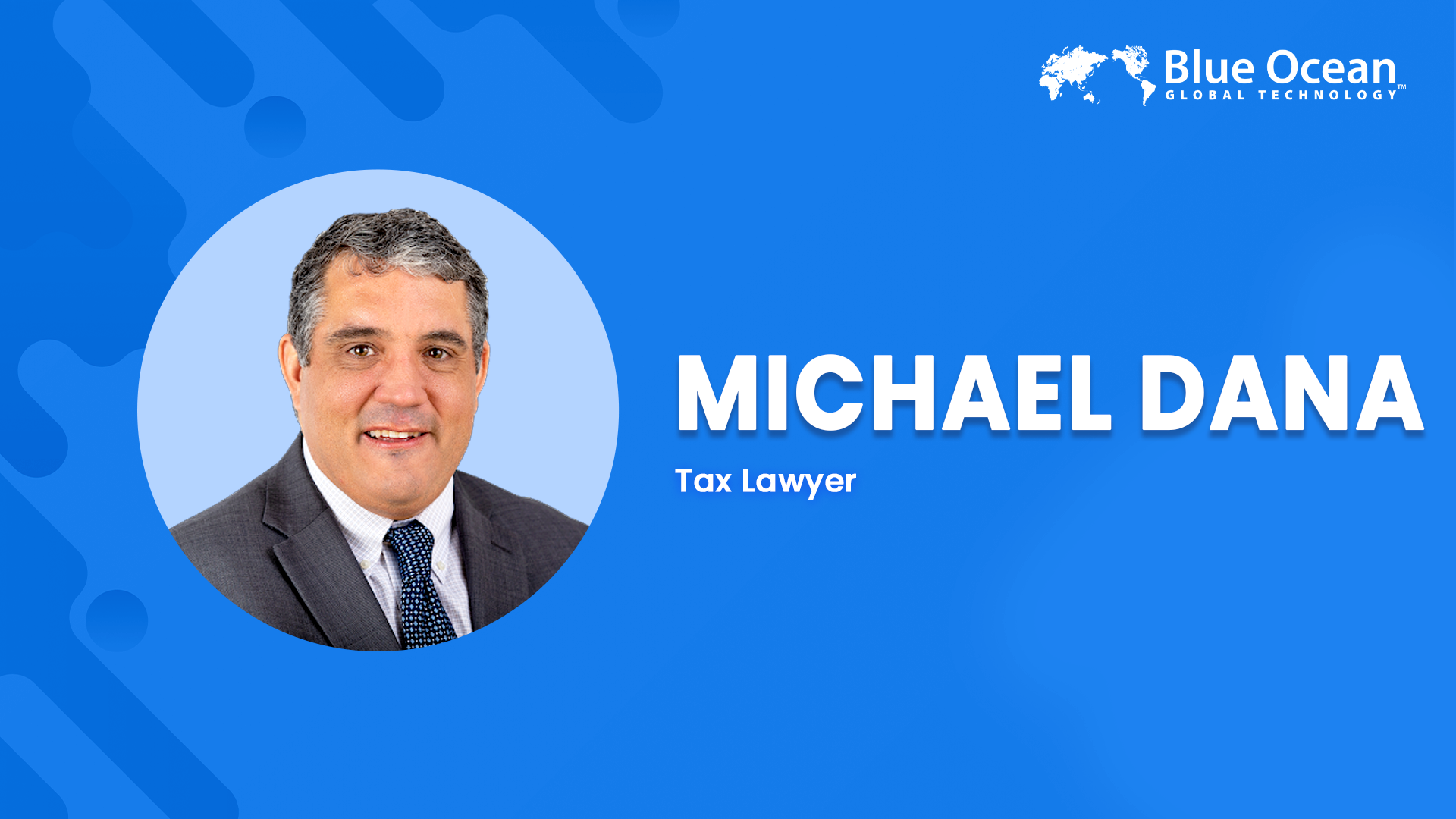
About Michael Dana:

Michael Dana provides tax and corporate law advice to businesses at all phases of operation, from initial business formation to disposition and all points in between. Michael advises clients across virtually all areas of operation regarding U.S. federal income tax issues. He has represented U.S.-based, foreign-based, and multinational enterprises, providing advice in connection with acquisitions, distribution structures, and internal reorganizations. His representations have included business structures, operations, and investments by U.S. and international clients. He also works with closely held businesses and their owners to develop and implement tax strategies that protect and enhance corporate value.
Michael has broad experience advising private funds, investment management firms, and investment industry professionals. In addition to tax counsel, he often renders advice regarding a host of fund formation issues for private equity and hedge funds. Further, he works with institutional investors, advising them on investments across a range of assets, including alternative investment products.
Blue Ocean: Your professional journey has spanned sophisticated tax, corporate, and investment matters. What initially drew you to a career in tax law, and what continues to motivate you in this highly technical and evolving field?
Michael: I did not grow up wanting to be a tax lawyer, nor did I know others. Some people find their way into tax law because they have family members who are accountants or work in tax, but that was not the case for me. I did not like tax in law school, and it was not on my radar as a professional opportunity at that time.
I went to Georgetown for law school, and after graduating, I joined a small firm where I represented clients dealing with tax and financial problems. One day, while representing a client in an audit, I was doing background research and trying to get up to speed on certain tax issues. I realized that if I was going to do this work professionally, I needed to understand taxes. That realization led me to pursue a Master of Laws in Taxation at Georgetown.
It was a great program. I had some of the leading tax lawyers in the country as professors, including someone who served as special counsel to the Assistant Secretary for Tax Policy at the Treasury, advising on partnership tax regulations. Learning from people at that level really sparked my interest in tax.
In my previous work, I was often representing clients whose problems could not really be fixed. It felt similar to bankruptcy work, where you are sometimes just minimizing damage rather than solving the underlying issue. That did not feel good to me, and it was frustrating for clients as well. When a problem is already beyond repair, there is no point in trying to rebuild it.
Because of that, I decided to move into tax consulting work. I wanted to help clients build effective structures that minimized tax and helped keep them out of trouble in the first place. As I did that, I realized something I really enjoy about tax law, compared to other areas of law, is the very technical and structured nature of the system. In tax court, the judges have backgrounds as tax lawyers, the IRS attorneys are tax lawyers, and the disputes tend to be more technical rather than emotional.
Tax law also has extensive regulations, examples, and published rulings. While there are uncertainties, in many cases you can sit down with a client and tell them exactly what the result will be if they take a particular approach. Clients appreciate that clarity, especially when it involves significant tax savings, and it often leads to a more rewarding and collaborative attorney-client relationship.
Another thing I enjoy is that tax law allows me to learn about many different types of businesses and ways people make money. Many of my clients are incredibly intuitive, innovative, and creative in how they build successful businesses, and I enjoy being around that kind of thinking.
As a lawyer, you do not always get to see or touch the results of your work. Sometimes it feels like you are speaking into a vacuum. But with the kind of work I do, there is often a clear beginning, middle, and end. By the end, I have helped a client build something. That is what motivates me. When I get up in the morning, I know I am helping someone build their business, and that is what keeps me engaged in this field.
Blue Ocean: As a partner advising high-net-worth individuals, family offices, and investment entities, what does a typical day look like for you?
Michael: I do not know that there really is a typical day. A lot of my time is spent on phone calls and strategizing with clients. Some days involve helping clients get comfortable with a particular strategy we are recommending. Other days, I am fielding a wide range of questions and helping clients work through specific issues as they come up.
There are also quieter days, when I am often reviewing documents, researching, and analyzing tax issues. Some of these issues are quite complex and require a significant amount of thought, research, and sometimes consultation with colleagues. It really depends on what is happening at that moment.
That said, most days tend to include a little bit of everything. I usually have time set aside for analysis and research, as well as time spent speaking directly with clients. When I have multiple transactions happening at the same time, I can be on calls for most of the day.
If I step back and look at my work over the course of a year, the biggest part of my job is really working with clients to understand their needs and figuring out how my firm can best serve them. Although I am a tax lawyer, I am not just doing tax work all day. I often talk with clients about a wide variety of issues they are facing and then help connect them with the right people within the firm and in my broader network who can assist.
That is also one of the most rewarding parts of my job. It allows me to build close relationships with clients over time. Sometimes friends become clients, and sometimes clients become friends. Some of my closest friendships started as professional relationships, and part of why those clients continue to work with me is because they trust me, know I care about their interests, and know that I will go the extra mile to help them.
Blue Ocean: Which emerging trends or developments in tax law are you most interested in?
Michael: What I find most interesting right now is not so much a single trend in tax law, but the continued globalization of tax rules and how cross-border transactions are being treated. There has been a lot of movement around global minimum tax efforts, particularly the OECD’s (Organisation for Economic Co-operation and Development) Pillar Two framework. I do not want to speculate on whether those developments are good or bad, but they are clearly reshaping the landscape.
The U.S. government, particularly during the Trump administration, took a very strong position against certain minimum tax arrangements and digital services taxes that countries like Canada and France were beginning to implement. Legislation was introduced as a way to push back against those taxes, and we saw real outcomes from that approach. Canada ultimately reversed course, and the OECD later excluded U.S. companies from key parts of the Pillar Two arrangement.
What makes this area so interesting to me is how the United States is going to continue interacting on the global stage with these efforts to establish some form of minimum taxation. There is an ongoing debate about whether a global minimum tax is the right approach or whether it is better to allow countries to experiment with different tax structures. Across Europe or the Asia-Pacific region, countries are trying different models, which creates useful comparisons about what works and what does not.
At the same time, governments have a legitimate concern about businesses using artificial structures to completely avoid taxation. Balancing those concerns with competitiveness and innovation is going to be one of the most important and interesting challenges in tax and corporate law going forward.
Blue Ocean: You’ve handled high-impact matters involving billion-dollar partnerships and complex acquisitions. Can you share an example of a particularly challenging engagement and how you approached finding the right solution for the client?
Michael: Some of the most challenging engagements I deal with involve cross-border issues. Those situations tend to be complex, not only technically, but also from a client-communication perspective. Clients often want to move assets or operations across borders in a way that is tax efficient, and that requires very careful planning.
In some cases, we have used different entity classifications in creative but fully compliant ways to help clients achieve better tax outcomes, including increasing tax basis in assets through mechanisms that already exist in the tax code. From a purely technical standpoint, those solutions are often manageable. The harder part is helping clients truly understand what is happening and why the outcome looks the way it does.
A recurring issue I see involves the use of convertible debt during fundraising. Many clients, particularly startups, use convertible debt without realizing that their entity structure is not well-suited for it. When a business is taxed as a pass-through entity for U.S. tax purposes, convertible debt can create unexpected and significant tax consequences when it converts. I have worked with several clients who benefited from tax losses in earlier years, only to be surprised later when the conversion of that debt triggered taxable income equal to those previously deducted losses.
From the client’s perspective, it feels like they are suddenly facing a large tax bill, even though economically they are often in a net-zero position over time. Helping them understand that distinction is one of the most difficult parts of the job. There are ways to manage or defer the issue, especially when the business is expected to grow significantly, but the key challenge is education.
Ultimately, some of the hardest moments as a tax lawyer are not about finding the right technical answer, but about explaining nuanced concepts in a way clients can absorb and trust. Clients want clear answers, and while I cannot simply ask them to trust me blindly, I have to strike a balance between giving them enough understanding to be comfortable and not overwhelming them with unnecessary complexity.
Blue Ocean: How do you and your team stay ahead in a competitive legal landscape while keeping client goals front and center?
Michael: Staying ahead really comes down to a combination of resources, discipline, and relationships. At my firm, we are fortunate to have strong internal support, especially on the technology side. We have an excellent IT team that actively looks for tools that help us work more efficiently, including artificial intelligence. Used properly and carefully, those tools can be very helpful, although they still require professional judgment. I have even had to explain to clients when an AI tool gave them an incorrect answer; technology is an aid, not a replacement for expertise.
Beyond technology, there is no shortcut to staying competitive. It requires constant learning. I spend a lot of time reading, staying current on developments, and participating in continuing legal education. I regularly join panels and discussions with other practitioners who are extremely knowledgeable, and I make a point to listen and learn from them. Building relationships with people who are deeply immersed in these issues allows me to benefit from their experience in a very efficient way, but that only works if you are willing to invest time and effort into those relationships.
The same principle applies to clients. Keeping client goals front and center means truly understanding who they are, what they are trying to accomplish, and what matters most to them. If you do not take the time to understand their needs, you cannot effectively serve them. In professional services, relevance comes from relationships. Whether it is relationships with other professionals or with clients themselves, those connections are what allow you to adapt, stay informed, and consistently deliver value.
Blue Ocean: What core principles guide your work as a lawyer, especially when advising clients on high-stakes financial and tax decisions?
Michael: At the core of my work, the first guiding principle is always keeping the client’s ultimate goal front and center. Sometimes clients come in thinking they already know the path forward and want advice only on execution. In such situations, my responsibility is to step back and assess whether the direction itself makes sense. If the strategy is flawed, I need to be honest and explain that they may be heading in the wrong direction or using the wrong approach entirely. Everything starts with understanding what the client is actually trying to achieve.
Another core principle for me is remembering that I am advising people, not just transactions. Every client is a human being with personal, family, and long-term considerations behind their decisions. I try to approach every matter with that perspective in mind. Most people are not acting out of bad intent. They are trying to do right by themselves, their families, and the people who depend on them. Treating clients with respect, listening carefully, and understanding where they are coming from is essential to giving good advice.
Accessibility is also very important to me. While clients may not always be dealing with emergencies in the traditional sense, they are often facing situations where timing matters and the financial consequences can be significant. Delayed advice or missed opportunities can cost them money or prevent them from growing their business in the way they want. I try to be reasonably available so clients know they can rely on me, I will listen, and I take their concerns seriously.
Ultimately, my guiding principles come down to understanding the client’s goals, respecting the human element behind every decision, and being present and dependable when clients need guidance on high-stakes financial and tax matters.
Blue Ocean: Tax law can feel intimidating to clients. What are some common misconceptions you encounter, and how do you help clients feel confident and informed throughout the process?
Michael: One of the biggest misconceptions I see is the belief that there are magic solutions to tax problems. Many clients think there is some kind of silver bullet that can simply make taxes disappear. What is often hardest to communicate is that, at a certain point, tax law really mirrors arithmetic. It comes down to addition, subtraction, and multiplication, and that is the tax result.
There was a time, particularly before the 1986 Tax Reform Act, when certain strategies could be used that followed the letter of the law and reduced taxes in ways that some would describe as artificial. Many of those strategies have since been eliminated. There were also transactional structures, especially in the cross-border space, before around 2011 to 2013, that the Treasury ultimately shut down.
I often reference a saying attributed to Martin Ginsburg, one of the leading tax lawyers in U.S. history. His point was that whenever the government develops a stick to beat the taxpayer, it often turns into something that can also harm the government. I use this idea to help clients understand that some strategies may seem surprising or counterintuitive, but they are still grounded in the law.
At the same time, I am very clear that creativity has limits. The government has become increasingly effective over time at closing gaps and strengthening enforcement. Still, with good advice and patience on the client’s part, it is often possible to find lawful and effective ways to address tax issues. My goal throughout the process is to help clients understand what is realistic, what is possible, and why certain approaches work, so they feel informed and confident rather than overwhelmed.

Blue Ocean: When clients face complex or high-risk tax issues, what do you believe truly sets your approach apart as a trusted advisor?
Michael: What truly sets my approach apart is creativity. I bring a creative perspective to complex and high-risk tax situations, but that creativity is grounded in experience. I also bring a broader background than tax alone. Over time, I have worked with clients across a wide range of situations, which gives me a perspective that allows me to see things others may miss. The way my mind works, combined with the types of clients I have represented, often helps me identify solutions that are not immediately obvious. I think that gives me a real competitive advantage.
Another important part of my approach is listening. I spend a lot of time understanding my clients and their goals. Often, the stated goal is simply to pay less tax, and I help them get there. But sometimes clients believe they already know the right path. Many practitioners will follow a client down that path even when it is the wrong one. I do not do that. When I see a client heading in the wrong direction, I stop them and help reframe their approach. I focus on showing them the right path rather than forcing a solution that will not work.
The final thing that really differentiates my approach is relationship management. I am not competitive because I think I am the smartest person in the room or because I am the most creative, even though I do believe I bring both of those qualities to my work. What matters most is that I build strong relationships with my clients. Trust is essential in this profession. Some clients approach legal advice in a purely transactional way, and I do not always work well in those relationships. I work best with clients who value trust and want a long-term relationship. Building that level of trust allows me to maintain a strong and lasting competitive advantage.
Blue Ocean: Tax controversy work can be especially high-pressure. How do you maintain clarity, resilience, and perspective when navigating sensitive disputes or litigation?
Michael: I think maintaining clarity and resilience starts with being very upfront and clear with the client about what is possible and what is not. It is important not to mislead clients and to make sure they are fully advised about the risks involved and what those risks could cost them. Especially in tax controversy, clients need a realistic understanding of the path they are choosing.
Earlier in my career, when I did more tax controversy work, I was not always as good at giving clients that full dose of reality. Over time, I learned that making sure the client is well advised from the beginning is critical, both for them and for maintaining perspective as a lawyer.
Another important part is mindset. Some lawyers take their clients’ situations very personally. I have done that myself in the past, and I still do with some clients who are also my friends. But at the end of the day, you have to remember that you are there to help the client with their problem, not to take the problem on as your own. It is ultimately the client’s issue. I did not cause it, and I can only do what I can do.
You also have to accept that you cannot control the outcome. You can only control the inputs. That applies not just in legal work, but in life generally, whether it is marriage, parenthood, or anything else. Keeping that perspective and focusing on doing the best you can with the resources you have helps build resilience. And if things do not work out the way you hoped, you can still know that you did your best, and that is something to be proud of.
Blue Ocean: For aspiring lawyers interested in tax or corporate law, what advice would you offer as they begin building their careers in this field?
Michael: If someone wants to go into tax law, my biggest advice is to find the right balance. You need exposure to other areas, especially if you want to do transactional work as I do. Having some background in corporate, non-tax law, and understanding deal processes is very helpful. You do not need to be an expert in those areas, but they inform your tax advice in a meaningful way.
At the same time, if you truly want to be a tax lawyer, you have to commit to it fully. You need to think of yourself as one hundred percent tax-focused and then use your knowledge of other areas to support and shape your tax analysis.
Blue Ocean: Outside of your legal practice, how do you like to spend your time? Are there hobbies or interests that help you recharge and maintain balance?
Michael: Outside of my practice, I am a very social person, so I spend a lot of time with people. I am also a father of five children, so much of my time is spent with them. Their ages range from almost ten to twenty, so that means everything from doing fun activities with my younger kids to helping my older children think through problems they are facing. I really enjoy being present with them.
I recently got engaged, so I also spend a lot of time with my fiancée, and we enjoy doing things together. When I can, I like to travel. I enjoy going to a city and staying there for several days just to learn how life works there and experience the culture. I am also an amateur chef, so I cook a lot and like trying new recipes. I love reading, especially novels. One of my favorite books, and one I plan to reread, is Far From the Madding Crowd by Thomas Hardy. I enjoy books that are not what people typically expect a tax lawyer to be reading.
Blue Ocean: Is there a guiding principle, legal philosophy, or quote that has shaped the way you approach your career and life more broadly?
Michael: The number one guiding principle for me is to do good and avoid evil. I try to understand what the right thing to do is in a given moment and focus on that. If you do good and avoid evil, even if you lose in the short term, you will win in the long term. It may not come back in the form of economic prosperity, but it comes back in other ways. In Hinduism, there is the concept of karma, and in Christianity, there is a similar idea that if you do good, it will be returned to you many times over. For me, it really comes down to trying to understand what it means to be a good person. That is actually one of the reasons I read novels, because good novelists help you see people more clearly and help you think about what it means to be a good person.
At the same time, if you truly want to be a tax lawyer, you have to commit to it fully. You need to think of yourself as one hundred percent tax-focused and then use your knowledge of other areas to support and shape your tax analysis.
Conclusion
Michael Dana’s career reflects a thoughtful blend of technical mastery, creativity, and deep respect for the human side of legal practice. From advising high-net-worth individuals and family offices to navigating complex cross-border tax issues, his approach is grounded in clarity, relationship building, and long-term perspective. What ultimately distinguishes his work is not only his command of tax law, but his commitment to understanding client goals, communicating honestly, and doing what is right even when it is not the easiest path. Guided by the principle of doing good and avoiding harm, Michael’s philosophy offers a compelling model of what principled, modern legal practice can look like in an increasingly complex global landscape.
Do you have a personal or professional story that can inspire other people into becoming the best version of themselves?
You are welcome to share your journey with our audience.