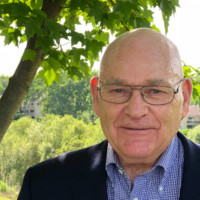
About Virginia Bates:
Virginia M. Bates is President and co-founder of VMB Associates, Inc., a consulting firm specializing in education, agency management, automation, and insurance operations. She has more than 20 years of experience consulting with insurance agencies and carriers and managing property and casualty insurance operations, with expertise in technology selection and implementation, profitability, E&O prevention, internal operations, marketing strategies, mergers and acquisitions, valuations, carrier relationships, and automation. Virginia is a frequent speaker and educator on automation, web-based sales and service, electronic processing, documentation, and risk management. She is a certified E&O instructor, a member of ACORD’s People and Computers national faculty and Alumni Seminar Team, and has developed and conducted educational programs for state agents’ associations, carriers, and vendor groups. She has also coordinated and edited continuing education materials for Rough Notes covering more than 30 volumes of personal and commercial insurance subjects. Virginia holds an honors degree from Swarthmore College, completed graduate work in management science, and is a licensed broker and insurance adviser.
Blue Ocean: Could you tell us about your professional journey and what inspired you to pursue a career in the insurance industry?
Virginia: Like most people in the insurance industry, there was no plan. It is very rare for someone to actually say, “I’d like to be in insurance,” when they’re young. Most people who end up in insurance do so totally by accident. Either because they needed a job, or the opportunity was there, or because there was some type of family connection.
In my case, I was working for an HR firm that was placing people with a new insurance company. It was all commission-based, which was fine as a second income. But when my husband went back to graduate school, I wanted something more secure. So I called the insurance company I’d been working with and told them I had to leave and that someone else would need to handle their account. They said, “Where are you going?” I said, “Beats me.” They replied, “Well, you’re hired.” I said, “To do what?” They said, “We’ll figure it out.”
And that started an insurance career that was totally unexpected, totally unplanned, but wonderful.
The reason is that most people stay in insurance for two reasons. First, it’s intellectually stimulating. Nothing is ever the same. Second, almost everyone in the industry is ethical, decent, and nice. The exceptions stand out, so you can easily avoid them. Working with decent, smart people is a great privilege in life.
So that’s how I ended up there, by pure chance, like everybody else. But it worked out well.
Blue Ocean: What does a typical day look like for you at this stage of your career?
Virginia: The nice thing about being my own boss is that every day can be what I want it to be. And because I work in a lot of different areas of the industry, I’m never bored.
Some days I’m teaching a big group; other days I’m working with a smaller agency. Some days I’m working with a very big agency; other days I’m in an insurance company, and some days I’m reading legal briefs and depositions.
Every day is different. The only constant, although it’s not always possible, is that I try to start at 9:30 am. That way, I have a couple of hours to get organized and feel on top of the world. I think if more people did that, the world would be a better place because it would give people direction, help everyone have a set of goals, and let their day work toward those goals instead of getting scattered.
So, there is no typical day for me, which is exactly what I like.
Blue Ocean: Which emerging trends in the insurance profession most capture your attention today?
Virginia: I deliberately don’t talk about AI because everyone else does, and I’m totally bored by the subject. It’s interesting, but I don’t have anything intrinsic to add to it.
What is most beneficial in the industry, and what makes me very happy, is that the people who deal with non-insurance people- let’s call those non-insurance people the clients- are moving away from being just order-takers and clerical people to being suggestors and guides. I try not to use the word “advising” because there are legal implications to that word, but they’re becoming thoughtful, helpful people.
They’re not just doing what they’re told. They’re actually conversing, suggesting, analyzing a situation, and offering solutions. That’s going to mean that a lot of people who own property, have businesses, drive cars, or are worried about their retirement, what comes after their life, or their families are getting much more credible help and guidance, rather than just asking for things that, in the long run, don’t make sense.
So the best trend is the movement toward intelligent counsel, which is important because people who don’t understand insurance, and most people don’t even like insurance, need someone who can make it real for them, take the legalese out of it, and simply explain what they need. They also need someone who can deliver bad news, like a high premium, in a way that makes it more palatable.
Blue Ocean: With decades of experience in a rapidly changing and highly regulated industry, what do you believe has been the key to your long-term success?
Virginia: Two things. One is simply returning phone calls and emails and respecting people enough to get back to them. I think very often people say they’re busy. To me, that’s not a reason; it’s a feeble excuse. What it basically says is, “You’re not important enough to get on my schedule,” and that’s terrible. If you can’t help someone, you tell them that. You move on, but you don’t leave anybody hanging. To me, that’s number one.
The second thing is that my work involves getting people to do things they either didn’t want to do or didn’t think they should be doing. Otherwise, why would they hire me? If everything were fine, there’d be no need for me to come in and tell them it’s fine. I deal with problems.
What I try very hard to do is listen and ask the kinds of questions that tell me exactly where an organization or a group of individuals is so that we can make progress.
Once, somebody asked me what I do for a living. I was a little cranky, and I said I didn’t really want to get into it. I just said, “I’m a bridge builder.” Later on, I was thinking, actually, I am a bridge builder because, when you’re building a bridge, you have to know where to start on one side of the body of water and where you want to go. If you don’t listen, you don’t know where you’re starting from, and you’re not going to build an effective bridge.
A lot of people advise because it’s what they want to say. After all, it’s what has worked in the past, or because it worked for somebody else. But I guarantee that whoever it worked for was starting somewhere different. You have to know where people are to get them to where they’d like to be, where they should be, or where they have to be legally.
So those are the two insights that I would have. Be courteous to people. Treat them nicely. Get back to them. Then listen carefully, and then start to tell them what you think.
Blue Ocean: Through your educational programs, what unique value do you believe you bring to insurance agencies and brokerages?
Virginia: A couple of things. I am a specialist in a lot of different areas. When you think about it, I’m sure you have some type of insurance. I’m guessing it’s something like car insurance, renters insurance, or maybe homeowners insurance. And I guarantee you’ve never read your policies. I also guarantee that when you get your bill, you’re not ecstatic. As a matter of fact, you’re probably kind of depressed that you’re using your money for that instead of something more fun and interesting.
To explain insurance well, even to insurance people, you have to know several different things. You have to have a very good grasp of finance, almost to the level of a CPA. You have to understand contract law because all insurance policies are contracts. That’s all they are. You have to understand human nature because, when somebody says no, you have to realize why. And if somebody explains something to you, you have to be able to interpret it. You have to have a strong understanding of psychology to recognize the interplay between two decision-makers and how that’s going to play out.
So, when you’re dealing with people in insurance, you’re trying to educate them in all of those areas. And because of what I said earlier, most people come into the industry without a lot of planning, and they just end up there. That doesn’t mean they have the same educational background. It’s not like law, where everybody went to law school. It’s not like being a doctor, where everybody had at least some basic medical knowledge, depending on their specialty.
In insurance, people take a three-week course and then call themselves experts, which is actually terrifying when you consider the fact that they’re helping you maintain your financial future and your stability. So, you have to teach them all of that background information and make them aware of how important it is. You also have to make them aware of what not to do.
Blue Ocean: How do you approach mentoring those who look to you for guidance?
Virginia: That is a very individualized approach. There are many different types of people that I deal with, and they’re probably represented in every industry. But in the insurance industry, you get people who are highly analytical but aren’t very people-oriented. Then some people are purely people-oriented but don’t really understand the ins and outs of contract law. Then you get people who tell a good story but really don’t know a whole lot. And then you have some people who know a whole lot but don’t know how to explain it in a way that gets it across to a normal human being.
So, first of all, anyone who tries to help another individual or a group of people has to determine, again, going back to the bridge-building analogy, what those people are like and what approach is going to work best. Sometimes it’s better to sit and listen for a long time. Sometimes it’s better to urge them on with questions. But what you’re really trying to do is build a friendship with someone because people listen to those who aren’t their friends.
For some, that takes very little time. For others, it takes quite a bit of time because they’re not as forthcoming. They’re more private. They’re more hesitant to share. But once you establish that relationship, then you have to give recommendations that may not always be what someone wants to hear. They have to understand that your heart is in the right place and that you’re trying to help them do the right thing.
Some of that comes from the fact that they don’t understand the law. I’ve run into insurance people who genuinely don’t realize they’re not supposed to be doing certain things legally because their dads did it, their moms did it, or the people who trained them did it. They simply never realized it was illegal. I always say, “I think you’d rather have me come than the insurance division come to take away your license.”
So you have to find ways to deliver bad news, or news that’s different from what they’ve heard before, in a way that is trustworthy and acceptable to people.
The other thing that makes me a little different from most consultants is that I’m manic about follow-up. I never leave a meeting that I have anything to do with unless there’s a to-do list at the end of it. I feel that if we haven’t come up with things that have to be done or changed, then we’ve wasted everybody’s time.
Those to-do lists are critical, and they have to be either in writing or on a screen somewhere. They have to be real. They can’t just be mental because that’s not a to-do list, that’s a wish list.
Then I follow up on things to make sure they get done. What I’ve discovered is that some of the biggest people, the people making the big bucks and leading large organizations, need to be followed up with just like everybody else. They actually appreciate it because I think everyone needs to know that someone is checking in. If they know, again, that you’re a friend and that you’re trying to move things in a positive direction, they appreciate that follow-up.
So, creating a friendly business relationship that’s sincere and deep, then making sure people know there is an endgame, that there is follow-up, and that there’s accountability involved. That also helps their own management style because they can model those same traits with their own people.
Blue Ocean: Is there a guiding principle or philosophy that has consistently guided your career?
Virginia: Other than honesty and decency, which I’m hoping are pretty common and not terribly remarkable qualities in people, I think of a quote by Albert Einstein, in which he said that “creating a system takes intelligence, while making that system simple takes genius and courage”.
Anyone who’s had any experience with the insurance industry, whether it’s paying premiums, filing a claim, or trying to fill out an application, probably wouldn’t have the word “simple” come to mind during any of that.
I was just in a meeting this morning about a very large loss in our town. There were eight people there, and everybody was speaking in sophisticated terms, but nobody was actually saying the same thing about the same issues.
What we have to do in our industry is make things simpler, both so that we can get through them more effectively and so that the consumer on the other end can understand what’s going on and feel safe. When things are too complex, we tend not to feel safe. The insurance industry is supposed to make people feel safe, but we do everything we can to complicate it and make it not just rigorous, but convoluted.
We’re trying to change that. And, just to bring up AI for a second, it will help us do that if it’s guided correctly because it may find ways to streamline processes.
We have to make the whole process of filing a claim, filling out an application, and even paying a bill a little more straightforward. For example, every insurance company has a different website and a different way of paying a premium. If a business has three different insurance companies for different needs, it has to learn three different websites. Then, just as people figure them out, the companies change the websites and make them more difficult to use because users are no longer familiar with them.
We have to find ways to stress-test the systems we have, the technology we use, the forms we create, and the processes we follow so they’re as straightforward as possible. We also have to stop having too many cooks in the kitchen complicating the entire process.
It shouldn’t be that complicated. Here’s a contract: you give me a premium, and I pay your claim. It should not be so confusing.
Blue Ocean: Was there a defining lesson or turning point that significantly shaped your perspective on agency management or leadership?
Virginia: I remember this very clearly. I come from New Jersey, and I’m very proud of it, so I’m sad to say this happened there because it wasn’t a good experience.
I was talking to a man who ran a large business, and it became clear after about 15 minutes that he didn’t care about his people at all. It was all about the money. It was all about him. His employees were simply tools. All 50 of them were there for his personal enrichment and convenience.
I remember making a mental note that, first, I would never see him again, and second, I would be much more analytical when taking on clients to determine whether they truly cared about the people they employed.
As we said earlier, you have to have a purpose in life. If your purpose is to use other people, you’re never going to build a healthy organization. You’re either going to keep desperate people or people who don’t realize what’s happening. Because anyone who is both a decent human being and intelligent is going to run in the other direction rather than work with someone who is selfish and doesn’t care about them.
Now, I’m not talking about giving people cake every Friday. I’m simply talking about being decent, rewarding people appropriately, giving them the right education, valuing them, and appreciating what they do for the organization and for you as the boss.
If you don’t have that appreciation, I don’t want to be near you because you’re not fixable. That’s a character trait, not a behavior. And I can’t fix character. Their moms and dads shaped that years ago, and it can’t be changed now.
I remember that meeting very distinctly. I remember where I was sitting. I remember looking at him. I remember calling my husband from the car and saying, “I won’t be coming here anymore.”
By the way, he paid me very well, but it didn’t matter because you can’t fix something like that. I’ve got a sign on my porch that says, “You can’t fix stupid.” And when you don’t care about the people who are producing for you, I call that stupid.
Blue Ocean: What are you most grateful for, professionally or personally?
Virginia: Literally every day, I thank the God I believe in for good health because I see people who are suffering in ways that I’ve been blessed to avoid.
I’m also grateful for my family. Because of my job, I traveled all over the country, which meant I wasn’t home very often. For many weeks, I would leave on a Monday and come back on a Friday. I have a thoughtful daughter and a wonderful husband, and they somehow managed to cope with all of that. It also meant that all we did on the weekends was have fun, so it worked out okay. They were very flexible, and most families would not have been that flexible.
I think it’s made my daughter much stronger and much better professionally because she understands how the business world works. If I hadn’t had that kind of family, it would have been impossible to do the work I did. I’m very happy that was the case.
I’m traveling a little less now, and I realize these are really nice people who are fun to be around, so that’s pretty wonderful. I’m grateful for that.
We have two houses, and we have beautiful gardens. I realized that gardening is just like the work I do. With gardening, you have to determine how to care for the plant, but you’re not the plant. You have to create an environment around it that’s conducive to growth and to creating beautiful things.
You also have to tend to it. The plant has its own to-do list, which is to use the fertilizer and the soil it’s given. But then I have to follow up with water and trimming to make sure it survives.
That’s really just like the work I do. It occurred to me that’s why I enjoy it. I like making things better, and I like shepherding them through that process, which is what I do professionally and what I do when I’m home in my garden. The only difference is that my hands are a whole lot dirtier in the garden than they are in an office. But even that feels good.
So those are the things I’ve really been blessed with. They’re not very unusual, but they’re critical. Some people don’t have them, so I know I’m blessed.
It’s just like gardening is a metaphor for what I do. It really is. If an agency or a business flourishes, or I get a letter from someone saying they advanced their life because of the work we did together, that’s as wonderful as seeing a lilac bloom in May. They’re both the same feeling.
Blue Ocean: Outside of your professional work, what interests or activities help you maintain balance and perspective?
Virginia: I do a whole lot of needlework, and I do a whole lot of reading. Both of those are totally different from what I do every single day.
The nice thing about needlepoint, knitting, and similar hobbies is that you end up with something that lasts forever and reminds you of the process and the time you spent creating it. It also allows me to relax and watch Netflix while I’m working on it, which is kind of nice because there are a lot of good things to watch.
Between work, those hobbies, maintaining two houses, enjoying a wonderful family, and spending time with my two grandchildren, I’m busy enough.
I should also mention the beach, which is a place I love to be. It’s the only place where I can truly relax.
I also love knitting. It’s a little unusual for someone my age, although it’s coming back. Apparently, there are now knitting clubs for young people and even knitting clubs at colleges.
Conclusion
Throughout the interview, Virginia reflects on a career that began by chance but evolved into a lifelong commitment to helping others navigate the complexities of the insurance industry. Her philosophy centers on building genuine relationships, simplifying complex concepts, following through on commitments, and treating people with respect. Whether discussing leadership, consulting, or personal fulfillment, she consistently returns to the importance of making things better for others. Drawing a parallel between consulting and gardening, she describes both as acts of nurturing growth through patience, care, and thoughtful guidance, illustrating a career defined by a lasting desire to help individuals and organizations flourish.
Do you have a personal or professional story that can inspire other people into becoming the best version of themselves?
You are welcome to share your journey with our audience.